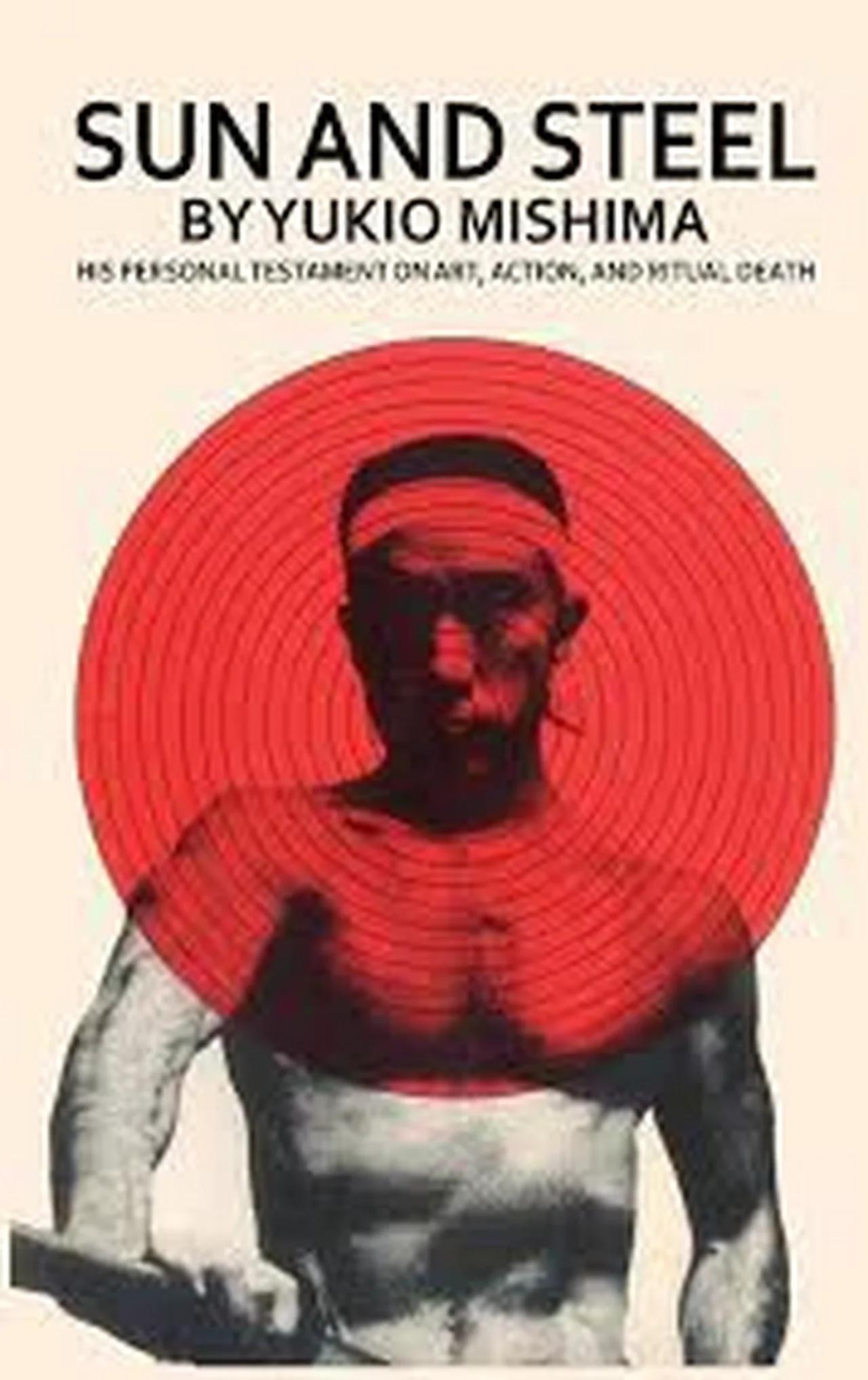
Ever felt like your brain is just a parasite eating your life? Yukio Mishima did. He felt it so deeply that he wrote a whole book about it before staging one of the most bizarre and tragic public deaths in modern history.
Basically, Yukio Mishima Sun and Steel isn't your standard celebrity memoir. It’s a manifesto. It’s a 100-page psychic explosion where a world-class novelist tries to explain why he traded his fountain pen for a set of dumbbells and a samurai sword.
The Problem With Words
Mishima starts with a weirdly relatable gripe: he was too smart for his own good. As a kid, he was "pallid" and bookish. He lived in his head. He argues that words are like "white ants"—they eat away at the pillar of reality until everything is just a hollow shell of ideas.
He grew to hate the "intellectual" type. You know the ones. People who talk about life but never actually live it. For Mishima, the more you describe a thing, the less you actually feel it.
Words are corrosive.
To fix this, he decided he needed a "language of the flesh." He needed something that couldn't be argued away by a clever metaphor. He needed the physical weight of the world.
Enter the Steel
Around age 30, Mishima got obsessed with bodybuilding and kendo. This is where the "Steel" part of the title comes in. He didn't just want to look good for the beach; he wanted to build a "dwelling" for his spirit that wasn't made of flimsy paper and ink.
He describes the weights as his teachers.
Lifting wasn't about "fitness" in the way we think of it now—it was about suffering. He believed that pain was the only thing that could bridge the gap between his mind and his body. When you're struggling under a heavy bar, you aren't thinking about literary theory. You're just... there.
- The Sun: Represents the "nocturnal" writer coming out into the light. It's the harsh, objective reality of the world.
- The Steel: The discipline. The weights. The sword. The tools used to carve a new self.
He spent ten years remodeling himself. He went from a sickly writer who was rejected from military service to a tanned, muscled "man of action." It’s a transformation that honestly puts modern "glow-ups" to shame.
Why He Was Obsessed With Death
Here is where it gets heavy. Mishima didn't just want a nice body; he wanted a "beautiful" death. He had this idea that a tragic, heroic end was only possible if the "vessel" (the body) was perfect.
He looked at the kamikaze pilots of WWII with a mix of envy and awe. To him, they had achieved the ultimate style: a brief, intense life followed by a "noble" end.
In Yukio Mishima Sun and Steel, he admits he was looking for a "precious passport" to dwell in danger. He felt that the modern world was too safe, too boring, and too "feminine." He wanted to return to a version of Japan that valued the warrior spirit over the "limp wordsmiths" of the postwar era.
That Jet Fighter Flight
One of the coolest—and weirdest—parts of the book is the epilogue. Mishima gets to ride in an F-104 Starfighter.
He’s soaring at supersonic speeds, looking at the curve of the earth, and he feels this total unity. The sun, the steel of the plane, the physical G-force—it all clicks. For a moment, the "I" of the writer and the "I" of the body become one thing.
It’s peak Mishima. High-altitude philosophy mixed with raw, mechanical power.
What Most People Get Wrong
People often treat this book like a workout guide or a simple "masculine" self-help book. It’s not. It's actually pretty dark.
Mishima wasn't trying to live a long, healthy life. He was preparing for 1970. That’s the year he led a tiny private militia into a military headquarters, gave a speech that everyone ignored, and then committed seppuku (ritual disembowelment).
He literally did exactly what he said he would do in the book.
He finished his "work" of art, and that work was his own life and death. Whether you think he was a genius or totally insane, you've got to admit the guy had commitment.
How to Actually Apply This
You don't have to start a militia or plan a tragic ending to get something out of this. The core lesson is about the "corrosion" of the digital, sedentary life.
- Get out of your head. If you spend all day on Twitter or reading think-pieces, your "intellectual" self is probably starving your physical self. Go lift something.
- Seek "Shared Suffering." Mishima talks about the men carrying the heavy shrine in a festival. They don't talk; they just struggle together. Find a community where the connection is based on doing, not just talking.
- Reject the "Abyss." Stop digging into your own psychology for a bit. Look at the "surface" of things. Sometimes a muscle is just a muscle, and a sunset is just a sunset. There’s a depth in the physical world that words can't touch.
Practical Next Steps
If you're ready to move past the theory and into the "steel" of your own life, here is how to start:
- Read the John Bester translation. It’s the gold standard. It captures the "supple" and "complex" nature of Mishima's prose without losing the bite.
- Audit your "word-to-action" ratio. For every hour you spend consuming content or writing, spend at least thirty minutes doing something purely physical and demanding.
- Research the "Four Rivers." Look into how Mishima categorized his life into Writing, Theater, Body, and Action. See which "river" in your own life is currently running dry.
Mishima's life was a warning as much as it was an inspiration. He showed that you can't live entirely in a world of symbols. Eventually, the sun and the steel will demand their due.



