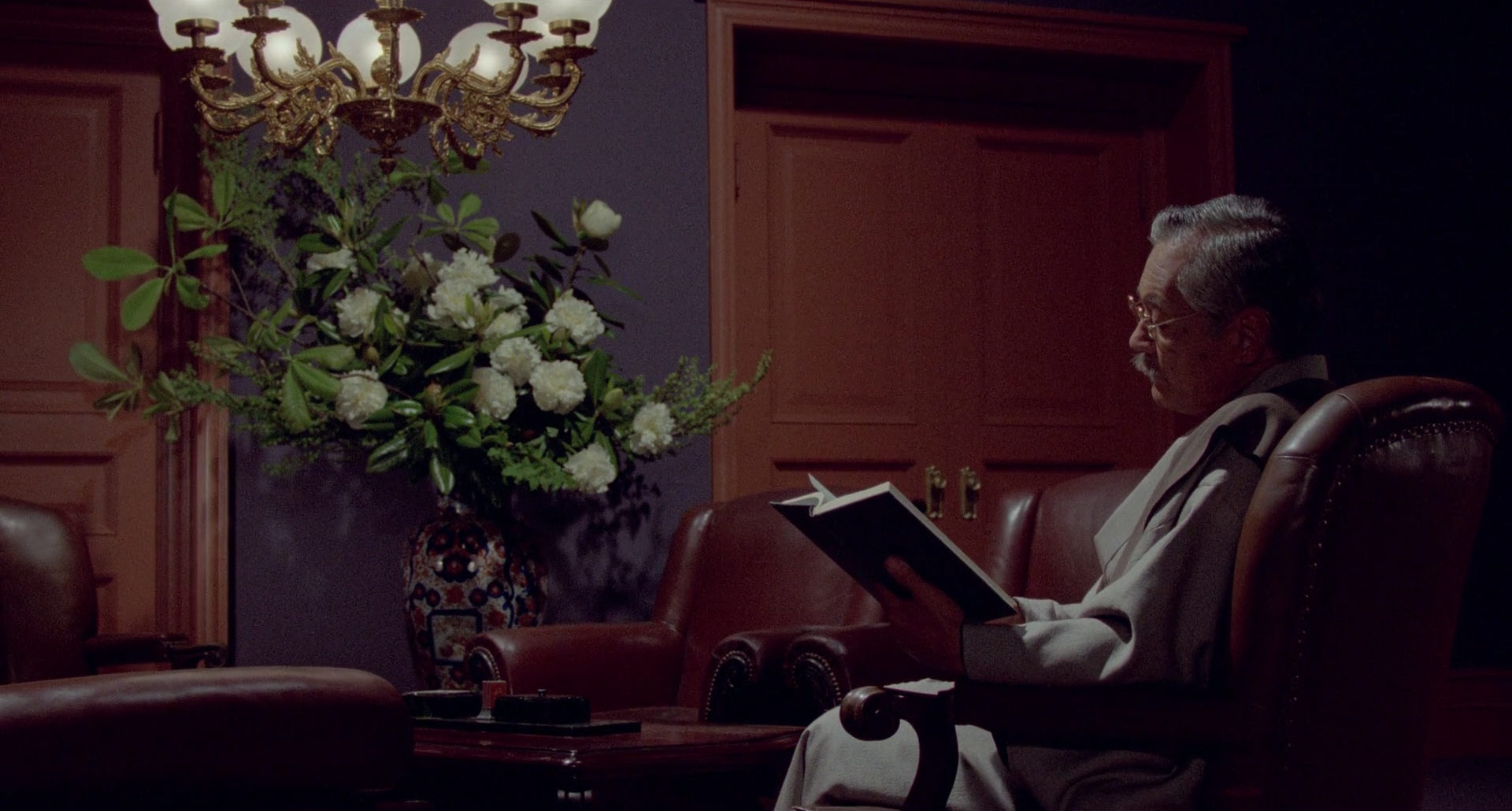
He was probably the most famous Japanese person in the world in 1970. Then he walked into a military office, took a general hostage, and killed himself in front of the world. It’s wild. If you’ve seen the Paul Schrader movie, you know the vibe. Mishima life in 4 chapters isn't just a clever way to organize a biography; it's the only way to understand a man who literally viewed his existence as a series of staged performances. He wasn't just a writer. He was a bodybuilder, a right-wing militia leader, a movie star, and a Nobel Prize nominee.
Most people just see the bloody ending. They see the seppuku—the ritual suicide—and think he was just crazy. But honestly, if you look at the trajectory of his work, that final day in November was the inevitable "final act" of a script he’d been writing since he was a sickly kid locked in a dark room by his grandmother. He spent his whole life trying to turn his soft, intellectual self into something hard, metallic, and beautiful. For an alternative perspective, read: this related article.
Chapter 1: The Beauty of the Cruel and the Frail
Kimitake Hiraoka—Mishima’s real name—didn't start out as a muscle-bound nationalist. He was a skinny, pale boy. His grandmother, Natsuko, basically kidnapped him from his mother and kept him in her darkened sickroom for years. She was a descendant of samurai, obsessed with the "aristocratic" way of life, and she filled his head with Kabuki plays and stories of tragic death. You can see how this messed him up. Or, depending on how you view his art, how it gave him his genius.
His first major hit, Confessions of a Mask, is basically a memoire disguised as fiction. It’s raw. He writes about his early realization that he wasn't like other boys—specifically his burgeoning homosexuality and his strange, morbid obsession with death and blood. He describes being captivated by a picture of Saint Sebastian, pierced by arrows. That image became his lifelong blueprint. To Mishima, beauty wasn't about flowers or sunsets. It was about the moment of destruction. Related reporting regarding this has been provided by GQ.
- The Mask: He realized early on that to survive in Japanese society, he had to wear a mask. He played the role of the dutiful son, the civil servant (he briefly worked in the Ministry of Finance), and the rising literary star.
- The War: During WWII, he was terrified of being drafted, but also obsessed with the idea of a "heroic death." When a doctor misdiagnosed him with tuberculosis, he was sent home. He felt a profound sense of shame for surviving. That survivor's guilt is the engine behind almost everything he wrote later.
The Literary Titan
By his late 20s, he was a superstar. Books like The Sound of Waves showed he could write "normal" romance, but it was The Temple of the Golden Pavilion that proved his mastery. It's based on a real event where a monk burned down a famous Kyoto temple because its beauty was "unbearable." Mishima understood that. He understood the desire to destroy what you love because you can't own its perfection.
Chapter 2: The Sun and Steel Transformation
Around the mid-1950s, something shifted. Mishima got tired of being a "man of words." He started calling himself a "puddle of ink." He hated the intellectual crowd in Tokyo—the coffee-shop philosophers who talked a lot but did nothing. He decided that if he wanted to die a beautiful, tragic death, he needed a body worth destroying.
This is where the Mishima life in 4 chapters narrative gets physical. He started lifting weights. Heavy. He took up Kendo. He became obsessed with the "Sun and Steel"—the title of his famous autobiographical essay. He wanted to bridge the gap between art and action. He famously said that "the body is the orchard of the soul," and he spent fifteen years pruning that orchard.
He wasn't just working out for health. He was sculpting a character. He started appearing in movies, often playing tough guys or yakuza. He posed for provocative photoshoots, most notably Ordeal by Roses (Bara-kei) by Eikoh Hosoe. In these photos, he’s often half-naked, draped in roses or tied up, leaning into the Saint Sebastian aesthetic he’d loved as a child.
He was essentially trying to erase the "frail boy" from the first chapter. He wanted to become a man of the Edo period living in the modern world. He started surrounding himself with young, athletic men who shared his vision of a restored Japan. This wasn't just a hobby; it was a total overhaul of his identity. He was preparing for the stage.
Chapter 3: The Tatenokai and the Political Theater
As the 1960s rolled on, Japan was changing. It was the era of student protests, the Vietnam War, and the Westernization of Tokyo. Mishima hated it. He saw Japan losing its soul to consumerism and American influence. He missed the Emperor-centric world of his youth—not because he was a standard politician, but because the Emperor represented a transcendent, aesthetic ideal of Japan.
He formed the Tatenokai (The Shield Society). It was a private militia of about 100 students. They wore sharp, designer uniforms (designed by Mishima himself, of course) and trained with the Japan Self-Defense Forces.
- They weren't there to stage a coup in the traditional sense.
- They were there to provide a "spiritual backbone" to the nation.
- Most people in the government thought they were a joke or a colorful eccentricity.
But for Mishima, this was the ultimate performance art. He was merging his literary themes of loyalty, beauty, and death with real-world politics. He began writing his tetralogy, The Sea of Fertility, which he considered his life's work. It covers themes of reincarnation and the decay of the Japanese spirit across the 20th century. He knew while writing it that he wouldn't live to see its long-term impact. He was timing his death to coincide with the completion of the final book.
Chapter 4: The Final Act at the Ichigaya Garrison
November 25, 1970. This is the day that defines the Mishima life in 4 chapters structure. Mishima woke up, polished his boots, and delivered the final manuscript of The Sea of Fertility to his publisher. He then headed to the Ichigaya Garrison, the headquarters of the Eastern Command of Japan's Self-Defense Forces.
He had four members of the Tatenokai with him. They had an appointment with General Mashita. Once inside, they took the General hostage, tied him to a chair, and barricaded the door. Mishima's demand? He wanted to address the troops. He wanted to spark a "rising" that would restore the Emperor to power and scrap the post-war constitution that forbade Japan from having a standing army.
The Speech That Failed
He stepped out onto the balcony. A crowd of soldiers gathered below. There were helicopters overhead. It was loud. Mishima started his speech, shouting about the "death of Japan" and the need for a "warrior spirit."
The soldiers laughed. They jeered. They told him to "get down from there, you idiot."
It was a total failure as a political speech. But as a dramatic climax? It was perfect. Mishima realized he would never be a political leader. He retreated back into the office. He apologized to the General. Then, he sat on the floor, unbuttoned his uniform, and performed seppuku.
The ritual requires a "second" to decapitate the person after they disembowel themselves to end the pain. His favorite student, Masakatsu Morita, tried to do it but failed three times. Another student, Hiroyasu Koga, finally finished the job. It was messy. It was violent. It was exactly what Mishima had been rehearsing in his mind for thirty years.
Why We Still Talk About Him
Mishima remains a polarizing figure because he represents a terrifying level of commitment to an idea. Most of us live in the "middle," compromising between our dreams and reality. Mishima refused. He lived his life like a poem, and poems need an ending.
Key Takeaways for Understanding Mishima
- Aesthetic Over Reality: He didn't kill himself for a political cause as much as he did it for an artistic one. He wanted to die while he was still beautiful and strong.
- The Paradox of the Mask: He was a man who felt he was always acting. Ironically, his most "honest" act was the one that ended his life.
- The Power of Discipline: Regardless of what you think of his politics, his transformation from a sickly child to a world-class athlete and writer is objectively incredible.
If you want to dive deeper into this, don't just read his bio. Read Confessions of a Mask followed by Sun and Steel. You’ll see the evolution of a man who decided that if he couldn't find a world he liked, he would build his own—and then burn it down.
Actionable Next Steps
If you're fascinated by the intersection of life and art in the Mishima life in 4 chapters style, here is how to explore further:
- Read the Work: Start with The Temple of the Golden Pavilion. It's his most accessible masterpiece and explains his philosophy of beauty better than any biography.
- Watch the Cinema: Paul Schrader’s Mishima: A Life in Four Chapters is a visual masterpiece that uses different color palettes for his life and his fiction. It's the best way to visualize his internal world.
- Analyze the History: Look into the "Zenkyoto" student movements of the late 60s in Japan. Understanding the chaos of that era makes Mishima’s radicalization much more understandable.
- Physicality and Mind: Consider his essay Sun and Steel. It’s a short, dense read that challenges the idea that the intellectual life and the physical life should be separate.
Mishima’s life wasn't a tragedy in his eyes; it was a masterpiece. Whether you find him a hero or a madman, he remains one of the few people in history who actually lived exactly as he wrote.



