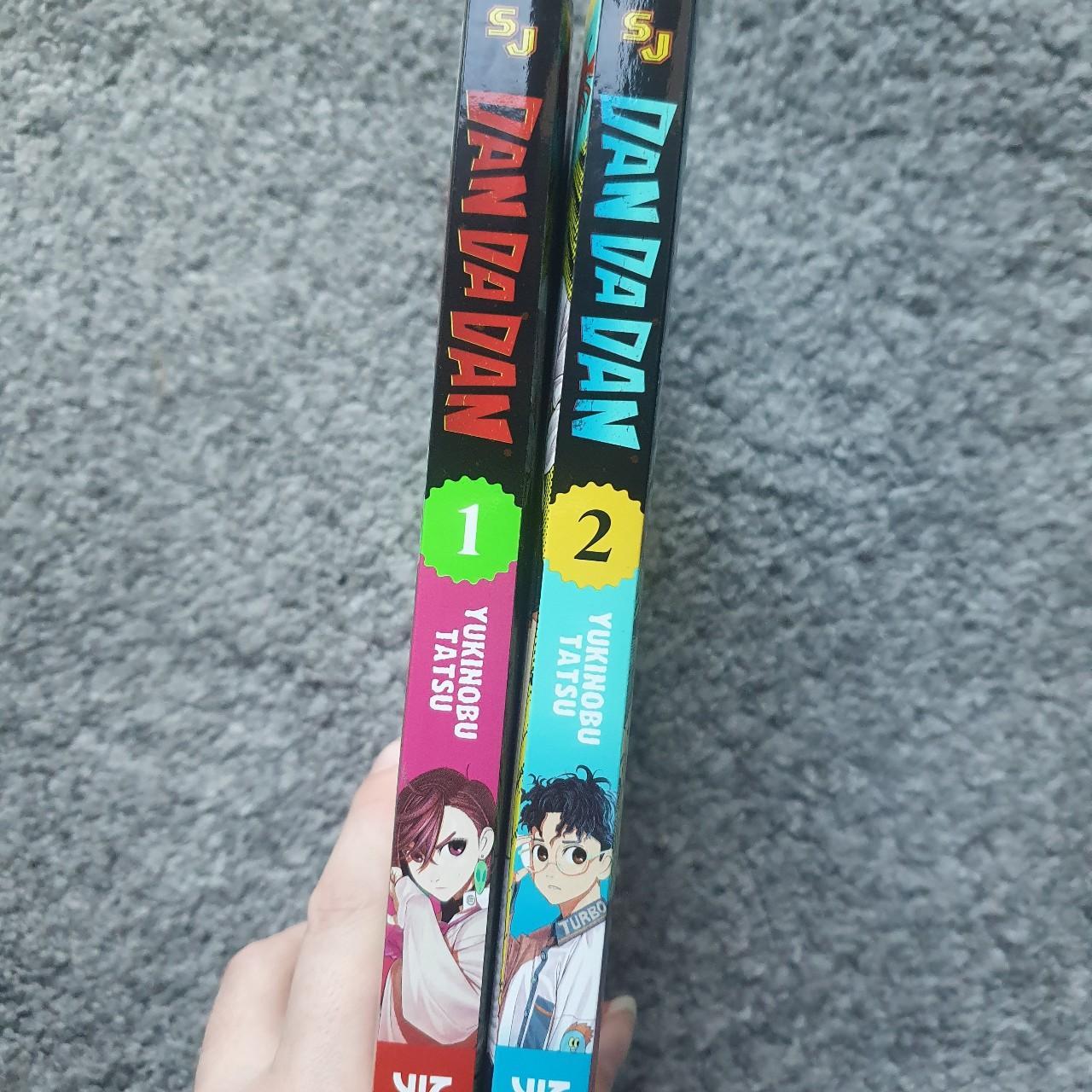
You’ve probably seen the panels. Those double-page spreads in Dandadan where a giant alien eye or a terrifyingly detailed ghost fills the screen with enough detail to make your own eyes ache. It’s chaotic. It’s beautiful. And honestly, it’s a bit of a miracle that we’re even reading it. Before he became the world-renowned Dandadan mangaka, Yukinobu Tatsu was basically the best-kept secret in the manga industry, a guy who spent over a decade in the trenches before finding his "big break."
Success didn't just fall into his lap. Tatsu's story is one of those "overnight success" tales that actually took fifteen years of grinding.
The "Assistant from Hell" (In a Good Way)
For a long time, if you were a fan of Chainsaw Man or Hell’s Paradise, you were already looking at Yukinobu Tatsu’s work without knowing it. He was a legendary assistant. We’re talking about the guy who handled the most complex backgrounds and technical drawings for Tatsuki Fujimoto. In the manga world, being an assistant is a tough gig, but Tatsu was part of what fans now call the "Fujimoto Class"—an insane group of creators that includes Tatsuya Endo (the genius behind Spy x Family) and Yuji Kaku (Hell’s Paradise).
Can you imagine that? A single room where the creators of the three biggest modern hits were all just... hanging out, helping each other draw speed lines and rubble.
Tatsu has mentioned in interviews that he’d walk home with Tatsuya Endo, both of them wondering if they were ever going to get their own series greenlit. It’s wild to think about now, considering Dandadan has surpassed 10 million copies in circulation as of early 2025. Back then, they were just two guys worried about letting another year slip by without a hit.
Why Dandadan Almost Didn't Happen
Before the ghosts and the aliens, Tatsu had a rough run. He actually debuted with Kodansha years ago, but it wasn't exactly a smooth ride. His first series, Seigi no Rokugou, ended after only two volumes. He followed that up with Fireball!, which also didn't set the world on fire.
The Dandadan mangaka was stuck in what creators call "one-shot hell." You write a one-off story, it gets decent feedback, but nobody wants to commit to a full serialization.
The turning point? Honestly, it was a moment of total surrender.
Tatsu was frustrated. He felt like he was trying too hard to guess what readers wanted or what his editors thought would sell. His editor, Shihei Lin (who also works with Fujimoto and Endo), basically told him to stop overthinking it. He told Tatsu to just draw what he liked.
So, Tatsu sat down and thought: "I like aliens. I like ghosts. I like rom-coms. Why not just do all of them at once?"
That’s how we got a story about a girl who believes in ghosts but not aliens, a boy who believes in aliens but not ghosts, and a quest to find... well, the main character’s missing "private parts." It’s absurd. It’s shouldn't work. But because Tatsu stopped trying to be "perfect" and started being "weird," it became a global sensation.
The Secret Sauce: Realism in the Absurd
What really sets Yukinobu Tatsu apart is his obsession with backgrounds. Most mangaka use digital shortcuts or simplified drawings for the scenery so they can focus on the characters. Tatsu does the opposite.
"I try not to make the screen look fake. Even a single false background can reduce the reality of the work." — Yukinobu Tatsu
He draws every telephone pole, every crack in the pavement, and every leaf with an almost frightening level of detail. He’s cited Akira creator Katsuhiro Otomo and Berserk’s Kentaro Miura as massive influences. You can see that DNA in the way he handles scale. When a monster appears in Dandadan, it feels heavy. It feels like it’s actually occupying space in a real-world neighborhood.
He’s also a huge fan of Toru Narita, the man who designed the original Ultraman monsters. If you look at the aliens in the manga, they have that same "raw, creepy" feel—like they’re biological entities that don't belong on this planet.
A Typical Workday for Tatsu
It's not all glamorous. The life of a weekly mangaka is pretty brutal. Tatsu has mentioned that he’s always looking for ways to keep the art quality high without collapsing from exhaustion. He focuses on clarity and readability, which is why even when the action is total chaos, you can always tell exactly what’s happening in a fight.
More Than Just "Fujimoto's Student"
There's a common misconception that Tatsu is just a "clone" of Tatsuki Fujimoto. While they are friends and have influenced each other, their styles are fundamentally different. Fujimoto is cinematic and often experimental with his pacing—think of the "quiet" chapters in Chainsaw Man.
Tatsu, however, is a maximalist. He wants to give you everything at 100% volume. Action, comedy, romance, and body horror all fighting for space on the page.
His ability to pivot from a terrifying scene involving the "Acrobatic Silky" to a genuinely sweet, blushing moment between Momo and Okarun is his real superpower. It’s hard to pull off that tonal whiplash without making the reader feel dizzy, but he handles it like a pro.
What You Can Learn from the Dandadan Mangaka
If you’re a creator, an artist, or just someone trying to make a mark in your field, Tatsu’s journey is a blueprint.
- Skills are never wasted: Those years he spent as an "invisible" assistant were actually his training ground. He was getting paid to master the technical skills he uses today to draw those mind-blowing spreads.
- Lean into your weirdness: The moment Tatsu stopped trying to follow the "rules" of shonen manga and combined his disparate interests (occult vs. sci-fi), he found his voice.
- Find your "Shihei Lin": Having a mentor or editor who tells you to "just draw what you like" is invaluable. Surround yourself with people who want to see your vision, not their version of it.
Dandadan is currently one of the highest-rated series on Shonen Jump+, and with the anime adaptation by Science Saru taking the world by storm, Yukinobu Tatsu is no longer just an assistant in the shadows. He’s the one everyone else is trying to keep up with now.
Actionable Insight for Fans and Creators: If you want to understand Tatsu’s evolution, go back and look at his 2010 one-shot Yamada Kiki Ippatsu. You can see the seeds of his current style—the dynamic poses and the quirky humor—long before it was refined into the masterpiece we have today. Sometimes, the "next big thing" is just a "previous small thing" that finally got the chance to grow.



