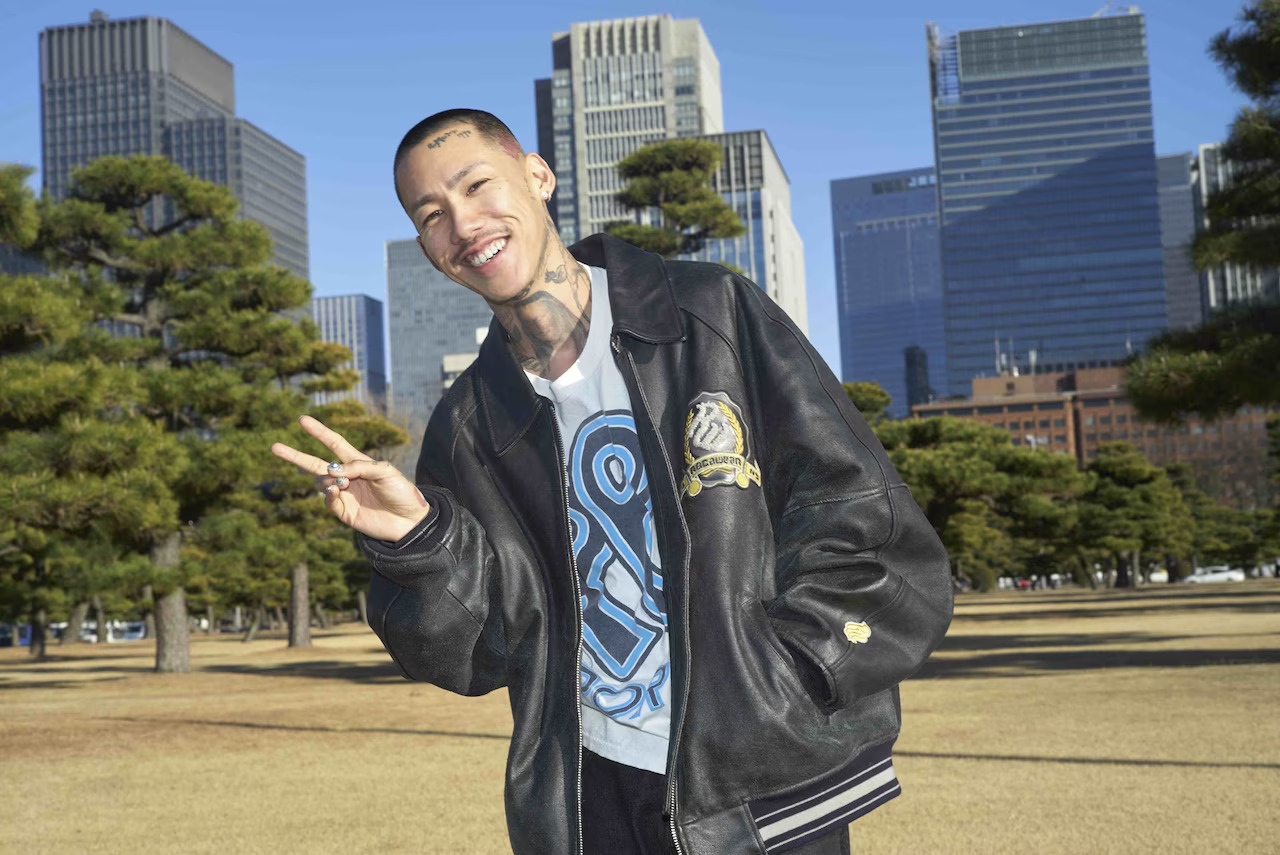
Honestly, if you haven't had the "Team Tomodachi" hook stuck in your head for three days straight, are you even listening to music right now? It’s basically everywhere. One minute you're scrolling through TikTok, and the next, you're hearing that sharp, repetitive "ch-ch-cheamu tomodachi" chant.
But there’s a lot more to this than just a catchy beat.
Yuki Chiba, the man behind the movement, didn't just drop a song. He sparked a full-blown cultural reset in the Japanese hip-hop scene. You might remember him as KOHH, the enigmatic powerhouse who once collaborated with Frank Ocean and Mariah Carey. Then, he just... stopped. He retired the KOHH moniker in 2021, leaving a massive void.
Fast forward to February 13, 2024. Chiba returns, not as the dark, experimental KOHH, but as himself. Using his birth name. The track? "Team Tomodachi."
The Meaning Behind the Movement
The phrase Team Tomodachi (チーム友達) translates literally to "Team Friends." It sounds simple, maybe even a little too wholesome for a rap anthem, right? Well, that’s the point.
In Japanese culture, there’s a nuance between nakama (comrades/colleagues) and tomodachi (personal friends). By choosing "Tomodachi," Chiba is leaning into something more intimate and real. It’s about the people you actually hang out with, the ones you trust when the cameras aren't rolling.
The song, produced by Koshy, features a stripped-back, bass-heavy sound that feels both nostalgic and futuristic. It’s "kawaii trap" but with a grit that only Chiba can deliver.
Why the Remixes Are the Real Story
Most artists drop a remix and call it a day. Yuki Chiba? He turned "Team Tomodachi" into a regional map of global hip-hop.
He didn't just pick famous names; he picked crews.
The Dirty Kansai Remix brought in Osaka heavyweights like Jin Dogg and Young Coco. Then came the Tokai Remix featuring ¥ellow Bucks, MaRI, and SOCKS representing Nagoya. He went to Aomori with JNKMN and PETZ. He even got the legendary King Giddra (Zeebra, K Dub Shine, DJ Oasis) on a track, bridging the gap between 90s J-Hip Hop royalty and the new school.
But the viral explosion went way beyond Japan's borders.
- The US Connection: Chris Brown, Bun B, and Duke Deuce all caught the wave. Bun B even jumped on an official remix.
- The Southeast Asian Surge: An "Indonesia Remix" popped up featuring Ramengvrl and Young Lex.
- The Virtual World: Even the VTuber community lost its mind. The Hololive Advent cover of the song has racked up over 10 million views, proving the beat's "brainrot" power is universal.
The Megan Thee Stallion Effect
You can't talk about Yuki Chiba in 2026 without mentioning "Mamushi."
Appearing on Megan Thee Stallion’s album MEGAN, the track "Mamushi" (also produced by Koshy) became a global smash. It wasn't just a feature; it was a moment. Seeing Chiba on stage at the 2024 MTV Video Music Awards teaching Megan how to say Japanese phrases was surreal for long-time fans.
It served as the perfect companion piece to the "Team Tomodachi" era. While "Tomodachi" was about the local crew, "Mamushi" was about the global takeover. It marked Chiba's first entry on the Billboard Hot 100, peaking at number 36.
What Most People Get Wrong
Some critics argued that Chiba was "dumbing down" his lyricism compared to the Untitled or Monochrome days.
That's a bit of a surface-level take.
If you look at the "Team Tomodachi" lyrics, they’re repetitive by design. They function like a mantra. Chiba has moved away from the "struggle" narrative of his youth into a space of "Business is Booming" (the title of his later 2024 track, Shōbai Hanjo).
He’s not trying to prove he’s the best lyricist anymore. He’s proving he can lead a movement.
The Logistics of a Legacy
Yuki Chiba is now operating under YC Sounds. This isn't just a label; it’s a hub for his vision. The sheer volume of content produced during this period—from the Team Tomodachi: The Remixes compilation to his solo album Star—is staggering.
He’s also made it clear: he’s not KOHH anymore. He reportedly won't even perform his old songs. That's a bold move. It’s like Radiohead refusing to play "Creep," but for an entire decade of work.
But it works because the new stuff is so undeniably infectious.
Actionable Takeaways for Fans and Creators
If you’re looking to dive deeper into the world of Yuki Chiba or apply his "Team Tomodachi" strategy to your own creative work, here is how to navigate it:
- Listen to the "Regional" Remixes: To truly understand the J-Rap scene, don't just stop at the original. Listen to the Tokai and Dirty Kansai versions. They act as a "who's who" of the current Japanese underground.
- Study the "UGC" Model: Chiba succeeded because the song was easy to remix and dance to. If you're a creator, notice how the simplicity of the hook allowed for hundreds of variations, from Okinawan rappers to virtual idols.
- Respect the Rebrand: Chiba’s transition from KOHH to his real name is a masterclass in artist evolution. He didn't cling to the past; he buried it to build something fresher.
- Watch the "Mamushi" VMA Performance: It’s a masterclass in stage presence and cross-cultural marketing.
The era of Team Tomodachi isn't just about a song. It’s a testament to the fact that when you bring your real friends along for the ride, the whole world might just decide to join the team.



