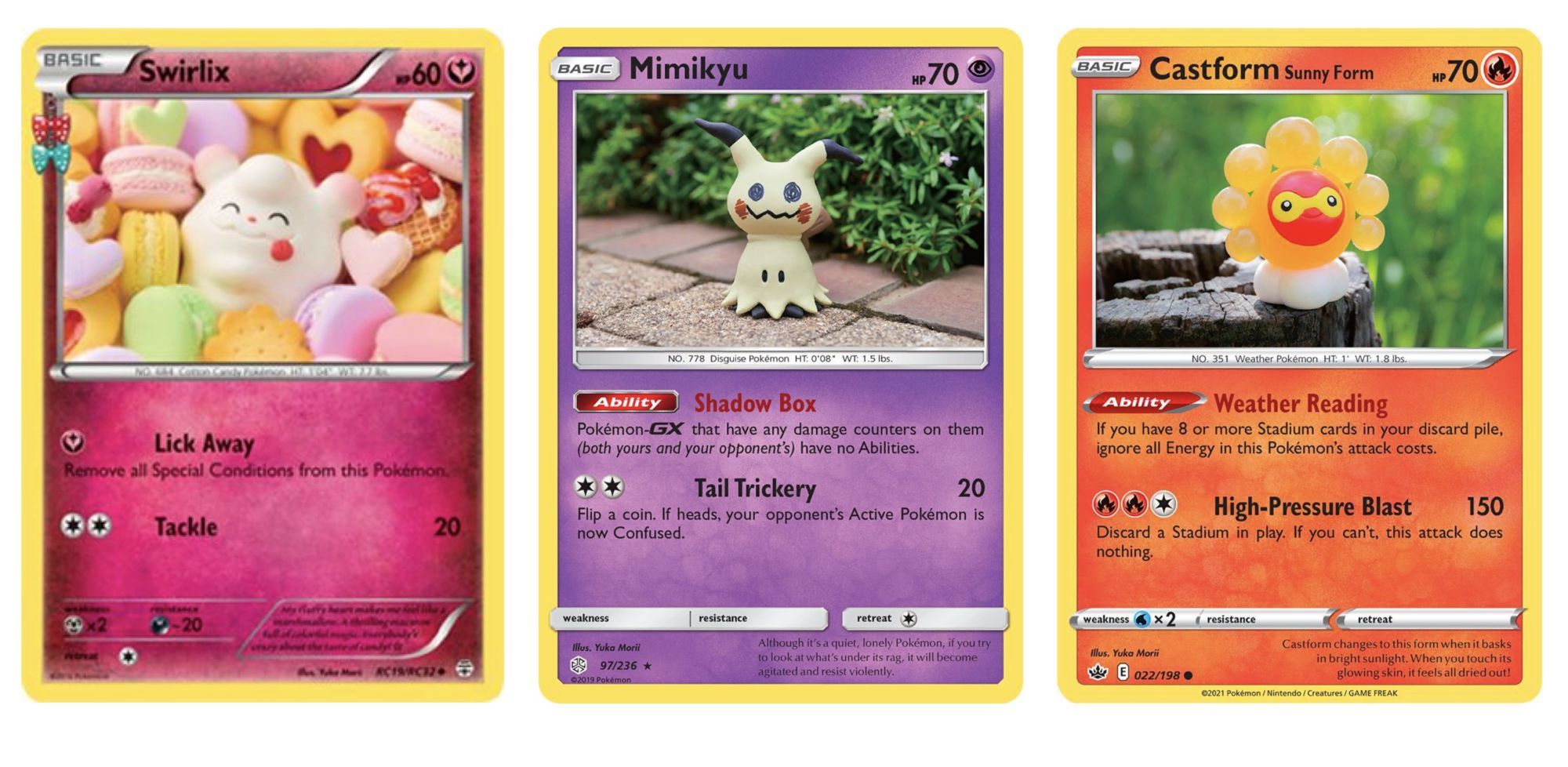
You know those moments when you’re ripping through a fresh booster pack, and suddenly everything stops? No flashy rainbows, no jagged gold borders—just a tiny, hand-sculpted clay figure staring back at you from a real-life forest or a sun-drenched windowsill.
That's the magic of Yuka Morii.
For over 25 years, she’s been the one-woman powerhouse behind some of the most distinct, cozy, and frankly weird cards in the entire hobby. While other artists are out here using high-end digital tablets to draw cosmic dragons, Yuka is literally getting her hands dirty. She molds, she bakes, she paints, and then she takes her little clay buddies outside for a photo shoot.
It’s tactile. It’s grounded. Honestly, it’s a vibe that the modern, hyper-digital TCG landscape desperately needs.
The Artist Who Doesn't Use a Pen
Yuka Morii didn't just stumble into the Pokemon TCG. She’s a professional clay modeler and designer who has been contributing to the game since the Neo Discovery era back in 2000.
If you look at the bottom left of a card and see her name, you aren't looking at a drawing. You’re looking at a photograph of a physical object. She crafts these "Clay Pokémon" by hand, often choosing to depict the smaller, overlooked Mons rather than the massive legendary beasts.
There’s a specific philosophy here. Most Pokemon cards are about "The Big Moment"—the Hyper Beam, the massive explosion, the world-ending power. yuka morii pokemon cards are about the "Little Moments." A Snom chilling in the snow. A Poliwag sitting on a mossy rock. It’s a documentary-style approach to a fictional universe.
The Secret Sauce: Real-World Environments
The craziest part of her process isn't just the clay. It’s the sets.
Instead of Photoshop, Morii often uses real-world locations or hand-built miniature dioramas. When you see a card like her famous Trapinch from EX Dragon, that sand looks real because it is real. The blurry leaves in the foreground? Those aren't a digital filter. That’s actual depth of field from a camera lens.
This creates a "toy photography" aesthetic that makes the Pokemon feel like they could actually exist in our world. It’s a bit like the I Spy books many of us grew up with—you end up staring at the background just as much as the Pokemon itself.
The Iconic "Ditto" Invasion (EX Delta Species)
If you ask any hardcore collector about her best work, they’ll probably point you toward the EX Delta Species set from 2005.
Morii was tasked with a hilarious project: a series of cards featuring Ditto "transformed" into other Pokemon. But because it’s Morii, these aren't perfect copies. They all have that iconic, blank Ditto stare.
- Ditto (Charmander)
- Ditto (Squirtle)
- Ditto (Pikachu)
- Ditto (Mr. Mime)
These cards have become massive fan favorites because they perfectly capture the "derpy" side of the franchise. Seeing a clay-modeled Mr. Mime with a Ditto face is both deeply unsettling and incredibly charming. They’re relatively affordable too, making them a great entry point for anyone starting an artist-specific collection.
Why Collectors Are Obsessed With the "Morii Master Set"
Most people collect Charizards. Some people collect every Pikachu ever printed. But there’s a growing, very dedicated group of people who only collect yuka morii pokemon cards.
Why? Because she has over 200 cards spanning the entire history of the game.
Starting a Morii collection is like a treasure hunt through Pokemon history. You get to see how her photography improved as camera technology evolved from the early 2000s to today. Her early work in Neo Revelation and Neo Destiny has a slightly grainy, nostalgic film feel. Her modern work, like the Aipom Art Rare from the Scarlet & Violet era, is crisp, vibrant, and incredibly detailed.
Complexity in the "Small Things"
There’s a misconception that clay modeling is "simpler" than traditional illustration.
That’s nonsense.
Look at Bruno’s Hitmontop from the Japanese-exclusive Pokemon VS set. The tension in the clay, the way it’s balanced on its head, the tiny painted details on the eyes—it’s a masterclass in 3D design. Because these are physical objects, Morii has to worry about things other artists don't: gravity, lighting, and the structural integrity of the clay itself.
How to Start Your Own Yuka Morii Collection
If you're thinking about diving in, don't just buy random lots. Be strategic.
Since she mostly illustrates Common and Uncommon cards, you can actually build a huge portion of this collection for very little money. You can find "bulk" lots of her cards on eBay or TCGPlayer for pennies.
However, there are a few "Big Boss" cards you'll eventually want to hunt down:
- The Art Rares: Her recent "Illustration Rare" cards (like the Aipom or the Octillery) are stunning and show off what she can do with a full-card canvas.
- The Japanese Promos: Some of her best work, like the Pikachu's Vacation CoroCoro promo, never made it to English.
- The Holos: Occasionally, the TCG gods let Morii do a Holo or a Reverse Holo. The Jumpluff from Aquapolis or the Piloswine from Skyridge are legendary (and pricey) additions.
The 2026 Perspective: Digital Fatigue is Real
As we move further into an era of AI-generated art and hyper-polished digital illustrations, yuka morii pokemon cards feel more important than ever.
There’s something human about seeing a fingerprint in the clay. There’s something authentic about knowing an artist actually went outside, sat in the dirt, and waited for the perfect light to hit a tiny clay model of a Snom. It reminds us that this game started as a labor of love.
If you’re tired of the "Gold Card" arms race and the obsession with "investment" value, go look at some Morii cards. They aren't trying to be the most expensive things in your binder. They’re just trying to be a window into a world where Pokemon are real, made of clay, and hiding in your backyard.
Your Next Step for Your Collection
Instead of scrolling for the next "hit," go to a site like Serebii or Bulbapedia and look up the full list of Yuka Morii’s TCG credits. Sort them by release date. You’ll likely realize you already own ten of them without even knowing it. Pull them out, put them in a dedicated page in your binder, and just appreciate the craftsmanship. It’s a lot more rewarding than checking market prices every ten minutes.