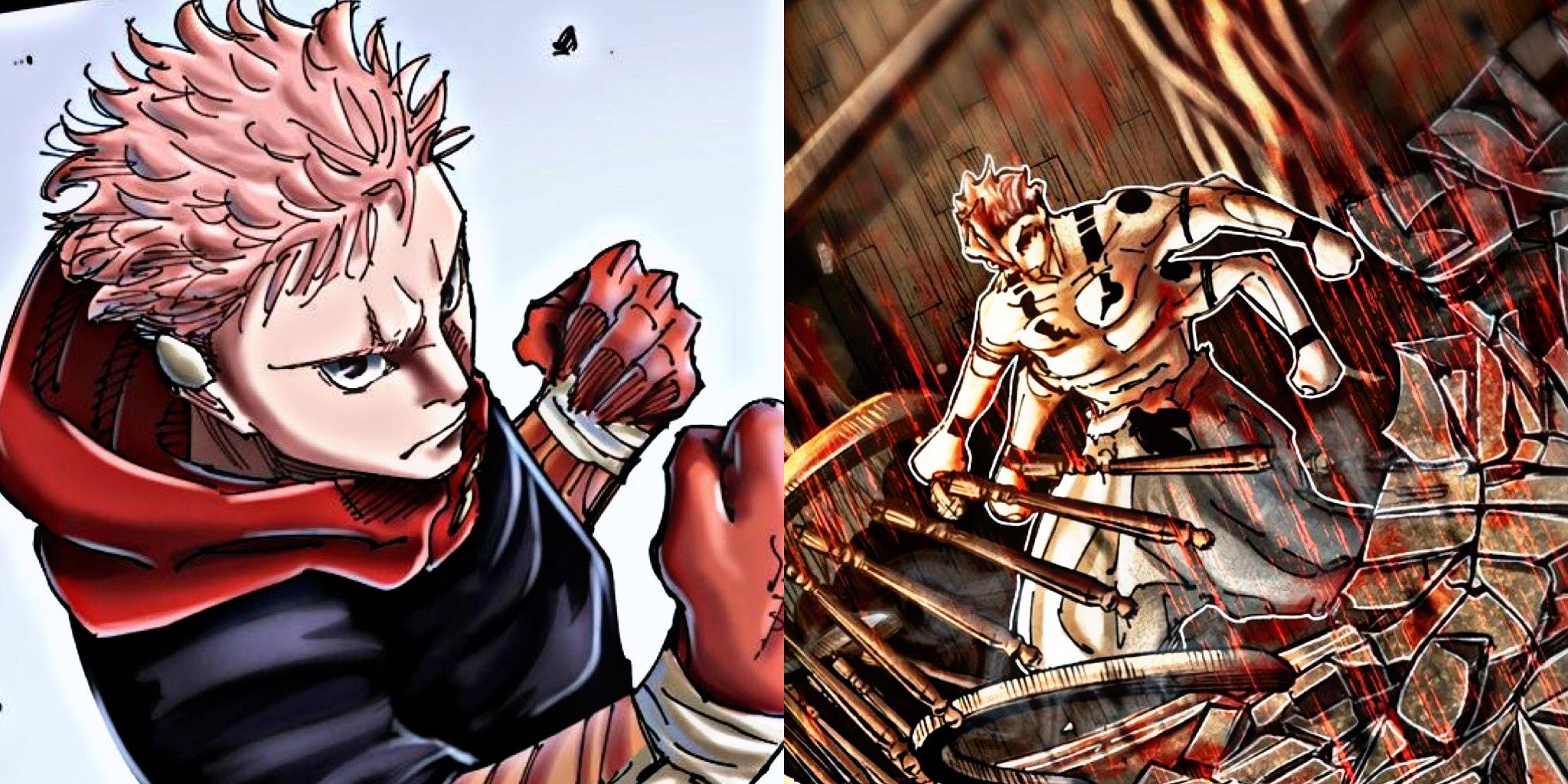
Gege Akutami has a habit of punching readers in the gut when they least expect it. But the moment yuji talks with higuruma during the Culling Game isn't just a sad scene. It’s a total breakdown of everything we thought we knew about Yuji’s mental state after the Shibuya Incident.
Honestly, most fans remember the fight for the lawyer’s crazy Domain Expansion, "Deadly Sentencing." But the conversation that happens after the gavel drops is where the real story lives. It's the moment Yuji stops being just a shonen protagonist and becomes someone deeply, perhaps irrevocably, broken. Meanwhile, you can explore related events here: The Anatomy of a Public Doubt.
The Trial That Wasn't About the Law
When Yuji enters Hiromi Higuruma’s domain, he isn't fighting a sorcerer in the traditional sense. He’s fighting a system. Higuruma, a genius lawyer who snapped after seeing the rot in the Japanese legal system, uses a shikigami named Judgeman to hold trials.
Basically, the domain forbids all violence. No punching. No Cursed Energy. Just a courtroom. To understand the full picture, we recommend the excellent article by Variety.
Most characters would try to lie their way out of a charge. If Judgeman accuses you of entering a shop you weren't supposed to, you'd argue you were looking for a bathroom. That’s what Yuji tried at first. But then, the retrial happened. And the charge changed to something much darker: the mass murder in Shibuya.
Why Yuji’s Confession Shocked Higuruma
You’ve gotta realize that Higuruma’s domain works on evidence. He gets a file from Judgeman that contains the "truth" of the case. When Yuji was accused of the Shibuya massacre, Higuruma already knew the truth. He knew it wasn't Yuji. It was Sukuna.
Sukuna took over Yuji’s body, unleashed a Malevolent Shrine, and leveled blocks of the city. Yuji was a passenger in his own skin. Legally and morally, he wasn't the killer.
But when the accusation was read, Yuji didn't hesitate. "Yeah. I did it."
That three-word confession changed everything. Higuruma, a man who had become disgusted with humanity because everyone lies to save themselves, was suddenly staring at a fifteen-year-old kid who was trying to take the blame for a literal apocalypse.
The Conversation Under the Executioner's Sword
After Yuji is sentenced to "Death" and "Confiscation," Higuruma gains the Executioner's Sword—a weapon that kills anyone it touches instantly. But as they fight, Higuruma starts to realize something is wrong.
He sees Yuji's eyes. There’s no malice. There’s just a crushing weight of responsibility.
Eventually, the fight stops. They just... talk. Higuruma explains the legal loophole. He tells Yuji that under "Article 39 of the Penal Code," a person cannot be held responsible if they weren't in control of their actions. He basically tells Yuji, "Kid, you’re innocent."
Yuji’s response is what makes this the most depressing part of the Culling Game. He doesn't feel relieved. He doesn't say "Oh, thank god." He just looks at Higuruma and insists that because he was the one who ate the finger, and because it was his body that did the killing, the blood is on his hands.
It’s a fundamental clash of worldviews.
- Higuruma: The law defines guilt.
- Yuji: My conscience defines guilt.
What This Interaction Means for the Future
The bond formed here is weirdly one of the purest in the series. Higuruma enters the story as a cynical killer who has murdered judges and lawyers. By the time yuji talks with higuruma and they finish their conversation, Higuruma has found a reason to believe in people again. He sees that if a kid like Yuji can be that honest—even when it hurts—then maybe the world isn't entirely rot.
This is why Higuruma eventually decides to help the sorcerers. He doesn't do it because he loves Jujutsu High. He does it because he wants to be the lawyer for the "guilty" boy who is actually the most innocent person in the room.
Key Takeaways from the Yuji-Higuruma Dynamic:
- The Power of Honesty: Yuji’s refusal to lie is what actually "defeated" Higuruma’s cynicism.
- Self-Induced Guilt: Yuji is suffering from "survivor's guilt" on a cosmic scale.
- Legal vs. Moral: The scene highlights that being "not guilty" in a court of law doesn't mean you feel "innocent" in your heart.
If you're catching up on the manga or waiting for the anime to hit this arc, keep an eye on Higuruma’s face during the trial. The transition from a cold, distant judge to a man who feels genuine pity for his "defendant" is some of Gege's best character work.
To really understand where Yuji goes from here, you have to look at how he treats himself after this talk. He stops valuing his own life as much. He starts seeing himself as a "cog" in a machine. It's a dark path, and it all started with that confession in the courtroom.
Next time you re-read these chapters, look closely at the evidence envelope Higuruma holds. It’s a reminder that while the world might have proof of your innocence, only you can decide if you're actually free.
Actionable Insight: If you're analyzing this arc for a theory or video, focus on the "Cog Mentality" Yuji adopts immediately following this fight. It directly correlates to his conversation with Higuruma and explains his suicidal bravery in the later battles against Sukuna.



