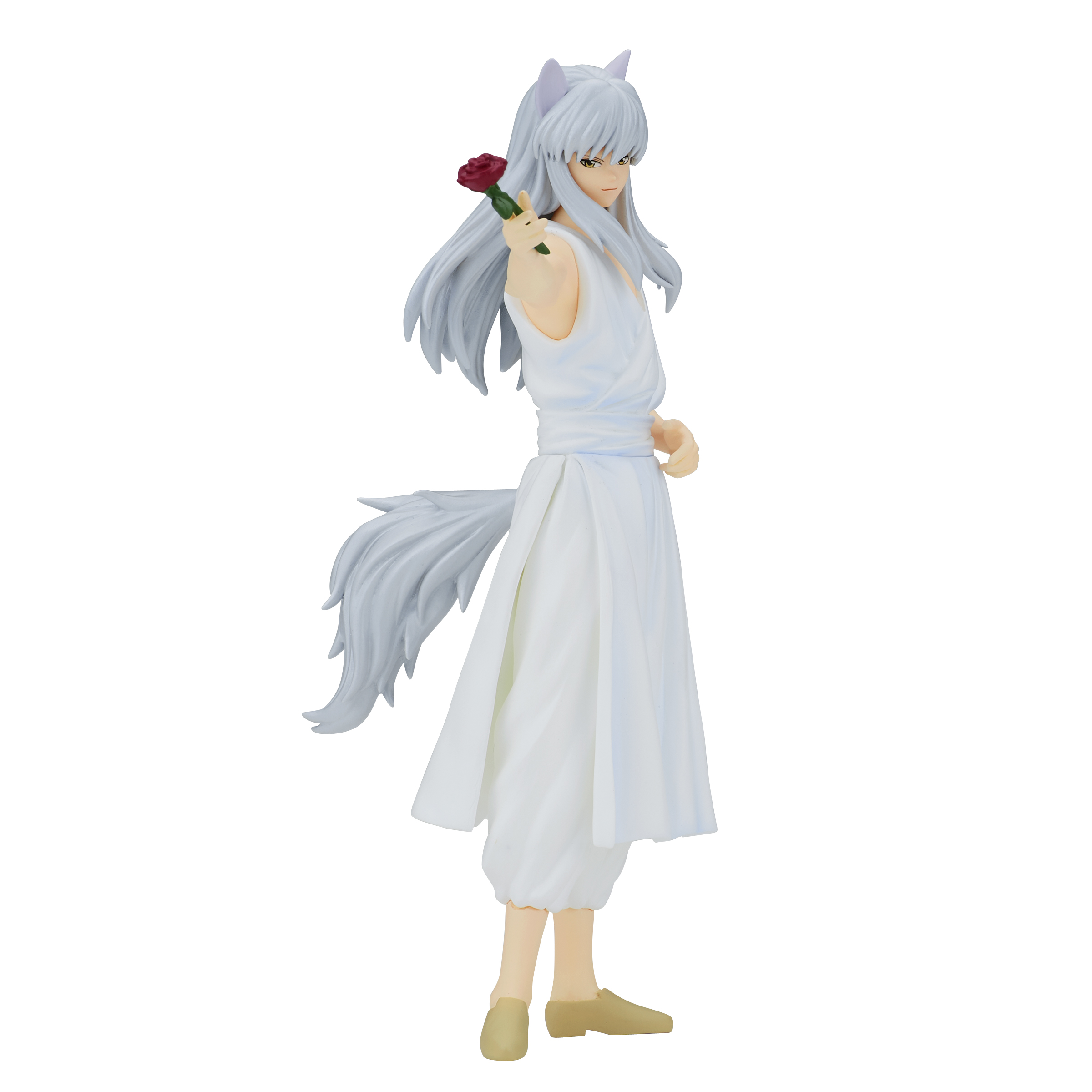
He’s the guy who brought a rose to a supernatural fistfight and won. Honestly, when you first see Yu Yu Hakusho Kurama on screen or in the pages of Yoshihiro Togashi’s manga, he doesn’t look like much of a threat compared to a spirit detective with a glowing finger or a three-eyed fire demon. He looks like a polite student. A bit soft. Maybe even a little too pretty for the grittiness of the Spirit World. But that’s exactly how he gets you.
Kurama isn't just a fan favorite because of the long red hair or the calm voice. He’s the blueprint for the "tactician" archetype that dominated 90s anime and still influences series today. Most shonen characters scream until their hair turns a different color. Kurama? He just smiles, explains how he’s already poisoned you, and watches you realize your lungs are filled with demonic flower petals. It's brutal. It's calculated. And even decades after the series ended, no one has quite managed to replicate that specific blend of ruthless efficiency and genuine human kindness.
The Dual Soul of Shuichi Minamino
To understand Kurama, you have to understand the weird, symbiotic tragedy of his existence. He isn't just one person. He’s a legendary silver-haired fox demon, Yoko Kurama, who was wounded by a Spirit World hunter and fled to the human realm. He possessed an unborn human infant named Shuichi Minamino to hide and recover his strength. The plan was simple: stay for ten years, regain his powers, and vanish.
But human life is sticky.
He didn't count on Shiori Minamino. His human mother didn't treat him like a monster or a fugitive; she treated him like a son. When Shiori fell ill, the cold-blooded thief who had lived for centuries was gone. In his place was a boy willing to sacrifice his own life to the Forlorn Hope mirror just to save her. This is where Yu Yu Hakusho Kurama becomes the moral heart of the team. He’s the bridge between the demonic and the human, far more than Yusuke Urameshi ever was. While Yusuke is a human learning to handle demon power, Kurama is a demon learning why human emotions aren't a weakness.
It’s a heavy dynamic. Togashi writes him with this constant, simmering internal conflict. He’s terrified of his own past. He hates the cruelty of Yoko Kurama, yet he relies on that same cruelty to protect the people he loves. It’s messy and complicated, which is why he feels like a real person despite being a thousand-year-old fox spirit.
Why the Rose Whip is More Than a Gimmick
Let’s talk about the combat. Shonen battles are usually about who can punch the hardest or shoot the biggest beam of energy. Kurama doesn't play that game. His "Rose Whip" is iconic, but it’s basically just a delivery system for his real power: biological warfare.
He uses plants. Not just any plants, but flora from the Demon World that do things you’d see in a David Cronenberg movie. Remember the Sinning Tree? It’s probably the most horrifying fate in the entire series. He trapped Elder Toguro in a perpetual hallucination where he’s being consumed by a parasite forever. Kurama didn't do it because he was "evil." He did it because Toguro was a monster who wouldn't stay dead, and Kurama found the most logical, permanent solution to stop him.
- He turns a simple rose into a serrated blade.
- He grows seeds inside people’s chests to burst out of their ribs.
- He uses petals to track enemies through invisible dimensions.
The creativity is what sticks. In the Dark Tournament saga, specifically the fight against Karasu, we see Kurama at his absolute limit. He’s outmatched in raw power. He’s bleeding out. But he wins because he understands the biology of his opponent and his own environment better than anyone else. It’s a chess match, and he’s usually five moves ahead before the first punch is even thrown.
The Yoko Transformation and the Loss of Control
Whenever the silver hair comes out, you know things have gone south. Yoko Kurama is the "true" form, a cold, calculating master thief who feels almost zero empathy. For a long time, fans saw Yoko as the "cool" version, the power-up. But Togashi is a smarter writer than that.
The return of Yoko Kurama is actually a source of massive trauma for the character. It represents a loss of the humanity he spent years cultivating. In the Chapter Black arc, when he faces off against Sensui’s subordinates, there is a palpable sense of dread every time he leans into his demon side. He isn't "powering up" to save the day; he’s sacrificing his peace of mind to become a weapon.
You see this most clearly in his relationship with Hiei. They’re the "cool" duo, but they’re also mirror images of each other. Hiei is trying to find his place in a world he hates, while Kurama is trying to keep the world he loves from seeing the monster he used to be. Their chemistry works because they don't need to explain their pasts to each other. They just get it.
The Reality of the Netflix Live Action Adaptation
If you’ve seen the 2023 Netflix live-action version, you noticed they had a massive hurdle. How do you make that hair look real? How do you make a guy with a rose look intimidating in high-definition? Jun Shison’s portrayal was actually surprisingly grounded.
The adaptation leaned heavily into the "Shuichi" aspect of the character. It focused on his devotion to his mother, which served as the emotional anchor for the first few episodes. While some purists missed the more flamboyant demon-summoning sequences from the manga, the show succeeded in capturing his stillness. Kurama is a character of silence. He observes. He waits. The live-action version understood that his presence is felt most when he isn't saying anything at all.
What Other Shonen Can Learn From Him
Most modern series try to do the "smart character," but they often make them too perfect. They have all the answers. They never make mistakes.
Yu Yu Hakusho Kurama is different because his intelligence is a burden. He knows exactly what he has to do to win, and often, what he has to do is something horrible. He doesn't enjoy the violence. He’s a pacifist forced into a world of killers. That tension is what makes him the most relatable member of Team Urameshi, even more so than the "average" teenager Yusuke.
Actionable Takeaways for Fans and Writers
If you're looking to dive deeper into the lore or even write your own characters inspired by him, keep these specific points in mind:
- Look at the source material beyond the anime. The manga version of Kurama is significantly more ruthless. Togashi’s art style in the later chapters—especially during the Three Kings arc—emphasizes his alien, unsettling nature. The anime softened him a bit, so the manga provides a much darker, more nuanced look at his psyche.
- Analyze the "Botanical" strategy. Kurama's fights aren't about strength; they're about the environment. If you’re a writer, study how he uses the setting to his advantage. He rarely wins on a flat, empty plain. He needs variables.
- The "Mother" Anchor. Never forget that his entire character arc is rooted in a domestic, mundane love. If you remove Shiori Minamino, Kurama becomes just another generic demon villain. It’s the contrast between the cosmic demon power and the simple act of a son caring for his sick mother that creates the spark.
Moving Forward with the Franchise
Even though Yu Yu Hakusho concluded its original run in 1994, the character of Kurama remains a pillar of the genre. You see his DNA in characters like Sasori from Naruto or even certain aspects of Jujutsu Kaisen’s tactical combat.
To really appreciate the depth here, go back and watch the fight against Amanuma (The Game Master). It’s not a physical fight. It’s a psychological breakdown of a child. Kurama has to kill a kid to save the world, and he does it with a chilling, surgical precision. It’s one of the darkest moments in shonen history, and it perfectly encapsulates why Kurama is the most dangerous person in the room. He will do what the "hero" cannot. He will carry the guilt so nobody else has to.
Your Next Steps: If you want to revisit the best of the character, start with the Dark Tournament arc (Episodes 33-66). Specifically, focus on the "Shadow Channelers" and the fight against Karasu. Afterward, read the Chapter Black manga chapters to see the art that the anime couldn't quite capture. It'll give you a whole new appreciation for why this fox demon is still the king of the genre.



