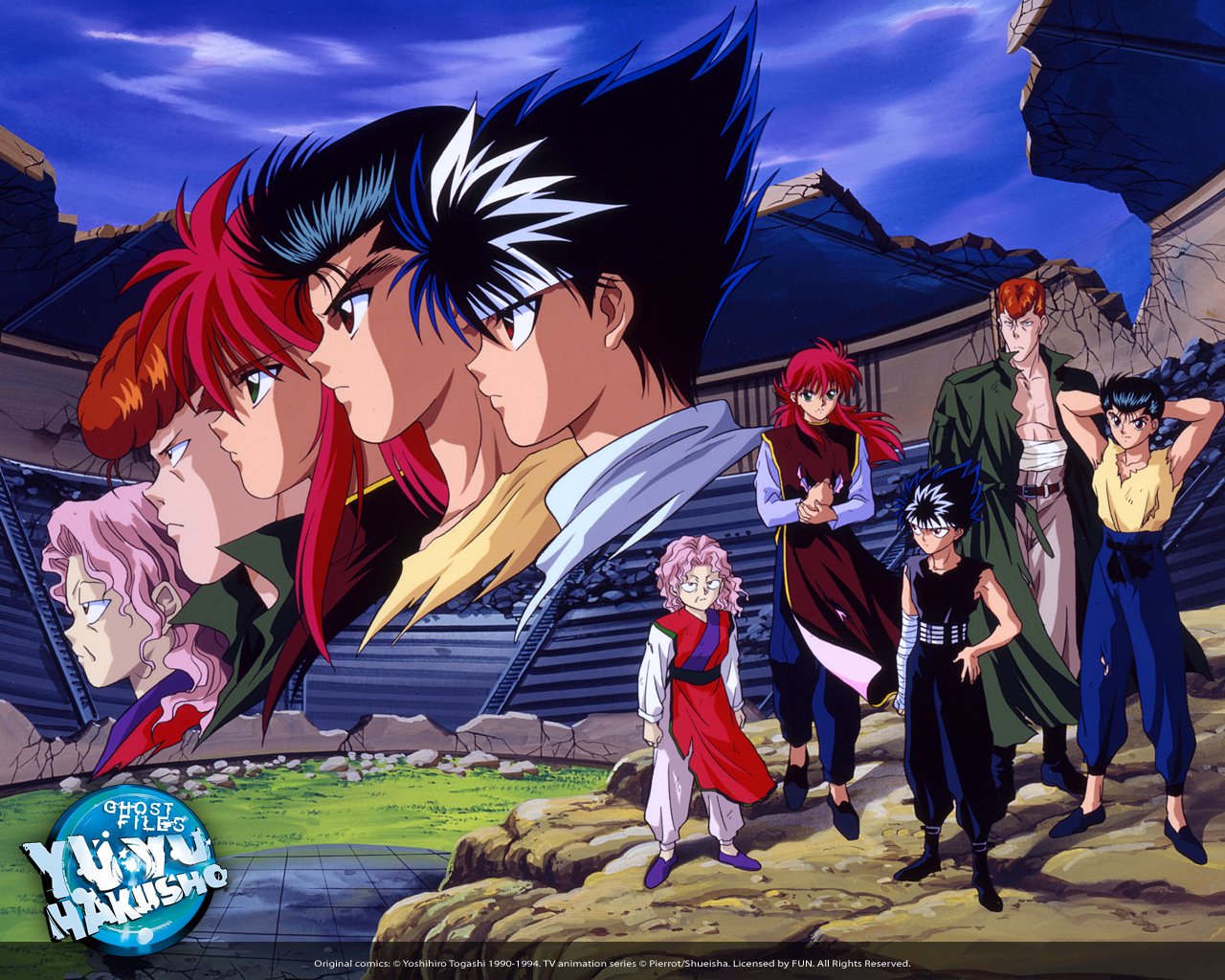
Hiei wasn't supposed to stay. Honestly, if you look back at the early chapters of Yoshihiro Togashi’s Yu Yu Hakusho, the short, spiky-haired demon with the clinical cynicism was just another "villain of the week." He was a thief. He was arrogant. He got beaten by a greenhorn Yusuke Urameshi using a reflection in a piece of glass. But something happened. Fans latched onto him, and Togashi, being the intuitive storyteller he is, realized that Hiei was the perfect foil to Yusuke’s brash optimism.
He’s the blueprint. Before Sasuke Uchiha started brooding in the corner or Vegeta decided that being a dad was actually okay, Hiei was redefining what it meant to be a "cool" rival. He didn't want to save the world. He just happened to be standing on it when things went south. You might also find this similar article interesting: The Last Blade in the Screening Room.
The Jagan Eye and the Price of Power
People always talk about the Jagan Eye like it's just a power-up. It's not. In the lore of Yu Yu Hakusho, Hiei’s decision to undergo the surgery to implant the third eye was an act of absolute desperation. He was a Fire Demon born to an Ice Maiden—a "Forbidden Child." Cast out from the floating glacial village of his mother, Hina, he spent his youth as a mercenary, fueled by a singular, obsessive goal: finding the Ice Tear stone he lost during his fall, and finding his sister, Yukina.
The surgery, performed by the demonic surgeon Shigure, wasn't some magical gift. It stripped Hiei of nearly all his original power. He went from being an A-Class demon back down to the lower rungs of D-Class just for the chance to track his sister. That’s the nuance people miss. He sacrificed his natural-born strength for a tool that would let him find his family. It's a deeply human motivation hidden behind a wall of "I don't care about anyone" dialogue. As reported in latest coverage by IGN, the implications are widespread.
When he finally finds Yukina, he doesn't even tell her who he is. Why? Because Shigure made him promise as part of the "payment" for the surgery. But also because Hiei thinks he’s too "stained" by his past to be a brother to someone as pure as an Ice Maiden. It’s tragic. It’s classic Togashi.
Why Everyone Gets the Dragon of the Darkness Flame Wrong
If you ask a casual fan about Yu Yu Hakusho Hiei, they’ll immediately mention the black dragon. The Dragon of the Darkness Flame (Enatsu Rengoku Sho) is arguably the most iconic move in the series, but its debut in the Dark Tournament against Zeru changed the stakes of shonen battles forever.
Most anime attacks are just "beam struggles." You fire a blast, I fire a bigger one. But Hiei’s dragon is a sentient, volatile entity. It doesn't just hit the opponent; it consumes the user. After he used it the first time, his arm was essentially charred meat. He had to wrap it in those iconic suppressed bandages because the energy was too unstable to contain.
- It isn't just fire; it's black fire from the depths of the Demon Plane.
- Hiei eventually learns to "absorb" the dragon to boost his physical stats, which was a wild concept in the early 90s.
- The move actually failed him a few times, showing that even the "cool guy" has limits.
The mastery of this technique is a metaphor for Hiei’s entire character arc. He starts by trying to control the darkness around him, then he tries to weaponize it, and eventually, he learns to live with it. By the time we get to the Chapter Black arc and the fight against Sensui, Hiei isn't just a fire demon anymore. He’s a master of his own internal chaos.
The Dynamics of the Team: Not Just a Loner
The "brooding loner" trope is usually boring. It works with Hiei because his relationships are built on unspoken respect rather than "power of friendship" speeches. His rivalry with Kuwabara is the soul of the show's comedy. He calls Kuwabara an "idiot" or "bumbling human" roughly five times an episode, but when push comes to shove, Hiei is the one watching Kuwabara’s back.
Then there’s Kurama. This is the most complex relationship in the series. They were partners in crime before they met Yusuke. They understand each other's "darkness" in a way the humans can't. While Yusuke is the heart of the team, Hiei and Kurama are the pragmatic, sometimes ruthless, brains. They know what it's like to have blood on their hands.
The Demon World Unification and the Ending That Divided Fans
When the series moved into the Three Kings arc, Hiei’s backstory finally came full circle. Finding out he was essentially a pawn in the larger political games of the Demon Plane (Makai) was a reality check. Working under Mukuro—one of the three rulers—gave Hiei a mirror. Mukuro was also a survivor of horrific trauma.
Their relationship is weird, right? It's not exactly a romance, but it's the closest Hiei ever gets to true intimacy with another demon. He gives her his Ice Tear stone as a birthday present. For Hiei, that’s the equivalent of a marriage proposal and a blood oath rolled into one. He chose to stay in the Demon Plane not because he hated humans, but because he finally found a place where he didn't have to hide his nature.
Actionable Takeaways for Fans and Collectors
If you're looking to dive deeper into Hiei's legacy or start a collection, keep these specifics in mind to avoid the "bootleg" traps and shallow interpretations:
- Watch the Sub vs. Dub: Justin Cook’s performance in the Funimation dub is legendary and gives Hiei a raspy, cynical edge that fits perfectly. However, the original Japanese voice (Nobuyuki Hiyama) captures a more "aristocratic" demon vibe. Both are valid, but they change how you perceive his personality.
- The Manga has more "Grit": Togashi’s art in the later volumes of the manga gets very experimental. Hiei’s fights are much more brutal on paper than they were allowed to be on TV in the 90s. If you’ve only seen the anime, you're missing about 20% of his "edge."
- Figure Collecting: If you're looking for Hiei merch, the Kotobukiya ARTFX J statue is widely considered the gold standard for accuracy. Avoid the generic "unlicensed" resins unless you've checked the sculptor's history; many of them mess up the hair-to-face ratio, which is notoriously hard to get right with Hiei.
- The Live Action Version: The Netflix live-action adaptation took some liberties with Hiei’s introduction. While the VFX for the Jagan Eye are cool, the pacing skips a lot of his early development. Use the live-action as a visual companion, but trust the 112-episode anime for the actual character depth.
Hiei remains relevant because he represents the struggle of identity. He’s a guy born into a world that told him he shouldn't exist, who spent his life trying to find a reason to keep going, and eventually found it in the most unlikely place: a group of loud-mouthed humans and a fox demon. He’s not a hero. He’s a survivor. And honestly? That’s way more interesting.



