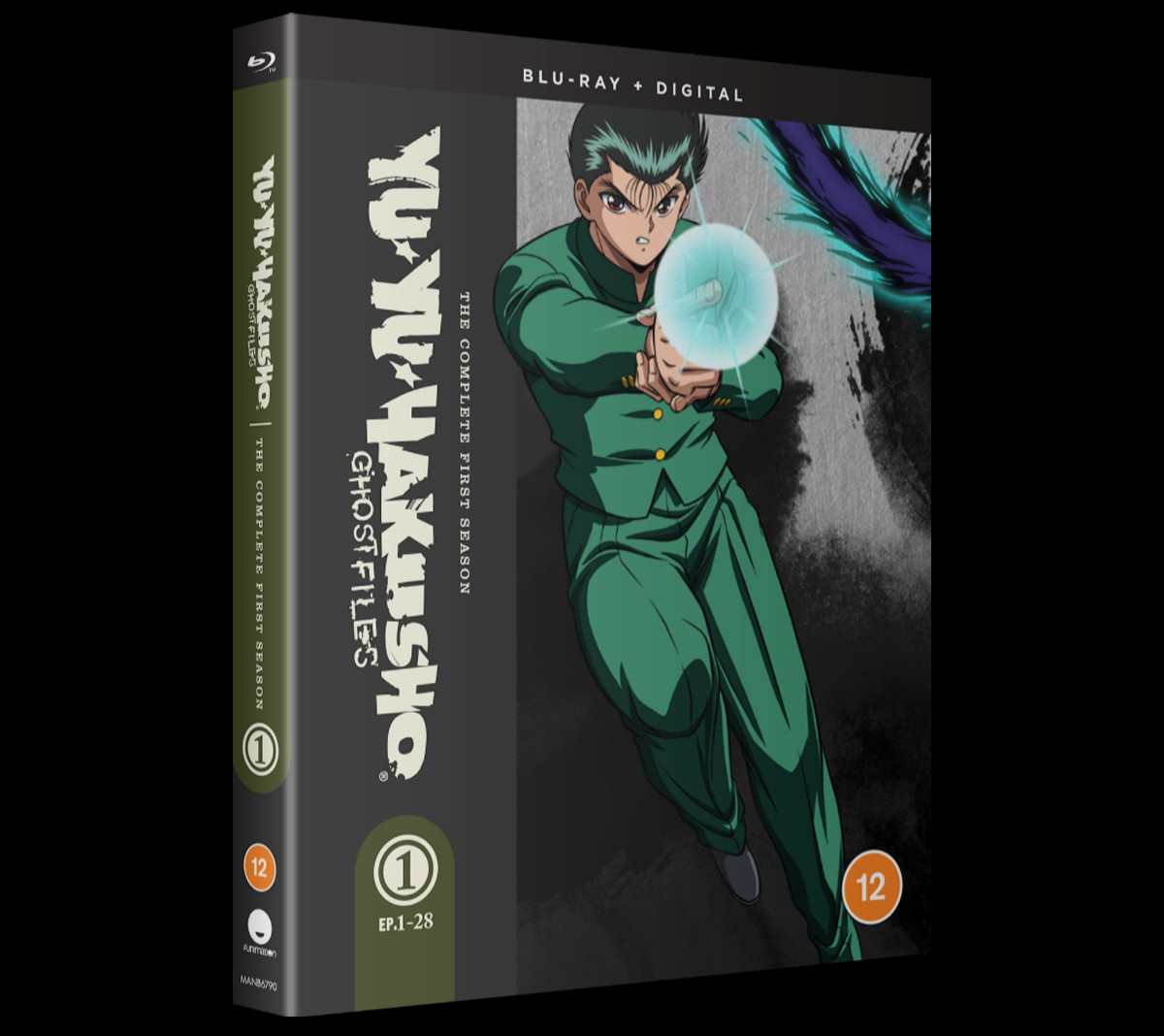
Yu Yu Hakusho: Ghost Files Season 3 hits differently. Most fans call it the Chapter Black Saga. It’s gritty. It's weirdly philosophical. If you grew up watching Yusuke Urameshi headbutt his way through the Dark Tournament, the shift here probably gave you whiplash. We went from a high-stakes wrestling ring to a psychological thriller involving urban legends and a depressed ex-Spirit Detective.
Honestly, it’s the best part of the show.
Yoshihiro Togashi, the creator, clearly started getting bored with standard power levels. You can feel it in the writing. Instead of just "who hits harder," Season 3 introduced "Territories." These were specific zones where the rules of physics just... stopped. Inside a Territory, you couldn't use spirit energy if the owner said so. You had to play by their games. It was a precursor to the Nen system he’d later perfect in Hunter x Hunter.
Why the Chapter Black Saga Changes Everything
The transition from Season 2 to Yu Yu Hakusho: Ghost Files Season 3 is jarring for a reason. The Dark Tournament was the pinnacle of the battle manga formula. Team Urameshi won. They were the strongest. So, where do you go from there? You go internal.
Shinobu Sensui is the antagonist here, and he’s arguably one of the most complex villains in anime history. He wasn't born evil. He was Yusuke’s predecessor. He was a prodigy with a black-and-white view of justice until he saw the "Feast of Vice." He saw humans being more demonic than the demons he was hired to kill. It broke him. Literally. He developed seven different personalities to cope with the trauma.
This season asks a heavy question: Is humanity actually worth saving?
The Shift to Psychological Warfare
Forget the Spirit Gun for a second. In the early episodes of Yu Yu Hakusho: Ghost Files Season 3, the battles are won with wit. Take the encounter with Kaito. He’s a high school kid who can create a zone where you can’t say specific words. If you say the forbidden word, your soul gets ripped out.
It’s stressful to watch.
Hiei, the ultimate "edgelord" of the 90s, gets taken out almost immediately because he’s too impulsive to follow the rules of a word game. This was Togashi telling the audience that the old rules didn't apply anymore. You couldn't just power up and scream your way out of a problem. Kurama, being the genius he is, becomes the MVP of these early Season 3 episodes. His fight against the "Gamemaster" (a literal child named Amanuma) is heartbreaking because Kurama realizes the only way to win is to mentally destroy a kid who doesn't understand the stakes of the game he's playing.
The Seven Psychics and the Hole to Demon World
The plot centers on a literal hole being bored between the Human World and the Demon World. Sensui recruits six other humans with supernatural "Territory" abilities to help him. They aren't all monsters. Some are just bored. Some are outcasts.
- Itsuki: A demon who loves Sensui. He handles the shadows and keeps the barrier stable.
- Hagiri (Sniper): He can turn any object—even a pebble or a dice—into a lethal projectile that never misses.
- Kamiya (Doctor): He can create viruses and reassemble his own limbs. He’s terrifying because he’s a medical professional who just wants to see people suffer.
The pacing in Season 3 is relentless. We move from Mushiyori City to a cave where the barrier is thinning. The atmosphere is thick with dread. Unlike the previous seasons, there's no crowd cheering. There are no commentators. It's just a small group of teenagers trying to stop the apocalypse in a dark, damp cave.
Yusuke’s Identity Crisis
By the time we reach the climax of Yu Yu Hakusho: Ghost Files Season 3, Yusuke faces a wall he can't climb. Sensui is too fast. He has "Sacred Energy," a tier of power that even the strongest demons can't touch.
Then, Yusuke dies. Again.
This is the big twist that everyone remembers. It turns out Yusuke isn't just a lucky punk from the streets. He has the "Atavism of the Mazoku." Basically, he has ancestral demon blood that only activates when he reaches a certain level of power and then dies. It’s a controversial trope, sure. Some people think it cheapens his hard work. But in the context of Season 3, it serves a narrative purpose. It alienates him from the humanity he’s trying to protect.
When he comes back with long hair and tribal tattoos, he isn't himself. He’s being possessed by his ancestor, Raizen. The fight that follows is a one-sided slaughter. It’s satisfying but also deeply unsettling because Yusuke didn't "win" the fight—something else won it for him.
The Production Quality of Season 3
Studio Pierrot really leaned into the "noir" aesthetic for this arc. The color palette is muted. There’s a lot of heavy contrast and shadow work. If you compare the bright, neon lights of the Dark Tournament to the rainy, grey streets of Mushiyori City, the difference is night and day.
The music changed too. The soundtrack shifted toward jazzier, more experimental tracks that fit the psychological tension.
Critics often point out that the animation in Yu Yu Hakusho: Ghost Files Season 3 fluctuates. There are episodes directed by Akiyuki Shinbo (who later did Bakemonogatari and Madoka Magica) that look avant-garde and incredible. Then there are "in-between" episodes that look a bit rough. But the direction is always inspired. The way they frame Sensui’s different personalities through mirrors and reflections is top-tier visual storytelling.
Legacy and Impact
Without Chapter Black, we don't get Hunter x Hunter. We don't get the "Chimera Ant Arc." This was Togashi deconstructing the hero's journey in real-time. He was exploring the idea that the "good guys" aren't always good and the "monsters" are often just reflections of our own failures.
It’s a cynical season. It ends on a bittersweet note. Sensui gets what he wants—to die in the Demon World—and Yusuke is left feeling empty. He saved the world, but he lost his sense of who he was.
How to Experience Season 3 Today
If you're looking to revisit this arc, don't just skim it. The nuances are in the dialogue.
1. Watch the Japanese Sub for Sensui's voices. The voice acting (Seiyuu) work for Sensui is a masterclass. Switching between the polite, murderous, and childlike personalities requires incredible range. The English dub is also legendary, especially Justin Cook's performance as Yusuke, but the original Japanese performance for the villain is haunting.
2. Pay attention to the "Territory" rules. Modern anime like Jujutsu Kaisen (Domain Expansions) and JoJo's Bizarre Adventure (Stands) owe a massive debt to the psychic battles in this season. Seeing where these ideas originated makes the viewing experience much richer.
3. Analyze the "Chapter Black" tape concept. In the show, there's a literal VHS tape containing the worst sins of humanity. While it's a plot device, it's a metaphor for the information overload and the loss of innocence. In 2026, where we are bombarded with grim news cycles daily, the concept of a "Chapter Black" feels more relevant than it did in the 90s.
4. Check out the manga version of the ending. The anime softens some of the darker edges of the Sensui fight. If you want the full, unfiltered Togashi experience, the manga chapters covering the end of this arc are visceral.
Yu Yu Hakusho: Ghost Files Season 3 remains a mandatory watch for anyone who wants to understand how the shonen genre evolved. It's not just about fighting; it's about the cost of fighting. It’s about growing up and realizing the world is a lot messier than you were told.
When you finish the season, look at the way the characters have changed. They aren't the same kids who started the series. They're tired. They're wiser. And they're much more human, even the ones who are half-demon. That's the real magic of this arc. It stays with you long after the final credits roll.



