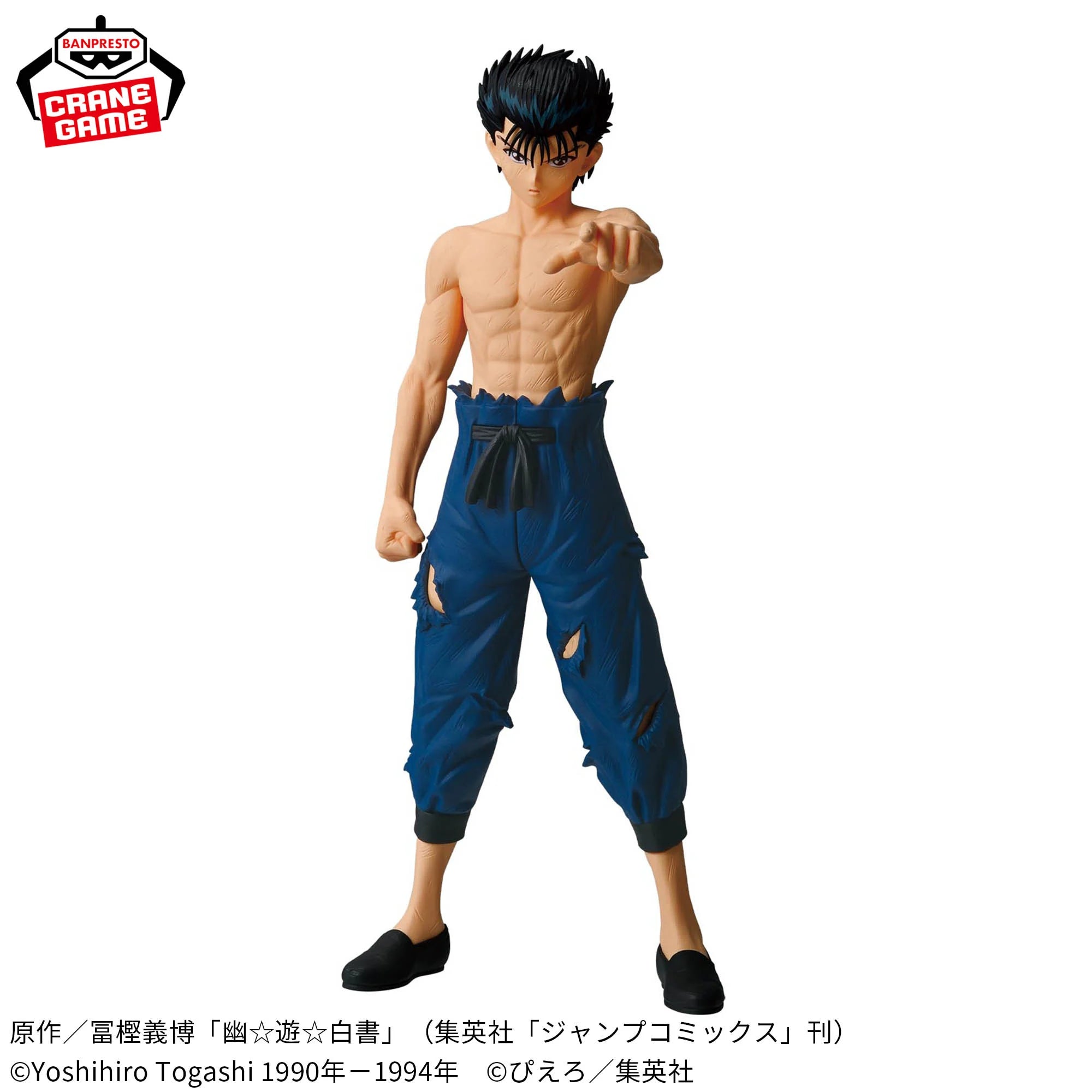
Spirit Gun. Dragon of the Darkness Flame. Rose Whip. If those names don't immediately conjure up a specific shade of 90s nostalgia, you probably weren't scouring hobby shops or early internet forums for Yu Yu Hakusho figures back in the day. It’s wild. Yoshihiro Togashi’s masterpiece ended its run in the mid-90s, yet the market for these collectibles is arguably more vibrant in 2026 than it was a decade ago. It isn't just about old guys reliving their youth. New fans are finding the show on streaming platforms and realizing that Yusuke Urameshi is, frankly, a much more relatable protagonist than half the "chosen ones" in modern shonen.
But collecting this series is a minefield.
Honestly, the "spirit detective" merchandise landscape has changed so much. We went from those blocky, charmingly ugly 1990s Japanese releases to the high-fidelity resin statues that cost as much as a used car. You’ve got to know the difference between a mass-produced prize figure and a limited-run Kotobukiya piece if you don't want to get ripped off on the secondary market.
The Kotobukiya ARTFX J Standard
If you talk to any serious collector about Yu Yu Hakusho figures, the conversation usually starts and ends with Kotobukiya. Their ARTFX J line is basically the gold standard. They captured the "swagger" of the characters. That’s the only word for it. When they released the initial Yusuke, Kurama, Hiei, and Youko Kurama set, it changed everything.
These aren't just plastic molds. They have texture. You can see the specific way Yusuke’s green jacket bunches at the shoulders. The Hiei figure, specifically the one with the removable "Dragon of the Darkness Flame" effect part, is a masterpiece of engineering. Most companies fail at Hiei because his hair is notoriously difficult to translate into 3D without looking like a sea urchin. Kotobukiya nailed the sharp, aggressive angles.
Prices for these fluctuate like crazy. A few years back, you could snag a re-run for about $80. Now? If you’re looking for a first-edition box, expect to pay a premium. People love these because they sit at that perfect intersection of "high quality" and "doesn't require a dedicated shelf reinforced with steel."
Bandai, Banpresto, and the Prize Figure Gamble
Not everyone has hundreds of dollars to drop on a single piece of PVC. That’s where the prize figures come in. You’ve seen them—the boxes in the back of the local anime shop or all over eBay. Banpresto has been churning these out under labels like DXF or the more recent Vibration Stars line.
They're affordable. They're accessible. But are they actually good?
Kinda.
The Vibration Stars Yusuke Urameshi is actually decent for the price. It captures him mid-Spirit Gun, and the facial sculpt is surprisingly accurate to the anime’s later, more polished art style. However, prize figures often suffer from "seam line" syndrome. You’ll see a giant line running through the hair or across the shoulder where the plastic pieces were snapped together in the factory. If you’re a perfectionist, these will drive you nuts. If you just want a cool-looking Yusuke on your desk, they’re a steal.
Then there is the Dasin Model (Great Toys) situation. These are technically third-party (unlicensed) but ask any hardcore fan—they are legendary. Their articulated figures often outperform the official SH Figuarts or Figma releases in terms of accessories and "shelf presence." They gave us a Kuwabara that actually looks like a tough street fighter instead of a caricature. It’s a weird legal gray area, but in the world of Yu Yu Hakusho figures, fans often prioritize accuracy over a logo on the box.
Why Is Kuwabara Always Forgotten?
It’s the great tragedy of the series. Kazuma Kuwabara is the heart and soul of the Team Urameshi, yet he has the fewest figures.
Look at the ratios. For every ten Hiei or Kurama figures, we might get one Kuwabara. Manufacturers seem to think western fans only want the "cool" guys with the swords and the angst. But Kuwabara collectors are die-hards. When Union Creative finally released their "Sofubi" style or when the older figures pop up on Mandarake, they sell out instantly.
If you are looking for a high-end Kuwabara, your options are limited. Most people end up hunting down the old 1994 Bandai Super Battle Collection. They’re small, they have zero articulation, and they look like they were carved out of a potato, but they have soul. They represent an era before everything was hyper-rendered in 4K.
Spotting the Fakes: The Bootleg Epidemic
Let's get serious for a second. If you see a Yu Yu Hakusho figure on a major discount site for $15 and it ships from a generic warehouse, it’s a bootleg. Period.
The bootlegs for the Kotobukiya Hiei are particularly nasty. They use a cheaper plastic that eventually "leaks" chemicals, making the figure feel sticky to the touch. The paint is the real giveaway. Official figures use matte finishes to simulate skin; bootlegs are shiny. They look like they’ve been sweating in a sauna.
Always check the holographic sticker on the box. Pierrot (the animation studio) is very protective of their branding. No sticker? No purchase.
The High-End Resin Market
For the elite collectors, the ones with "adult money," there is the world of resin statues. We’re talking companies like Figurama Collectors or Espada Art. These aren't toys. They are massive, 1/6 scale dioramas that weigh twenty pounds and come in boxes the size of a mini-fridge.
The Figurama "Yusuke vs. Toguro" statue is probably the single most impressive piece of YYH merchandise ever created. It captures the climax of the Dark Tournament. The rubble, the muscle definition on Toguro, the sheer intensity of the Spirit Gun—it’s breathtaking.
But it costs over $800.
And you need a specific type of shelf (like a Moducase) to even hold the weight. It’s a commitment. It's the kind of thing you buy when you’ve decided that this series is your "forever" fandom. Most people start with a $30 Banpresto and, five years later, they’re clearing out their closet to make room for a 2-foot-tall Toguro.
Collectors' Strategy: How to Actually Buy These
If you’re just starting, don't just go to Amazon. You'll overpay.
- AmiAmi or Hobby Search: These are the big Japanese retailers. If a re-release is announced, this is where you get the "retail" price.
- Mandarake: This is the king of pre-owned goods. If you want a rare 1990s release or a sold-out Kotobukiya, check here daily. Their descriptions are honest; if a box has a tiny dent, they’ll mark it down.
- Yahoo! Japan Auctions: You’ll need a proxy service like Buyee or ZenMarket. It’s more complicated, but this is where the "grails" live.
- The "Wait for the Re-run" Rule: Togashi’s work is timeless. Every few years, especially when there is news about Hunter x Hunter, manufacturers realize there is money in the "spirit detective" world and they re-issue the popular stuff. Don't pay $300 for a $90 figure unless you absolutely have to have it today.
What Most People Get Wrong About Condition
In the Yu Yu Hakusho figures world, "New" doesn't always mean "Perfect." Because many of these items have been sitting in warehouses for years, "Box Wear" is a real thing. Humidity in Japan can cause boxes to warp or the tape to yellow and crack.
If you’re a "New in Box" (NIB) collector, you need to be specific. Ask for photos of the corners. But if you’re like most of us, you want to see the figure on your shelf. "Out of Box" (OOB) is the secret way to save 30-40% on the secondary market. A figure that has been displayed in a smoke-free, sunlight-free glass case is essentially identical to a new one, minus the cardboard.
Essential Maintenance for Your Collection
Plastic degrades. It’s a sad fact of physics. To keep your Kurama looking fabulous and your Hiei looking brooding, follow three rules.
Keep them out of direct sunlight. UV rays are the enemy of paint; they will turn Yusuke’s green jacket into a sickly lime color within months.
Dust them with a soft makeup brush, not a cloth. Cloth can snag on delicate parts like Hiei’s sword hilt or Kurama’s rose petals.
Finally, watch the temperature. If it gets too hot, the PVC can soften, leading to "the lean." This is when a figure slowly tilts over time until it looks like it's doing a Michael Jackson dance move. If your figure starts to lean, you can sometimes fix it with a hair dryer and some cold water, but it's better to avoid the heat in the first place.
The reality of collecting Yu Yu Hakusho figures is that it’s a marathon, not a sprint. The series isn't a "hype" show that disappears after one season. It’s a legacy title. Whether you’re hunting for a vintage 1992 keychain or a 2024 high-spec articulated figure, you’re participating in a community that values character over flash.
Start by identifying your budget and your shelf space. If you’re tight on both, look into the Nendoroid line. They’re small, "chibi" versions of the characters that come with tons of accessories and are surprisingly expressive. If you have the room, the Kotobukiya ARTFX J line remains the definitive way to experience these characters in three dimensions.
Avoid the temptation of "cheap" deals on auction sites that seem too good to be true—they always are. Stick to reputable Japanese proxies or established domestic retailers. Most importantly, collect the characters you actually love, not just the ones that are "rare." A shelf full of figures that make you smile every time you walk by is worth more than a "complete" set of things you don't care about.
Check the bottom of your existing figure stands for the "©Y.T.90-94" copyright mark to ensure authenticity before trading. If you're looking to expand, prioritize the "Dark Tournament" era sculpts, as they generally hold their resale value better than the early-series "Spirit Detective" designs.
Focus on the quality of the sculpt over the size of the box. A well-painted 6-inch figure will always look better than a poorly made 12-inch statue. Take your time, do your research, and keep your eyes peeled for those surprise re-runs.



