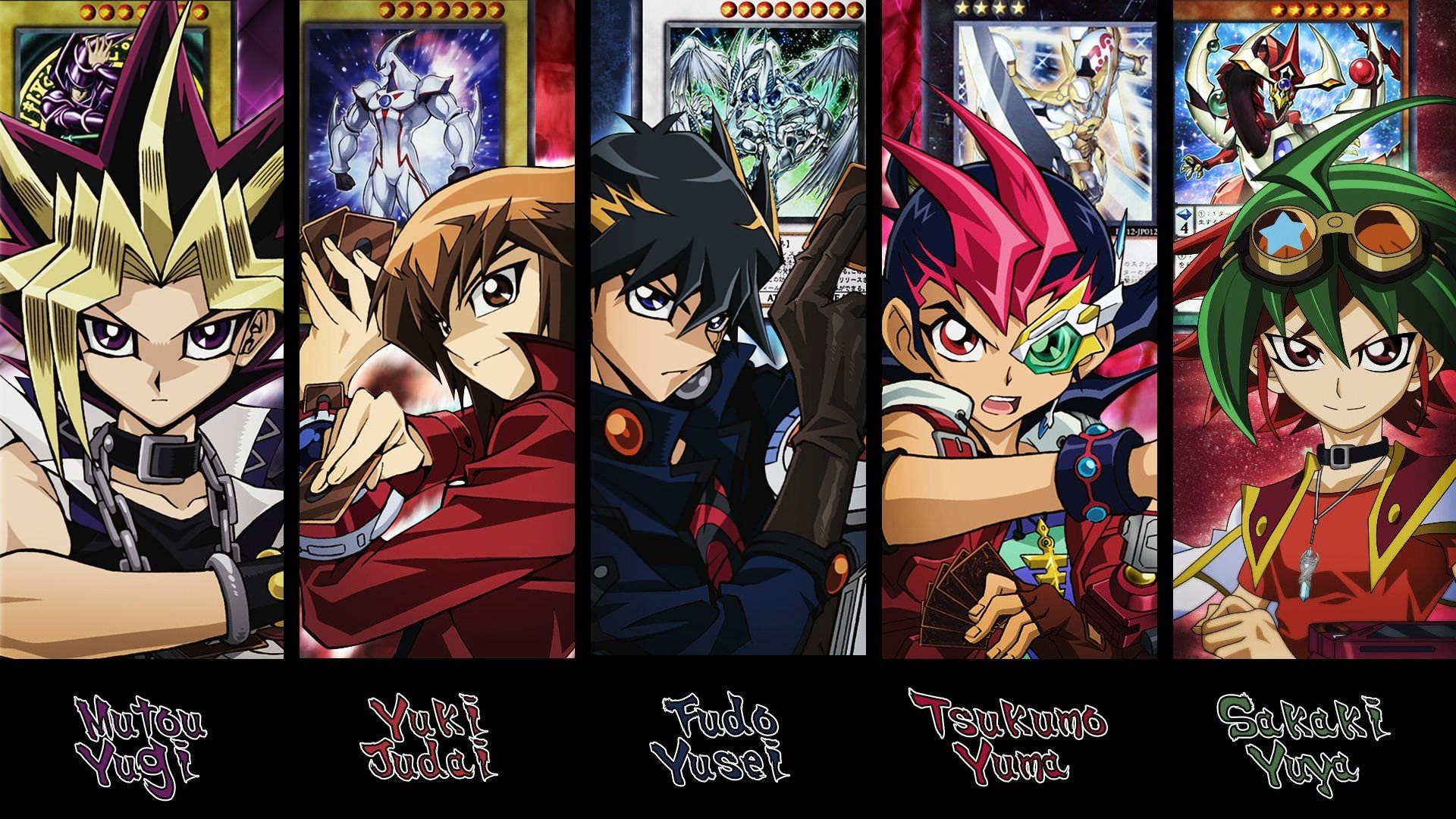
It was rough at the start. I remember the backlash vividly when the first episode of Yu-Gi-Oh! ZEXAL aired, replacing the gritty, high-stakes motorcycle duels of 5D's with a bright, neon-colored world and a protagonist who didn't even know how to play the game. Fans were livid. Yuma Tsukumo wasn't Yami Yugi. He wasn't Jaden or Yusei. He was a kid who tripped over his own feet and made misplays that would get you laughed out of a local tournament.
But then something weird happened over the course of 146 episodes.
The community shifted.
What started as the "black sheep" of the franchise eventually became one of the most emotionally resonant entries in the entire Yu-Gi-Oh! canon. It wasn't just about the flashy Xyz Summons—though those were undeniably cool—it was about the relationship between a failing duelist and an amnesiac ghost from another dimension.
The Yuma Problem and the Growth Arc
Most Yu-Gi-Oh! protagonists start as experts. Yugi had the Pharaoh's soul, Yusei was a prodigy from the slums, and Jaden was a natural talent at Duel Academy. Yuma was different. He was bad. Like, genuinely terrible at the game. He forgot his card effects. He made suboptimal trades. Honestly, it was frustrating to watch if you were looking for high-level play right out of the gate.
But that’s the secret sauce of Yu-Gi-Oh! ZEXAL.
By starting Yuma at rock bottom, the writers gave themselves a massive runway for character development. You aren't watching a god play a card game; you're watching a kid learn how to stand on his own two feet. This is where Astral comes in. Astral is the "original" duelist, a being composed of pure light and logic who possesses the "Number" cards.
The dynamic between them isn't just a teacher-student relationship. It’s a symbiotic evolution. Astral learns what it means to have "heart"—or Kattobingu (Feeling the Flow)—while Yuma learns how to actually read a board state. When Yuma eventually wins a duel without Astral's help, it feels earned in a way few other moments in the franchise do.
Kattobingu is more than a catchphrase
You’ll hear the word Kattobingu about ten thousand times if you watch the subbed version. In the dub, it's "Feeling the Flow." It sounds cheesy. It is cheesy. Yet, as the stakes escalate from schoolyard rivalries to the literal destruction of two dimensions—Earth and the Barian World—that catchphrase becomes a manifesto on resilience. It's about trying when you know you’re going to fail.
Why the Barian World Arc Changed Everything
If you dropped off during the "Number of the Week" filler in the first season, you missed the part where Yu-Gi-Oh! ZEXAL turned into a cosmic tragedy. The introduction of the Seven Barian Emperors changed the tone from a Saturday morning cartoon to something much darker and more philosophical.
The Barians weren't just "bad guys" from space. They were tragic figures with backstories rooted in betrayal, sacrifice, and lost humanity. Take Vector, for example. He is arguably one of the most effective villains in anime history. He didn't just want to win a card game; he wanted to psychologically dismantle the protagonists. His "reveal" as Ray Shadows is still one of the most brutal plot twists in the series.
- Nash (Shark): His transition from a school bully to a rival, and eventually to the leader of the Barians, provides the show's emotional backbone.
- Kite Tenjo: The "Number Hunter" who was essentially the series' version of Seto Kaiba, but with a much more desperate motivation—saving his sick brother, Hart.
- The Seven Emperors: Each represented a different facet of loss, making the final war feel like a clash of ideologies rather than just a struggle for power.
The stakes became personal. When characters like Quinton or Dumon "die" (or get absorbed), it carries weight because the show spent dozens of episodes building their lore. It wasn't just about the cards anymore; it was about the cost of war.
The Impact on the TCG: Xyz Summoning
We can't talk about Yu-Gi-Oh! ZEXAL without talking about how it broke and then remade the trading card game. Xyz Monsters—those black-bordered cards that sit in your Extra Deck—were a revolution. Before them, Synchro Summoning required specific "Tuners," which often made deck-building restrictive.
Xyz Summoning simplified everything. Got two monsters of the same level? Great. Stack them.
This accessibility exploded the meta. Cards like Number 39: Utopia became staples, but it was the "Rank-Up-Magic" mechanic that truly captured the anime's spirit. It allowed players to evolve their monsters into more powerful forms, mirroring the transformations seen on screen. Even today, in 2026, Xyz monsters remain a core pillar of the game. Look at any modern Tier 1 deck, and you'll likely find a Rank 4 toolbox tucked away in the Extra Deck.
Visuals and Animation Quality
ZEXAL was the first series in the franchise to heavily lean into CGI for its monsters. At the time, it was polarizing. Some people hated the "plastic" look of the dragons and knights. However, looking back, the integration was remarkably smooth compared to other series of that era. The "Augmented Reality" duels—where characters wore D-Gazers to see the monsters—gave the show a futuristic, high-energy aesthetic that felt distinct from the shadow games of the past.
The Misconceptions People Still Have
"It's just for kids."
I hear this a lot. Because the art style is rounder and the colors are brighter, people assume Yu-Gi-Oh! ZEXAL lacks the "edge" of Duel Monsters or 5D's. That's a mistake. By the time you get to the "Mythic Battlefield" arc, the show deals with themes of genocide, suicide, and the heat death of the universe.
Another big one: "Yuma is a crybaby."
Yeah, he is. Early on. But that’s the point. If you want a protagonist who never struggles, go watch a generic power-fantasy isekai. Yuma's tears are what make his eventual growth into a protector of both the Human and Astral worlds so satisfying. He doesn't win because he's the strongest; he wins because he refuses to give up on his enemies, even when they’ve done the unthinkable.
Final Thoughts on the Astral World Legacy
The ending of ZEXAL is arguably the best finale in the franchise. It doesn't end with a generic explosion. It ends with a duel between the two main characters—Yuma and Astral—that serves as a final exam for everything they've learned. It's a bittersweet goodbye that respects the audience's intelligence and the characters' journeys.
If you skipped this one because the first ten episodes felt too "kiddy," you owe it to yourself to go back. The transition from the lighthearted "Monster-of-the-week" format to the operatic tragedy of the Barian invasion is one of the most impressive tonal shifts in shonen anime.
How to approach ZEXAL today
If you're looking to dive in, here’s the best way to handle it:
- Push through the first 25 episodes. This is the "learning" phase. It’s slow, but it sets the foundation.
- Watch the Subbed version if possible. The original Japanese score is incredible, and some of the more intense emotional beats were softened in the English localization.
- Pay attention to Shark. He is widely considered one of the best-written characters in Yu-Gi-Oh! history. His arc is the true "shadow" protagonist of the show.
- Don't ignore the World Duel Carnival. It seems like a standard tournament arc, but it’s where the lore of the Arclight family and the Vetrix conspiracy begins to boil over.
ZEXAL isn't just a commercial for cards. It’s a story about what happens when logic (Astral) meets emotion (Yuma), and how the middle ground between them is where true strength lives. It’s about the fact that even if you're bad at something, if you keep "feeling the flow," you might just end up saving the world.
The best next step for any fan is to revisit the "Kite vs. Yuma" duels. They serve as the perfect microcosm for the series' power escalation and the shifting respect between rivals. Watch the way the animation evolves from the first encounter to their final clash; it tells you everything you need to know about why this series earned its place in the pantheon of great anime.



