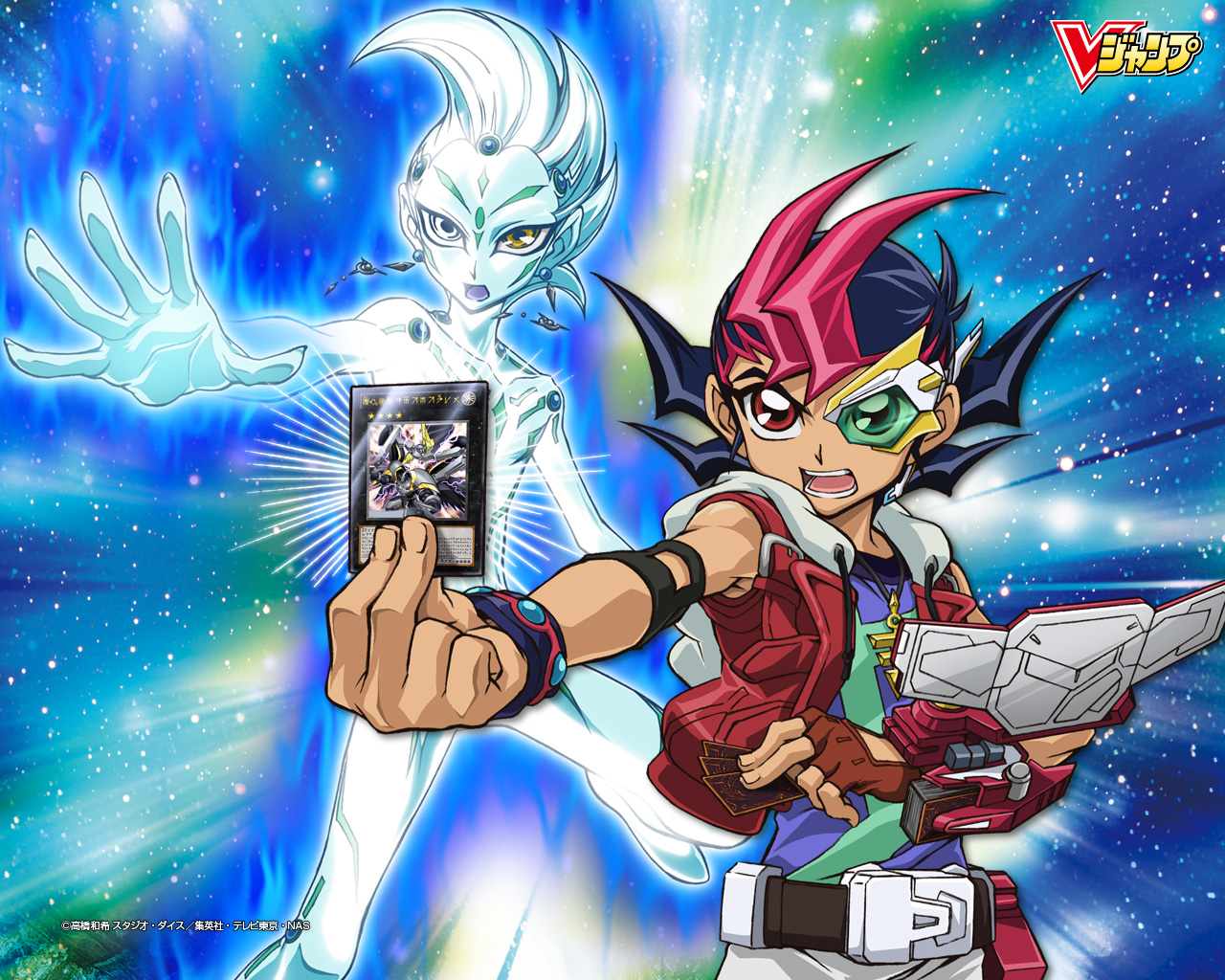
If you ask a casual fan about the middle child of the Yu-Gi-Oh! franchise, you usually get a groan. Most people bailed during the first half of ZEXAL because Yuma Tsukumo was, let's be honest, a total scrub who didn't know how to play his own deck. But then Yu-Gi-Oh! ZEXAL II happened. It basically took everything you thought you knew about the show, set it on fire, and replaced it with interdimensional warfare, tragic backstories, and some of the most genuinely shocking betrayals in anime history.
It’s a massive shift.
Suddenly, we weren't just watching a kid hunt for shiny "Number" cards in a bright, futuristic city. We were watching a war between the Astral World and the Barian World. Honestly, if you stopped watching before the Barian Emperors showed up, you missed the best part of the entire series. It’s the rare sequel that doesn’t just continue the story; it completely redefines it.
The Barian Emperors Changed Everything
The biggest reason Yu-Gi-Oh! ZEXAL II works is the villains. In the first series, the antagonists felt like "villains of the week" or eccentric rich dudes like Dr. Faker. The Barian Emperors are different. They aren't just evil for the sake of being evil. Well, most of them aren't.
Take Vector, for example. If you want to talk about a character who lives for the "troll," it’s him. The reveal of his true identity as Ray Shadows is still one of the most brutal moments in the franchise. He didn't just want to win a card game; he wanted to mentally break Yuma. He spent dozens of episodes pretending to be Yuma’s best friend just to laugh in his face when it mattered most. It was dark. Like, really dark for a show about teenagers playing cards.
Who are these guys, anyway?
The Seven Barian Emperors—Alito, Girag, Dumon, Mizar, Vector, Nash, and Marin—all have these tragic past lives. They weren't born as purple-skinned aliens. They were legendary human heroes who were basically cheated out of their happy endings.
- Alito: A champion gladiator who was framed and executed.
- Mizar: A dragon tamer who died protecting his village.
- Dumon: A knight who sacrificed himself for his kingdom.
The show does this incredible job of making you feel bad for the people trying to destroy the world. You’re sitting there rooting for Yuma to win, but you also kind of want Alito to just get a win for once because his life was so miserable. That’s nuanced writing you don't always see in "children's" media.
The Stakes Went Way Beyond Card Games
In Yu-Gi-Oh! ZEXAL II, the dueling evolved. We moved past the basic Xyz Summoning and into the "Rank-Up-Magic" era. This wasn't just a gimmick to sell more cards (though it definitely did that). The "Chaos" Xyz monsters felt like actual weapons. When someone dropped a Number C101: Silent Honor DARK on the field, the atmosphere changed.
The "Shining Draw" and "Barian's Chaos Draw" became the ultimate expression of the characters' will. A lot of people joke that it’s just "legalized cheating," and yeah, it kinda is. But in the context of ZEXAL II, it’s about a duelist’s power to literally rewrite reality. It fits the high-stakes, cosmic theme of the Barian war.
One of the most intense sequences in the entire series happens on the Moon. Yeah, a duel on the Moon. Kite Tenjo vs. Mizar. It’s easily one of the top five duels in Yu-Gi-Oh! history. There’s no Yuma to bail them out. It’s just two masters of "Galaxy-Eyes" dragons fighting until one of them literally runs out of air. It’s tragic, beautiful, and way more emotional than it has any right to be.
Why the Ending Actually Sticks the Landing
Most long-running anime struggle with endings. They either drag it out or rush it. ZEXAL II manages to pull off a finale that feels earned. The final confrontation between Yuma and Astral isn't just a "friendly" match to see who’s better. It’s a clash of philosophies.
Astral wants to use the Numeron Code to fix everything by erasing the "impurities" (the Barians). Yuma, being the "kattobingu" kid he is, argues that you can’t just delete the things you don't like. He fights for the right for everyone—even the villains—to exist and change. It’s a surprisingly mature take on conflict resolution.
By the time the credits roll on episode 146, you’ve watched Yuma go from a kid who couldn't Special Summon to a guy who can stand toe-to-toe with a literal god. The growth is real.
Practical Takeaways for Fans
If you're thinking about revisiting Yu-Gi-Oh! ZEXAL II, or if you skipped it the first time around, here is how you should approach it:
- Watch the Sub: Honestly, the Japanese version (subbed) is significantly better. The voice acting during the Barian arc is incredible, and the English dub censors some of the darker plot points that make the story work.
- Don't Skip the Barian Ruins Arc: It might feel like a "quest of the week" setup, but it’s where all the lore for the Emperors is hidden. Pay attention to the legends told at each ruin.
- Look for the Archetypes: If you play the TCG, seeing the "Battlin' Boxers," "Star Seraphs," and "Umbral Horrors" in action is a treat. They might not all be meta-dominant today, but their anime origins are fascinating.
- Acknowledge the First Half: You can't appreciate the darkness of ZEXAL II without sitting through the lighter, goofier moments of the first 73 episodes. It makes the "fall from grace" much more impactful.
ZEXAL II isn't just a sequel; it's the heart of the fourth generation. It took a protagonist everyone hated and made him someone worth cheering for. It took a card game and turned it into a mythic tragedy. If you're looking for the peak of Yu-Gi-Oh!'s storytelling, this is where you'll find it.
Next Steps for You
Check out the "Legendary Duelists: Soulburning Volcano" booster set if you want to see how Konami updated the Barian-era cards like Alito's "Battlin' Boxers" for the modern game. Alternatively, if you're a lore enthusiast, go back and re-watch episodes 94 through 98. That's the Vector reveal arc—it’s the exact moment the show changes forever.



