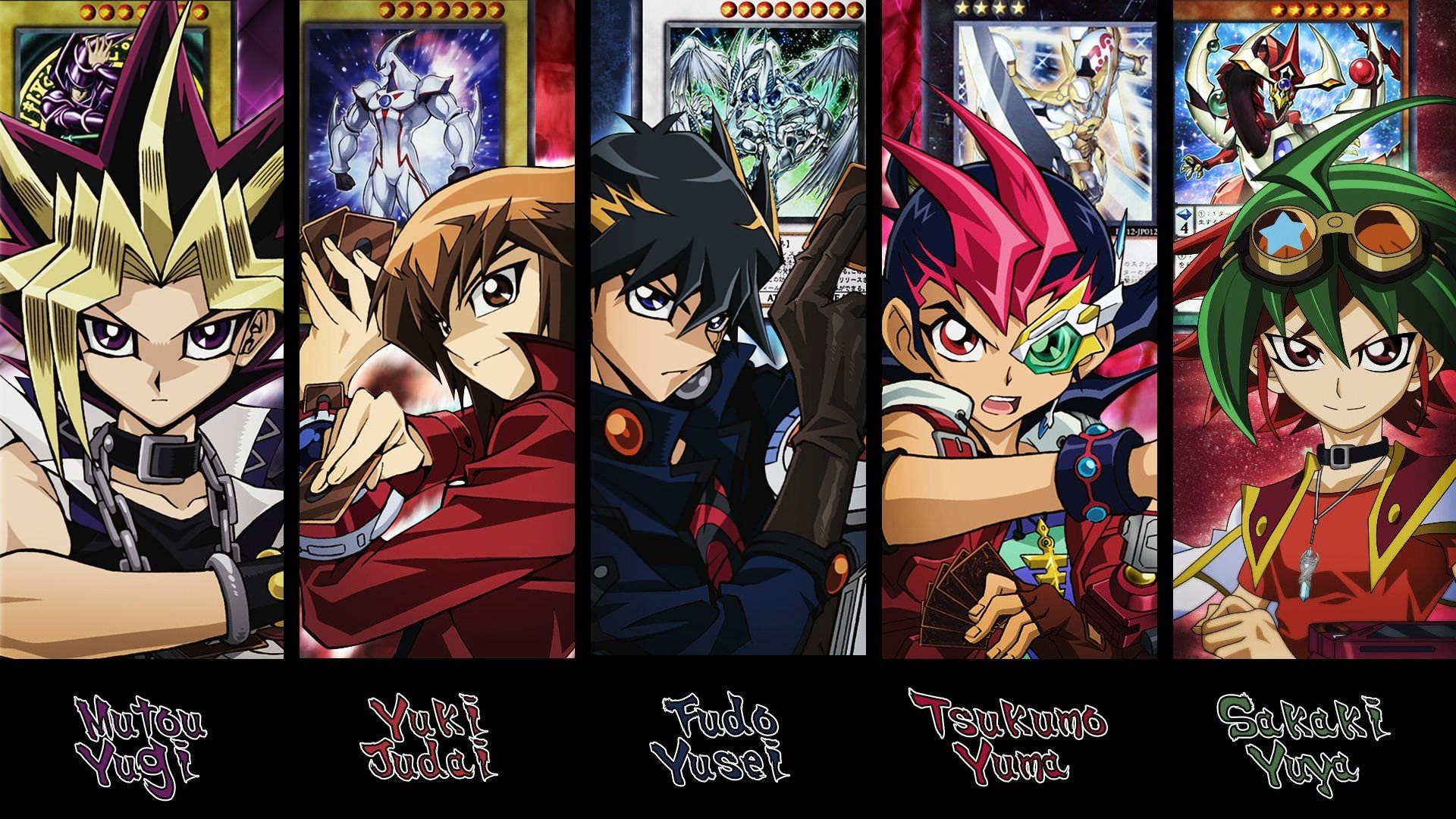
Yuma Tsukumo is annoying. At least, that's what the entire fanbase yelled back in 2011 when Yu-Gi-Oh! ZEXAL first hit the airwaves. We went from the brooding, motorcycle-riding cool of Yusei Fudo to a kid who couldn't even perform a basic summon without tripping over his own feet. It was a shock. But here’s the thing about the Yu-Gi-Oh! ZEXAL characters—they actually have the most cohesive, rewarding growth arcs in the entire franchise. If you stopped watching because Yuma’s "Feeling the Flow" (Kattobingu) catchphrase grated on your nerves, you missed out on some of the darkest, most complex writing in shonen card game history.
The show starts as a "Monster of the Week" gag series. It doesn't stay that way. By the time you hit the Barian Invasion, the stakes aren't just about saving the world; they're about the crushing weight of identity and the tragedy of lost memories.
The Astral and Yuma Dynamic: More Than Just a Ghost Teacher
Most people compare Astral to Atem from the original series. That’s a mistake. Atem was a king; Astral is a computer program with a soul. When he first emerges from the Emperor's Key, he’s cold. Analytical. He views dueling as a series of calculated observations.
Yuma, on the other hand, is pure chaos. He’s a terrible duelist at the start. Honestly, he’s probably the worst protagonist the series has ever seen in terms of raw skill during episode one. This creates a fascinating power struggle. Unlike Yugi, who eventually stepped aside to let Atem take the wheel, Yuma and Astral have to learn to synchronize. It’s a literal representation of the "Xyz Summon" mechanic—two disparate elements overlapping to create something more powerful.
You see this evolve through the "Numbers" cards. These aren't just power-ups; they are fragments of Astral’s memory. As they collect them, the Yu-Gi-Oh! ZEXAL characters change. Astral becomes more "human," learning about fear and doubt, while Yuma starts to understand the burden of responsibility. It’s not just about winning; it’s about the fact that every time they win, they’re piecing together a being that might eventually have to leave.
Shark and the Burden of the Anti-Hero
Reginald "Shark" Kastle is the best written "rival" in Yu-Gi-Oh! history. Fight me.
Kaiba was an egomaniac. Chazz was a joke. Jack Atlas was a diva. Shark? Shark is a tragedy. He starts as a school bully who lost his pro license, but the layers peel back to reveal a guy who is fiercely protective of his sister, Rio, and haunted by a past he doesn't even fully understand yet.
The transition from Shark to Nasch is one of the most heartbreaking twists in the show. Imagine finding out your entire life is a lie and your destiny is to lead the very villains your friends are trying to kill. He doesn't join the Barians because he's "evil." He joins them because he is a king who cannot abandon his people, even if those people are destined for destruction. His duels aren't just card games; they're philosophical battles about loyalty versus morality.
The rivalry between Yuma and Shark works because it’s built on genuine respect. Yuma refuses to give up on Shark, even when Shark is actively trying to erase him from existence. That kind of stubborn optimism is Yuma's real superpower, not the Shining Draw.
Kite Tenjo and the Price of Family
Kite (Kaito in the Japanese version) fills the "cool" slot, but his motivation is grounded in something surprisingly dark for a kids' show. He's a Number Hunter. He literally rips the souls out of people because he believes it's the only way to cure his younger brother, Hart.
Kite’s introduction changed the tone of the series instantly. When he freezes time and summons Galaxy-Eyes Photon Dragon, the show stops being a comedy. He represents the "ends justify the means" mentality. The interaction between Kite and his father, Dr. Faker, adds a layer of familial dysfunction that complicates the standard hero-villain dynamic.
The Barian Emperors: Villains with a Purpose
The Barians aren't your typical "I want to rule the world" baddies. Each of the Seven Barian Emperors has a backstory rooted in a past life where they were heroes, kings, or protectors who suffered a horrific betrayal.
- Vector: The absolute psychopath. He’s the Joker of the Yu-Gi-Oh! universe. His betrayal of Yuma (the "Ray Shadows" reveal) is still one of the most shocking moments in the franchise.
- Mizar: The rival to Kite, obsessed with being the true "Dragon Tamer."
- Dumon: The noble knight who actually cares about the balance of the worlds.
- Alito and Girag: They provide the much-needed levity before things get depressing, but even their endings are somber.
These Yu-Gi-Oh! ZEXAL characters force the audience to ask: if a "villain" is just a hero who was wronged in a past life, do they deserve redemption or a finishing move?
Why the "ZEXAL" Transformation Matters
"I'm feeling the flow!" sounds dumb in English. In the context of the show, it's a mantra for survival. ZEXAL (the fusion of Yuma and Astral) represents the ultimate evolution of the series' themes. It’s not just a power-up. It’s the bridge between two worlds.
The Shining Draw is often criticized for being "cheating." And yeah, literally creating the card you need out of thin air is a bit much. But narratively, it fits. In the world of ZEXAL, dueling is an expression of soul-energy. If your soul is strong enough, you change reality. It’s a literalization of the "Heart of the Cards."
The Impact of Supporting Cast Members
We can't talk about the Yu-Gi-Oh! ZEXAL characters without mentioning the peanut gallery. Tori (Kotori) is often sidelined, which is a shame, but her role as Yuma’s emotional anchor is what keeps him from spiraling when Astral disappears.
Then there’s Quinton, Quattro, and Quinton—the Arclight brothers. Their quest for revenge against Dr. Faker provides the mid-series tension that bridges the gap between the school-life episodes and the interdimensional war. Quattro (IV) specifically goes through a massive redemption arc, moving from a sadistic "fanservice" duelist to a hero who sacrifices himself to try and stop the Barians.
Technical Nuance: The Xyz Era
From a gaming perspective, these characters introduced us to the most versatile mechanic in the TCG. Xyz summoning changed how we played. You didn't need specific tuners; you just needed two monsters of the same level. This accessibility mirrored Yuma’s own journey—anyone can reach the top if they have the right pieces.
The "Numbers" cards themselves created a real-world hunt for collectors. Tracking down all 100 (plus the C-numbers) became a meta-game for fans, mirroring Astral's mission. This synergy between the anime plot and the real-world card game is something ZEXAL did better than almost any other iteration of the franchise.
Final Verdict on the ZEXAL Cast
Is Yuma as "cool" as Yusei? No. Is he as iconic as Yugi? Probably not. But the characters in ZEXAL feel the most human. They fail. They cry. They lose people they love.
The ending of the series isn't a celebration; it’s a bittersweet farewell. Yuma has to duel Astral one last time, not for the world, but for their own closure. It’s a coming-of-age story wrapped in a high-stakes sci-fi epic.
If you gave up on ZEXAL after ten episodes, go back. Skip the filler if you have to. Watch the duel between Kite and Mizar on the moon. Watch Shark’s realization of his true heritage. You’ll find that the Yu-Gi-Oh! ZEXAL characters offer a depth that the bright, colorful art style initially hides.
Actionable Insights for Fans and Duelists:
- Re-watch the Barian Arc: If you’re looking for the peak of ZEXAL’s writing, start around episode 74. This is where the lighthearted tone shifts into a genuine war drama.
- Explore the "Numbers" Lore: Many of the Number cards have backgrounds based on the Seven Barian Emperors' past lives. Reading the flavor text and the anime backstories adds a massive layer of appreciation for the card design.
- Analyze the Xyz Mechanic: ZEXAL is the definitive era for Rank 4 toolboxes. If you're a TCG player, studying how Yuma and Shark utilize their "Extra Deck" provides a masterclass in resource management that still applies to the modern game.
- Give Yuma a Chance: Look past the "Kattobingu" catchphrase. Focus on his growth from a kid who literally couldn't play to a duelist who challenged a god. It’s one of the few times the "Zero to Hero" trope feels earned in Yu-Gi-Oh!