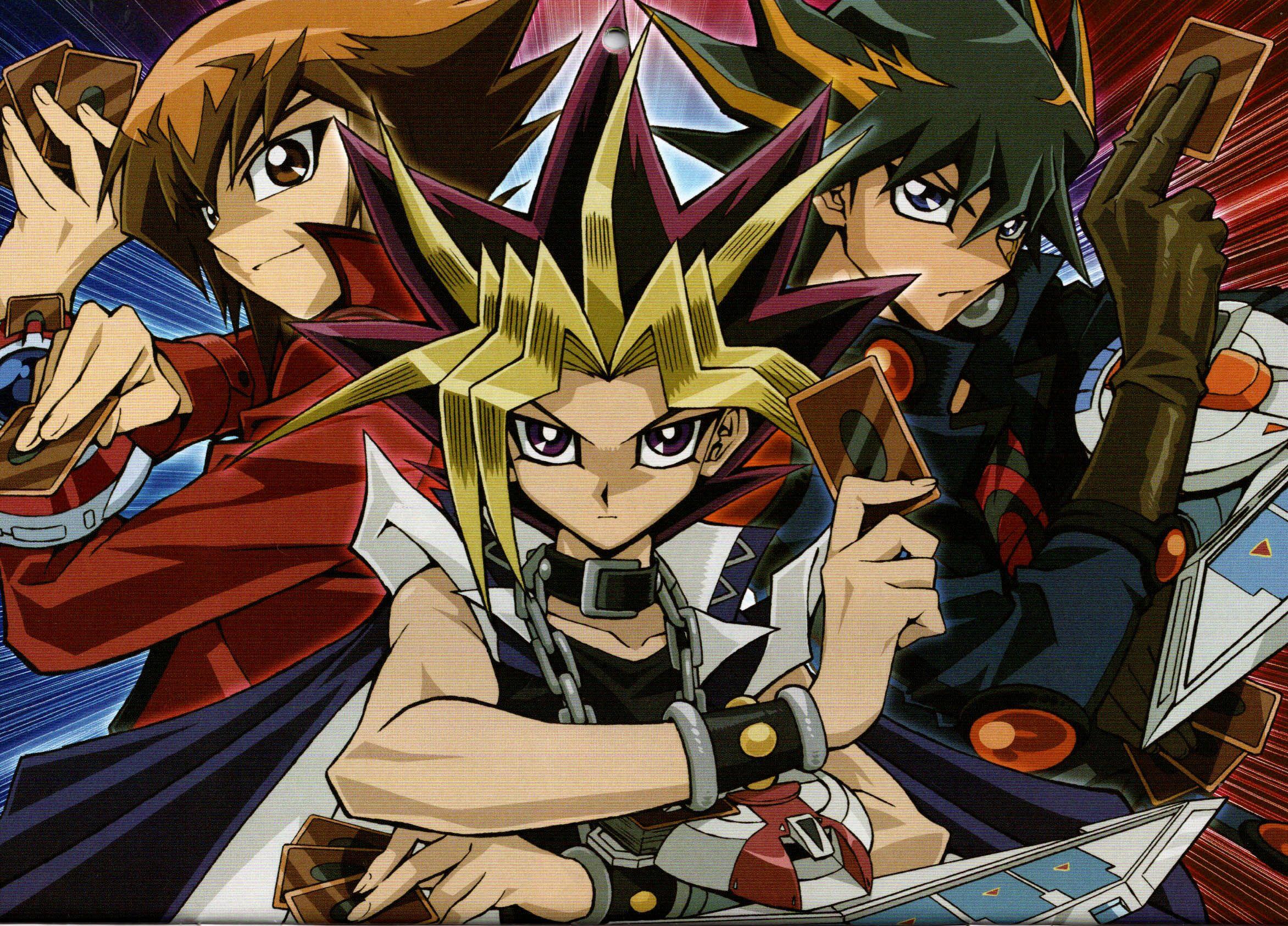
Black cards changed everything. When Yu-Gi-Oh! ZEXAL premiered and the first Starter Deck hit shelves in 2011, players weren't sure what to make of these weird, sleek frames. They looked different. They felt different. Honestly, the mechanic was a total departure from the math-heavy Synchro era that preceded it. You didn't need a Tuner. You didn't need to add levels together. You just needed two monsters with the same level. Click. Clack. Done. An Xyz Summon was born. It was simple. It was accessible. It was, quite frankly, a little bit broken at first.
Yu-Gi-Oh Xyz Mechanics: More Than Just "Stacking"
Let's talk about the actual physics of the game for a second because it matters. When you perform a Yu-Gi-Oh Xyz summon, you take two or more monsters of the same level and you stack them on top of each other. The monster from your Extra Deck goes on the very top. Those monsters underneath? They aren't "on the field" in the traditional sense, but they aren't in the graveyard either. They are Xyz Materials. This distinction is huge. If you have a card that says "When a monster leaves the field," and you use it for an Xyz summon, that effect usually won't trigger. Why? Because the material just... transitions. It’s a weird legal limbo that Konami judges had to explain a thousand times in the early 2010s.
The materials are the fuel. Most Xyz monsters have powerful effects that require you to "detach" a material to activate. You pick up the card from the bottom of the stack and send it to the Graveyard. It's a resource management game within a game. If you run out of materials, your shiny boss monster is basically just a vanilla beatstick sitting there waiting to be destroyed. This created a specific tension in the meta. Do you use your last material now to stop a play, or do you hold it?
The Rank vs. Level Confusion
This is the big one. Xyz monsters do not have Levels. They have Ranks. If your opponent plays a card like Gravity Bind or Level Limit - Area B, your Xyz monsters just laugh and walk right through. They aren't Level 4; they are Rank 4. This mechanical quirk made them an immediate "must-have" in every side deck. You could bypass decade-old floodgates just by changing the way you summoned.
But there’s a downside. You can't use an Xyz monster as Synchro material easily because Synchros need Levels. You can't use them for another Xyz summon unless you have a specific "Rank-Up-Magic" card or the monster text explicitly allows it. It’s a self-contained ecosystem.
The Most Infamous Xyz Monsters Ever Printed
We can't talk about Yu-Gi-Oh Xyz without bringing up the cards that actually got banned. Remember Number 16: Shock Master? It was a nightmare. If you could put three Level 4s on the board, you could basically tell your opponent they weren't allowed to play spells, traps, or monster effects for a whole turn. It was a "shut up and sit down" card. It’s still banned in the TCG for a reason. People hated it. It wasn't "interaction"; it was a lockout.
Then there’s M-X-Saber Invoker. For years, this Rank 3 was the gateway to some of the most degenerate combos in the game. It didn't matter what deck you were playing; if you could make a Rank 3, you were getting a free Special Summon from your deck.
- Divine Arsenal AA-ZEUS - Sky Thunder: The modern king. You can summon this thing just by attacking with any other Xyz monster. It wipes the entire board. It’s the ultimate "reset button."
- Evilswarm Ophion: The ultimate middle finger to high-level decks. As long as it has material, nobody can Special Summon Level 5 or higher monsters. It single-handedly kept Blue-Eyes and Dragon Ruler decks in check for years.
- Number 41: Bagooska the Terribly Tired Tapir: Everyone's favorite drunk tapir. It forces everything into defense mode and negates their effects. It’s the stall king of the Rank 4 toolbox.
Why the Rank 4 Toolbox Changed Everything
In the old days, you built a deck around a specific archetype. If you played Elemental HEROes, you played HEROes. But the Rank 4 toolbox changed the philosophy of deck building. Level 4 monsters are the most common in the game. Suddenly, every deck that could sneeze out two Level 4s had access to a Swiss Army Knife of answers.
Need to destroy a card? Summon Castel, the Skyblaster Musketeer. Need to steal a monster? Summon Number 101: Silent Honor ARK. Need to burn for game? Gagaga Cowboy in defense position.
It made the game more "solvable." It also made it faster. You didn't have to wait to draw your "out" to a situation; you just had to get two bodies on the board and go into your Extra Deck. Some people say this killed the "soul" of the game. Others say it made the game more skillful because you always had options. Honestly? It was probably a bit of both.
Ranking Up and Xyz Evolution
Konami eventually realized that just stacking two monsters was getting a bit stale, so they introduced Rank-Up-Magic. These are spells that let you take an Xyz monster you already control and slap a higher-Rank one on top of it. This is how we got the "C" versions (Chaos versions) of the Number cards.
It's a flashy mechanic. It’s very "anime." Watching Yuma in the show go through three different evolutions of Number 39: Utopia was hype, but in the real competitive game, it was often too slow. That is, until Zoodiacs arrived. Zoodiacs broke the fundamental rule of Xyz summoning. They allowed you to summon an Xyz monster using only one monster. It was a one-card full combo. The deck was so dominant that almost every card in the archetype ended up on the Forbidden and Limited list at some point. It showed that when you mess with the "two-monster requirement," things get dangerous fast.
The Number Hunt
A huge part of the Yu-Gi-Oh Xyz lore revolves around the "Number" monsters. In the lore, there are 100 of them (plus some extras, because it's Konami). Collecting them became a meta-game for fans. Some are useless pieces of cardboard, while others like Number 60: Dugares the Timeless are staples in modern combo decks. The "Number" tag matters for certain card effects, creating a sub-archetype that spans every Rank from 1 to 12.
How to Play Xyz in 2026
If you're looking to get into Xyz summoning now, the game is very different than it was in 2011. We have Link monsters now. We have faster hand traps. But Xyz monsters are still the backbone of many top-tier strategies.
If you want to win, you need to understand "Chain Blocks." Because detaching a material is usually a cost, it happens immediately. Even if your opponent negates the effect of your monster, the material is still gone. This can be used to your advantage to put specific cards in the Graveyard to trigger other effects. It's subtle, but it's the difference between a Gold-ranked player and a Master-ranked player in Master Duel.
Don't overlook the utility. Too many players go for the biggest dragon they can find. Sometimes, the play is just making an Abyss Dweller to shut off the opponent's Graveyard. In a game where the Graveyard is basically a second hand, Abyss Dweller is often more powerful than a monster with 4000 ATK.
Practical Steps for Your Next Duel:
- Audit your Level distribution. If your deck has a mix of Level 3s and 4s, you're going to have a bad time. Pick a Level and stick to it to maximize your Xyz consistency.
- Learn the "Utopia" package. If you have space in your Extra Deck, Number 39: Utopia into Number S39: Utopia the Lightning is still a reliable way to beat over almost any monster in the game.
- Watch out for Nibiru. Xyz decks tend to summon a lot. If you're going for a big Xyz play, count your summons. If your fifth summon is your big boss, you might find yourself staring at a giant rock on your side of the field.
- Check your materials. Always remember that when an Xyz monster is destroyed or banished, the materials go to the Graveyard. If you have a card that needs to stay on the field, don't use it as Xyz material.
Xyz summoning stayed relevant because it’s elegant. It doesn't require the complex level-tuning of Synchros or the specific naming conventions of Fusion. It just asks you to find two things that are the same and make them something better. Whether you're playing Kashtira, Purrely, or just a classic Rank 4 Spam deck, these black cards aren't going anywhere. They are the most flexible tool in the duelist's arsenal. Sorta makes you wonder what they'll come up with next, but for now, the Rank 4 toolbox remains the gold standard of the Extra Deck.
Actionable Insight: Start by integrating a small "Rank 4" engine into a casual deck—using cards like Parallel eXceed or Kagetokage—to see how easily you can access powerful utility monsters like Tornado Dragon or Bagooska without changing your core strategy.