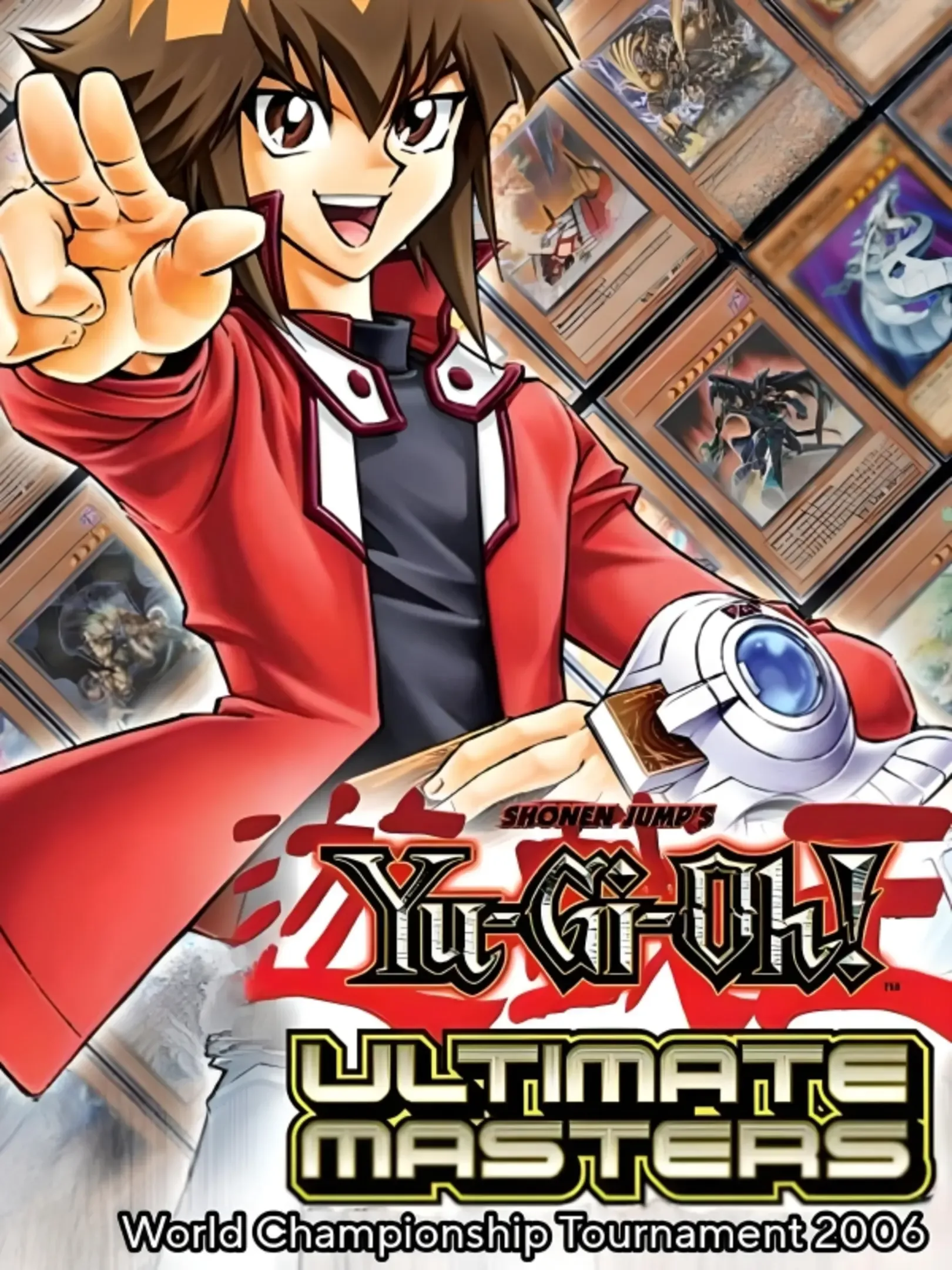
If you owned a Game Boy Advance back in the mid-2000s, you probably remember the distinct clicking sound of a cartridge slotting into place. For Yu-Gi-Oh! fans, that click usually meant one thing: hours of grinding for DP. Yu-Gi-Oh! Ultimate Masters: World Championship Tournament 2006 wasn’t just another yearly iteration in Konami’s relentless release schedule. It was, and honestly still is, the peak of the "classic" era. It arrived at a very specific moment in the franchise's history.
The GX anime was in full swing, but the game mechanics hadn't yet spiraled into the hyper-speed complexity of Synchro or Xyz summons. This was the era of Tribute Summons, Fusion Monsters that actually required Polymerization, and the terrifying presence of Chaos monsters. If you liked this post, you should read: this related article.
Why the 2006 Edition Was Different
Most handheld card games feel like stripped-down versions of their physical counterparts. Not this one. Yu-Gi-Oh! Ultimate Masters: World Championship Tournament 2006 felt like Konami just decided to dump every single card they could fit onto a 256-megabit cartridge. We’re talking over 2,000 cards. In 2006, that was an astronomical number for a portable device.
You weren't just playing through a story mode with a pixelated Jaden Yuki. You were engaging with a massive, encyclopedic simulation of the TCG. The game featured several different modes that broke away from the standard "talk to NPC, duel NPC" loop. You had Limited Duels, where you had to build decks under weird constraints. You had Survival Duels. You had the incredibly addictive "Theme Duels" where the game essentially dared you to win using specific, often difficult, win conditions like Deck Out or pulling off an Exodia win. For another angle on this event, see the recent update from The New York Times.
It was brutal.
The AI in this game didn't pull punches. If you went up against the higher-tier duelists, they would absolutely punish a misplay. I remember losing more times than I’d like to admit to the AI’s perfectly timed Mirror Force. It taught you how to play the game properly. You learned about "Chain Links." You learned about "Spell Speed." You learned why searching your deck was the most powerful thing you could do.
The Card Pool and the Meta
The game uses the September 2005 Forbidden and Limited list as its baseline, but it also allows you to unlock the ability to ignore the list for casual play. This specific meta is often cited by "Goat Format" enthusiasts as one of the most balanced—or at least the most nostalgic—times to play.
You had the "Elemental HERO" stuff starting to pop up, but the real power lay in cards like Black Luster Soldier - Envoy of the Beginning and Chaos Emperor Dragon - Envoy of the End. Even though those were often banned in official tournament presets, the game let you live out the power fantasy of using them against the AI.
The variety was insane.
- You could build a dedicated Burn deck using Solar Flare Dragon.
- You could go for a Water deck built around A Legendary Ocean and Levia-Dragon - Daedalus.
- Zombies were huge thanks to Pyramid Turtle and Vampire Lord.
The progression system was simple but effective. You won duels, you got Duel Points (DP), and you bought packs. But Konami added a layer of depth by making certain packs only unlockable after meeting specific criteria, like winning a certain number of duels in a row or completing a high percentage of the "Challenge" mode. It kept you coming back. It wasn't just about the dueling; it was about the collection.
Solving the "Grind" Problem
Let's be real: Yu-Gi-Oh! games are grindy. Yu-Gi-Oh! Ultimate Masters: World Championship Tournament 2006 is no exception, but it handled it better than its predecessors. The sheer volume of opponents meant you weren't just face-rolling the same three characters. You had tiered opponents ranging from weak Level 1 monsters to the "Deity" tier duelists.
The game also included a Password feature. If you had the physical cards, you could enter the 8-digit code found at the bottom left of the real card to unlock it in-game, provided you had enough DP. It was a bridge between the physical and digital worlds that worked perfectly.
One thing people often forget is how good the music was. The tracks were catchy, driving, and perfectly captured that "high-stakes duel" energy. It made the repetitive nature of grinding for that one last copy of Cyber Dragon much more tolerable.
The Legacy of the 2006 World Championship
Why do people still play this on emulators or hunt down original cartridges today?
Honestly, it’s the speed. Modern Yu-Gi-Oh! (Master Duel, for example) is a game of ten-minute turns and "negate" boards. In the 2006 version, a turn took thirty seconds. You set a monster, you set a backrow, and you passed. There was a back-and-forth rhythm that has mostly been lost in the modern game.
It also represents the last time the "World Championship" branding on GBA felt like a definitive resource. After this, the series moved toward the DS and started incorporating 3D sprites and more heavy-handed story elements from the Yu-Gi-Oh! 5D's era. Those games are great, but they lost some of the "pure card game" focus that 2006 mastered.
Technical Limitations and Quirks
No game is perfect. The GBA's screen resolution meant that reading card text was sometimes a chore. You basically had to memorize what the cards did because squinting at the tiny font was a recipe for a headache. Also, the AI, while competent, could occasionally get stuck in loops or make "weird" choices—like using a Heavy Storm when they had three set cards and you had none.
But these were minor gripes. The core gameplay loop was airtight.
How to Get the Most Out of the Game Today
If you’re looking to revisit this classic or try it for the first time, don't just rush through the duels. The real meat is in the Challenge Mode.
- Prioritize the "Theme Duels." They force you to understand mechanics you might otherwise ignore. You'll become a better player by figuring out how to win with a Destiny Board deck.
- Save your DP for the "high-value" packs. Don't just spend it on the early sets. Look for packs that contain staples like Mystical Space Typhoon, Heavy Storm, and Call of the Haunted.
- Experiment with the "Limited" lists. Playing under different ban lists changes the game entirely and prevents it from becoming stagnant.
Ultimately, Yu-Gi-Oh! Ultimate Masters: World Championship Tournament 2006 stands as a testament to what a licensed game can be when it respects the source material. It didn't try to reinvent the wheel; it just gave us the best possible version of the wheel we already loved.
If you want to understand why Yu-Gi-Oh! became a global phenomenon, this is the game you play. It captures the strategy, the luck, and the sheer satisfaction of a well-timed trap card perfectly.
Actionable Next Steps for Retro Duelists
If you are ready to dive back in, start by focusing on unlocking the "All Cards" pack. It requires a 100% completion rate in most other areas, but it's the ultimate goal for any completionist. Alternatively, if you find the grind too slow, look into the various fan-made patches available online that can adjust the DP earn rate or unlock certain regional-exclusive cards that were hard to find in the original Western release. Check out community forums like Pojo or the Yu-Gi-Oh! subreddit's retro sections; there is still a thriving community of players who theory-craft decks specifically for this 2006 meta. Focus on mastering the "Timing" mechanics—learning the difference between "Missing the Timing" and a successful trigger will save you countless losses against the higher-level AI opponents like the Egyptian Gods or the high-tier GX characters. For those using original hardware, ensure your cartridge battery (if applicable, though most used Flash) is functional, or consider a flashcart to preserve your save data, as these 100+ hour save files are precious.