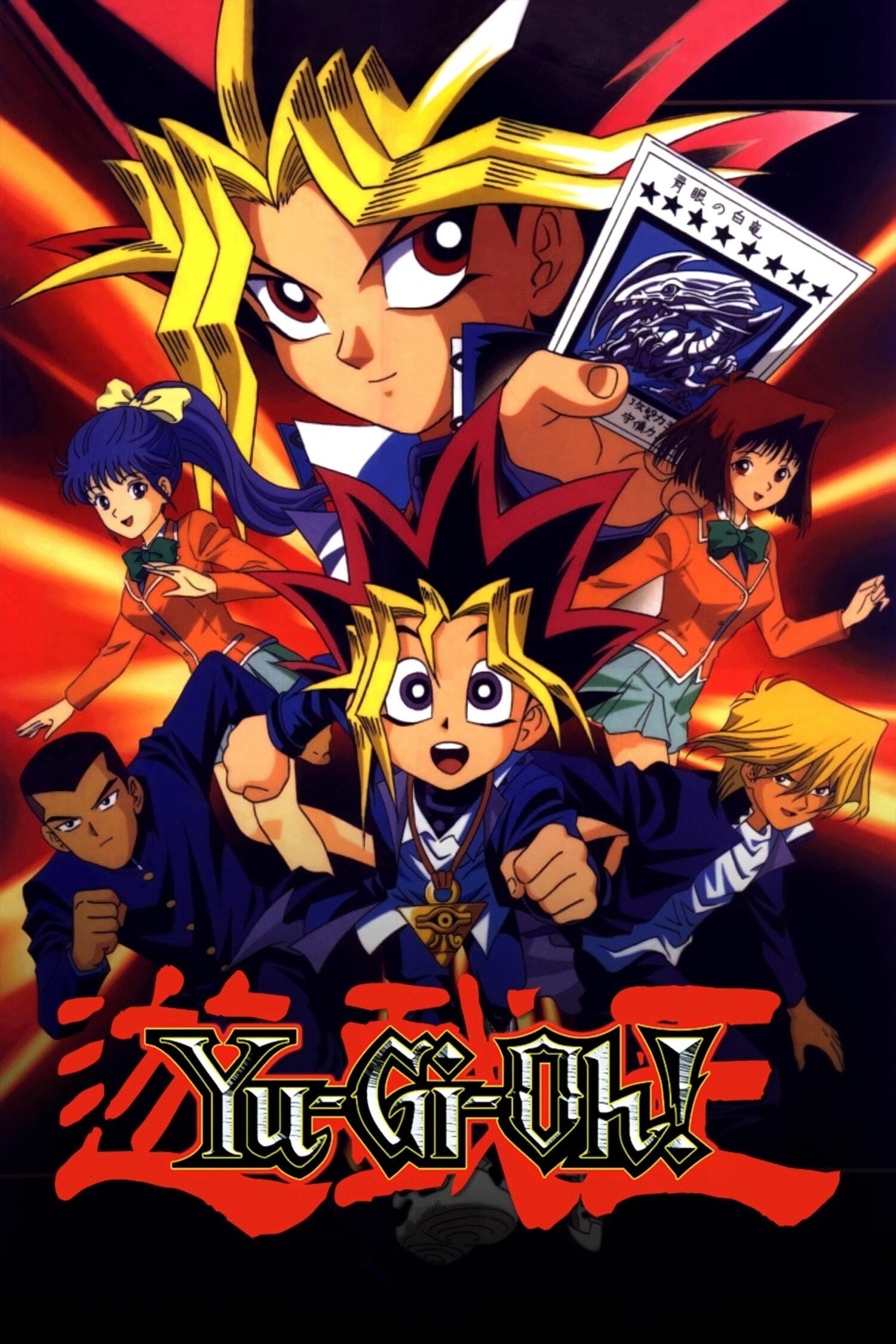
It’s actually wild when you think about it. Most people over the age of 25 hear the words "Duel Monsters" and immediately see a spiky-haired kid screaming about the Heart of the Cards. That 2002 Saturday morning nostalgia is powerful. But Yu-Gi-Oh TV shows didn't just stop when Yugi Muto walked into the sunset. The franchise has been a revolving door of motorcycle races, interdimensional wars, and weirdly aggressive card-based VR sports for over two decades now. It’s a massive, sprawling mess of different continuities that somehow keeps a global card game economy afloat.
Honestly, the transition from the original series to Yu-Gi-Oh! GX was the first big shock for the fandom. We went from ancient Egyptian gods and literal life-or-death shadow games to... a boarding school? It felt smaller. Yet, that shift established the "Studio Gallop" formula: new protagonist, new gimmick, same desperate need to sell booster packs. It’s a cycle of reinvention that hasn't stopped since.
The Rough Start Nobody Remembers
Before the 4Kids dub made "It’s Time to Duel" a household phrase, there was the 1998 Toei Animation series. Fans call it "Season 0." It’s weird. Yugi doesn't even play the card game that often. Instead, he’s basically a diminutive jigsaw-puzzle-loving vigilante who sets people on fire or induces permanent psychosis if they lose a game of dice. It was dark. It was gritty. And it was based on the early chapters of Kazuki Takahashi's manga where the "Magic & Wizards" game was just a one-off parody of Magic: The Gathering.
The Yu-Gi-Oh TV shows we actually recognize started with Yu-Gi-Oh! Duel Monsters in 2000. This is the bedrock. It’s where the Blue-Eyes White Dragon became an icon. If you’re looking for why this show stuck, it’s the stakes. Characters weren't just playing for trophies; they were playing for their souls. That intensity, paired with the legendary rivalry between Yugi and Seto Kaiba, created a blueprint that every subsequent series has tried to replicate, with varying degrees of success.
The "Card Games on Motorcycles" Era
If you want to see where the franchise truly went off the rails—in a good way—look at Yu-Gi-Oh! 5D’s. When it was first announced, everyone laughed. "Card games on motorcycles? Seriously?" It sounded like a parody. But 5D’s is arguably the peak of the Yu-Gi-Oh TV shows for many long-term fans. It took place in a dystopian future with a heavy emphasis on class struggle and social inequality.
Yusei Fudo wasn't a school kid. He was a mechanical genius living in a literal scrap heap. The introduction of Synchro Summoning changed the physical card game forever, speeding up the meta-game to a point of no return. The show felt mature. It had a gritty, industrial aesthetic that we haven't really seen since. It proved that the franchise could survive without Yugi's name in the title.
The Pendulum Swing into Complexity
Then came Yu-Gi-Oh! ZEXAL and Arc-V. This is where the barrier to entry got high. Like, really high.
- ZEXAL gave us Xyz Summoning and a protagonist, Yuma, who was actually terrible at the game at first. It was a polarizing shift toward a younger audience, full of bright colors and "shonen" tropes.
- Arc-V tried to do everything at once. It brought back legacy characters and introduced Pendulum Summoning, a mechanic so complex it required a literal rewrite of the game board.
The narrative ambition of Arc-V was insane. It involved four parallel dimensions based on the previous summoning methods. Fusion, Synchro, Xyz, and Standard. It was a love letter to the history of Yu-Gi-Oh TV shows, but it eventually collapsed under its own weight. The ending is still a massive point of contention in the community because of how rushed and convoluted it became.
VRAINS and the Cyber-Punk Pivot
Yu-Gi-Oh! VRAINS felt like a course correction. It leaned into the "e-sports" and VR trend. The protagonist, Yusaku (Playmaker), was a stoic hacker with a tragic past. No more "I believe in my friends" speeches every five minutes. It was colder. More technical.
Link Summoning was the big hook here. It was designed to fix the "power creep" from Arc-V, but it ended up being even more restrictive for old-school players. VRAINS is a bit of an outlier. It’s shorter than the others and suffered from production issues, yet it has some of the most tactically sound duels in the entire franchise. If you actually play the modern TCG (Trading Card Game), the logic in VRAINS makes the most sense.
The Bridge and Sevens Era: A Total Reset
Around 2020, things changed. Studio Gallop, which had handled the shows for decades, stepped away. Studio Bridge took over. The result? Yu-Gi-Oh! SEVENS and the subsequent Yu-Gi-Oh! Go Rush!!.
These aren't the Yu-Gi-Oh TV shows you grew up with.
- The Art Style: It’s much more "cartoonish" and soft.
- The Rules: They introduced "Rush Dueling." It’s a completely different game with simplified rules.
- The Tone: It’s almost entirely comedic.
This was a business move. The main card game had become so complex—with 10-minute turns and "negate" boards—that kids couldn't get into it. SEVENS was a hard reset designed to bring in a new generation of 8-year-olds. To an old-school fan, it looks unrecognizable. To a kid in Japan, it’s the current face of the brand.
Why Does It Still Work?
You’d think after 1,000+ episodes across different series, the concept would be dead. It’s not. The secret sauce of Yu-Gi-Oh TV shows is the "Atem Effect." There is a fundamental human thrill in the "comeback" narrative.
Whether it's Yugi pulling the last piece of Exodia or Yusei top-decking the perfect tuner monster, the show taps into that gambling-adjacent rush of the "perfect draw." We know they’re going to win. We just want to see how the animation renders the monster.
There's also the "Kaiba Factor." Every series has a rival. These characters—Kaiba, Chazz, Jack Atlas, Reiji—often have more interesting character arcs than the heroes. They represent the elitism and the sheer wealth associated with high-level card gaming, providing a perfect foil to the "underdog" protagonist.
Watch Order and Accessibility
If you're looking to jump back in, don't feel obligated to watch chronologically. It’s not one big story.
- For Nostalgia: Stick to the original Duel Monsters. Just be aware that the "rules" of the game are basically made up on the fly for the first two seasons.
- For Plot: 5D’s is the strongest standalone narrative. It feels like a real anime, not just a toy commercial.
- For Fast Pacing: VRAINS gets straight to the point, though it can be dry.
- For Kids: SEVENS or Go Rush!! are the modern entry points.
The Legacy of Kazuki Takahashi
It’s impossible to talk about these shows without acknowledging the creator, Kazuki Takahashi, who passed away in 2022. He didn't just create a show; he created a cultural phenomenon that redefined how we think about "merchandise anime."
The Yu-Gi-Oh TV shows were never just about the cards. They were about the "Ties of Friendship" (it sounds cheesy, I know) and the idea that even a game can have consequences. Takahashi’s influence is still felt in the monster designs—that blend of bio-mechanical horror and ancient mysticism that no other franchise has quite managed to copy.
Actionable Insights for Fans and Collectors
If you're diving back into the world of Yu-Gi-Oh TV shows, here’s how to actually engage with the franchise in 2026:
- Check the Subs vs. Dubs: The English dubs (especially the early ones) are famous for "Shadow Realm" censorship and removing guns/violence. If you want the intended dark tone, watch the Japanese versions with subtitles.
- Master Duel is Your Friend: If the shows make you want to play, don't buy physical cards yet. Download Yu-Gi-Oh! Master Duel. It’s free-to-play and has solo modes that explain the mechanics of the different show eras (Synchro, Xyz, etc.).
- Follow the "Quarter Century" Releases: Konami is currently leaning hard into the 25th-anniversary nostalgia. This means many of the iconic cards from the various TV shows are being reprinted in high-rarity formats. It’s a great time to grab a "Blue-Eyes" or "Stardust Dragon" without spending a fortune on vintage 2002 packs.
- Ignore the Power Creep: If you're just a fan of the shows, don't worry about the professional "meta." The beauty of the anime is that "bad" decks win because of plot armor. You can enjoy the spectacle without needing to understand why a $100 "Snake-Eye" card is dominating the real-world tournaments.
The franchise has mutated so many times that it’s almost unrecognizable from its Egyptian roots. But at its core, it’s still about the tension of the draw. Whether it’s on a motorcycle, in a digital void, or in a primary school classroom, that "draw" remains one of the most effective hooks in television history.