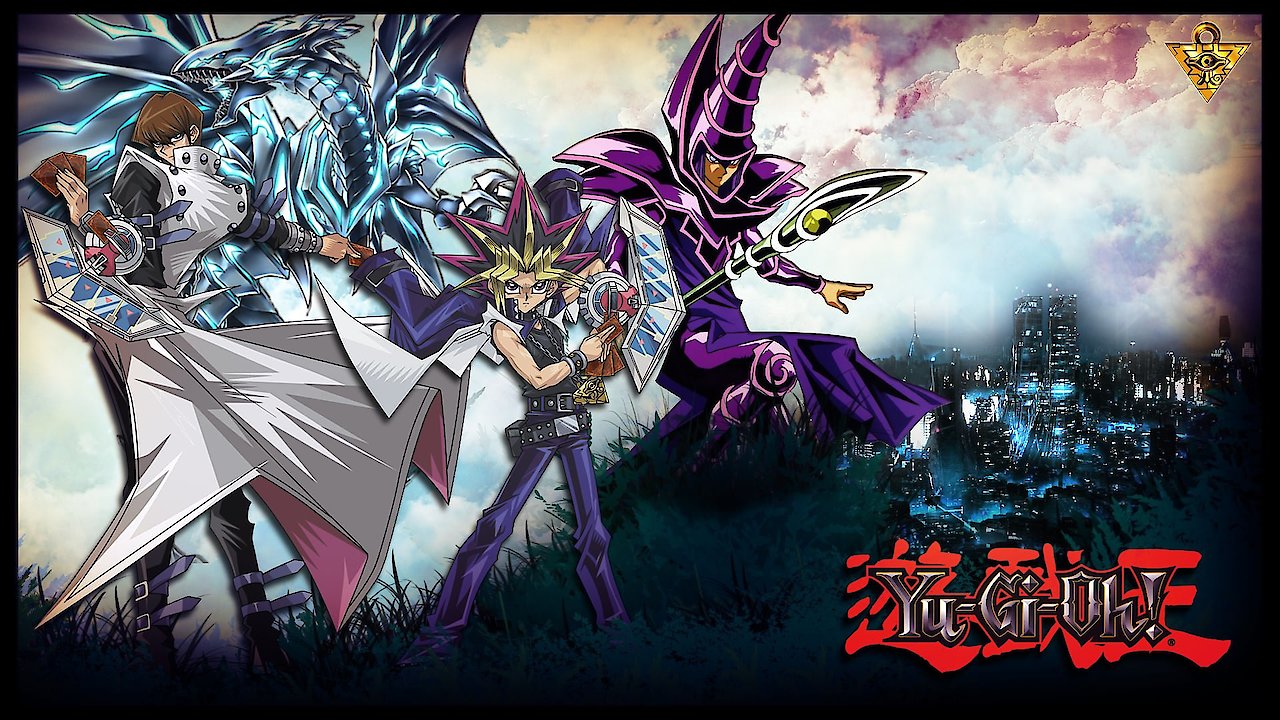
Walk into any hobby shop today and you’ll see it. Grown adults in their thirties are hunched over tables, slamming down pieces of cardboard with the same intensity they had in 2002. It's wild. The Yu-Gi-Oh TV show wasn't just another toy commercial disguised as a Saturday morning cartoon; it was a cultural pivot point that turned a niche Japanese manga into a global obsession. Honestly, if you grew up during the 4Kids era, that theme song probably still lives rent-free in your head.
But here’s the thing. Most people remember the memes—the "Heart of the Cards," the shadow realm, the gravity-defying hair. They forget how dark and genuinely weird the show actually was. Before it became a polished machine for selling booster packs, it was a story about a lonely kid who solved an ancient puzzle and accidentally invited a vengeful Egyptian spirit to inhabit his body. Meanwhile, you can read similar stories here: The Death of Summer Camp and the Brutal Reality of the Modern Music Festival.
Kazuki Takahashi, the late creator, didn't even start with card games. The original manga was a horror-adjacent series about "Shadow Games" where losing meant psychological torture or worse. When the anime finally hit Western shores, a lot of that grit was sanded down for the kids, yet the stakes still felt massive. We weren't just watching a game. We were watching a battle for souls.
The Duelist Kingdom Era: Where Rules Didn't Matter
If you try to play the modern trading card game (TCG) based on what you saw in the first season of the Yu-Gi-Oh TV show, you are going to lose. Badly. To see the full picture, we recommend the excellent article by Vanity Fair.
The early episodes were basically the Wild West of game design. Yugi would use his "Catapult Turtle" to launch "Gaia the Fierce Knight" at a floating castle’s flotation ring to make it crush the opponent’s monsters. Or he'd attack the moon. Literally. He used "Giant Soldier of Stone" to destroy a literal Moon card to drain the tide and strand Mako Tsunami’s sea monsters.
None of that is in the rulebook.
It didn't matter, though. The narrative tension of the Duelist Kingdom arc was built on "Anime Logic." Every duel was a puzzle. Maximillion Pegasus, the creator of Duel Monsters, was an incredible villain because he cheated using his Millennium Eye. How do you beat a guy who can see your hand? You don't outplay him; you out-soul him. That’s the kind of high-concept drama that kept us glued to the screen.
The dynamic between Yugi Muto and the Pharaoh (Yami Yugi) is the soul of the show. It's a classic "coming of age" story but doubled. Yugi gains confidence, while the Pharaoh learns humanity.
Battle City and the Rise of the Egyptian God Cards
The show really found its footing during the Battle City arc. This is where Seto Kaiba—everyone's favorite billionaire jerk—decided to turn the entire city of Domino into a holographic war zone. This arc introduced the Egyptian God Cards: Slifer the Sky Dragon, Obelisk the Tormentor, and The Winged Dragon of Ra.
These weren't just cards. They were weapons of mass destruction.
Why Kaiba is the Best Rival in Anime History
Seto Kaiba is a fascinatiing character because he is a staunch materialist in a world of literal magic. He sees ghosts, ancient Egyptian prophecies, and magical artifacts, and he basically says, "I don't care, I have money and technology."
- He built a theme park.
- He owns a private jet shaped like a Blue-Eyes White Dragon.
- He once threatened to jump off a castle ledge if Yugi didn't let him win.
That level of petty is legendary. But Kaiba also represents the drive for excellence. He pushes Yugi because he refuses to accept anything less than being the best. The rivalry works because it’s a clash of ideologies: the "Heart of the Cards" versus raw power and calculated strategy.
The Shadow Realm and the 4Kids Censorship Mystery
We have to talk about the "Shadow Realm." If you watched the Japanese version (Yu-Gi-Oh! Duel Monsters), characters didn't go to some purple misty dimension when they lost. They died. Or they were sent to hell.
4Kids Entertainment, the company that localized the Yu-Gi-Oh TV show for the US, had to get creative to satisfy broadcast standards. Saws that were going to cut off characters' legs were replaced with "dark energy disks." Guns were digitally removed so characters were just pointing their fingers menacingly.
Surprisingly, the "Shadow Realm" actually made the show scarier for some kids. Death is a concept we understand, but an eternal void of suffering? That’s heavy stuff for an eight-year-old. It inadvertently added a layer of cosmic horror to the series that the original creators might not have even intended.
Beyond the Original: The Yu-Gi-Oh Multiverse
After the original series ended with the "Ceremonial Duel" (which is one of the most emotional finales in anime, period), the franchise didn't stop. It evolved.
- Yu-Gi-Oh! GX: Set at a boarding school for duelists. Jaden Yuki was a total 180 from Yugi. He was happy-go-lucky until the show took a massive dark turn in the later seasons (which, sadly, weren't all dubbed).
- Yu-Gi-Oh! 5D's: This is the "Card Games on Motorcycles" era. It sounds ridiculous, but 5D's is actually some of the best writing in the franchise. It’s a gritty, dystopian story about class warfare and ancient Nazca lines.
- ZEXAL, ARC-V, and VRAINS: These introduced new summoning mechanics like Xyz, Pendulum, and Link. The shows became increasingly complex, mirroring how the actual TCG was becoming a game of "if you don't win on turn one, you're dead."
The Yu-Gi-Oh TV show became a vehicle to explain the new mechanics of the physical game, but it never quite lost that core theme: the bonds between friends. Even in VRAINS, which is about AI and virtual reality, the emotional stakes remain front and center.
Why It Still Matters in 2026
The longevity of this series is staggering. We are seeing a massive resurgence in "retro" hobbies, and Yu-Gi-Oh is at the forefront. Part of it is nostalgia, sure. But it’s also the fact that the show created a very specific aesthetic—Ancient Egypt meets high-tech cyberpunk—that hasn't been replicated.
Moreover, the show's focus on "The King of Games" speaks to the universal desire for mastery. Whether you're playing a card game, a video game, or a sport, we all want to believe that there's a "Heart of the Cards" moment waiting for us when our backs are against the wall.
Real Talk: How to Revisit the Show Today
If you’re looking to dive back in, don’t just watch the edited dub. While the voice acting (especially Dan Green as Yami and Eric Stuart as Kaiba) is iconic, the original Japanese version with subtitles offers a completely different experience. The music is more orchestral, the stakes are higher, and the character motivations make a lot more sense.
Also, check out the movie Yu-Gi-Oh! The Dark Side of Dimensions. It was the last project Kazuki Takahashi worked on before his passing, and the animation is breathtaking. It serves as a true sequel to the original manga and gives Kaiba the closure he—and we—needed.
Actionable Steps for the Aspiring Duelist
If you're feeling that itch to play or watch again, here is how you should actually approach it without getting overwhelmed by 25 years of history.
- Watch the "Season 0" (Toei Anime): This is the "lost" season that never came to the West. It’s not about card games; it’s about Yami Yugi playing sadistic games of chance with criminals. It's a trip.
- Play Master Duel: If you want to experience the game today, this is the official digital platform. It’s free-to-play and has a great tutorial. Just be prepared: the game is way faster than it was in 2004.
- Read the Manga: The original manga by Kazuki Takahashi is a masterpiece of art and pacing. It’s much darker and more cohesive than the anime.
- Focus on Speed Duel: If the modern game is too fast, the "Speed Duel" format in the physical TCG uses the smaller field and simpler rules of the early Yu-Gi-Oh TV show. It's the perfect entry point for returning fans.
The legacy of Yugi Muto isn't just about the cards he played. It's about the fact that a small, bullied kid found a way to stand up for himself. That's a story that doesn't age, regardless of how many new "Blue-Eyes" variations they print.