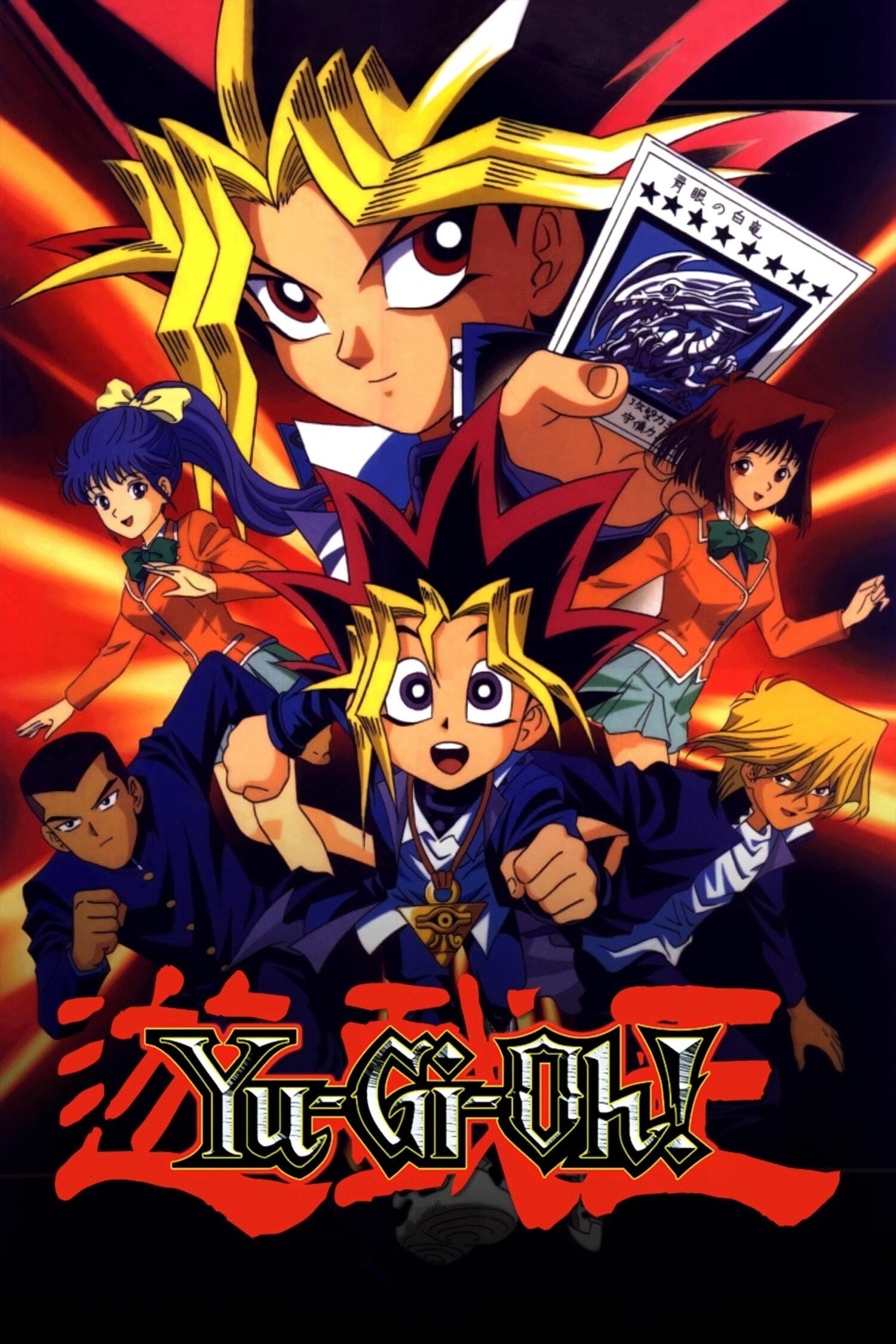
It started with a golden puzzle and a kid who clearly didn't know how to style his hair. Honestly, looking back at the 1990s, the Yu-Gi-Oh TV series shouldn't have worked. It’s a show about a supernatural entity inhabiting a teenager’s body just to play cards. It sounds ridiculous. Yet, here we are, decades later, and the franchise is still a titan of global pop culture.
If you grew up in the early 2000s, you remember the ritual. You’d rush home, flip on Kids' WB or 4Kids, and watch Yugi Mutou scream about the "Heart of the Cards" while a rich guy in a white trench coat flew around in a jet shaped like a blue dragon. It was peak Saturday morning chaos. But there is a massive difference between the version we saw in the West and the original Japanese vision created by Kazuki Takahashi. People often forget that the manga didn't even start as a card game story. It was a horror series.
The Yu-Gi-Oh TV series we know and love—the one with the Duelist Kingdom and Battle City arcs—is actually the second adaptation. There’s a "lost" season produced by Toei Animation that fans call Season Zero. It’s dark. Yami Yugi doesn't just win card games there; he sets people on fire or drives them insane with "Penalty Games." When the show eventually shifted focus to the Duel Monsters card game, it pivoted from a niche psychological thriller into a marketing juggernaut that redefined how anime worked in the West.
The 4Kids Era and the Great "Shadow Realm" Lie
Let's talk about the Shadow Realm. It's the most famous censorship pivot in television history. In the original Japanese version of the Yu-Gi-Oh TV series, characters didn't go to a purple dimension when they lost. They died. Or they were sent to the hospital with permanent trauma.
4Kids Entertainment had a problem. They had this incredibly cool show with high stakes, but they couldn't show saw blades cutting into people's legs (the Arkana duel) or people falling to their deaths. So, they invented the Shadow Realm. Ironically, this made the show scarier for some of us. The idea of being trapped in eternal darkness forever felt way worse than just... dying.
The localization also gave us some of the most iconic voice acting of the era. Dan Green’s booming, authoritative baritone as Yami Yugi and Eric Stuart’s smug, condescending Seto Kaiba created a rivalry for the ages. It wasn't just about the cards; it was a clash of philosophies. Kaiba represented cold, hard logic and the power of money. Yugi represented the mystical, communal power of friendship and faith. It was cheesy. It was loud. It was perfect.
Beyond the Original: The Multiverse of Card Games
Once Yugi Muto walked into the sunset, the Yu-Gi-Oh TV series didn't stop. It evolved. Some would say it got weird.
GX took us to a school. Think Hogwarts, but instead of potions, you’re studying "Deck Thinning." It started lighthearted but ended up being one of the darkest entries in the franchise, dealing with Jaden Yuki’s literal depression and isolation. Then came 5D's. This is where the memes come from. "Card games on motorcycles." It sounds like a parody, but 5D's is widely considered to have the best writing in the entire franchise. It tackled class warfare, social stratification, and a post-apocalyptic future.
The progression looked something like this:
- Yu-Gi-Oh! Duel Monsters: The classic. Egyptian gods and ancient puzzles.
- Yu-Gi-Oh! GX: High school drama with "Elemental Heroes."
- Yu-Gi-Oh! 5D's: Dystopian futures and Synchro Summoning.
- Yu-Gi-Oh! ZEXAL: High-energy, divisive, but introduced Xyz Summoning.
- Yu-Gi-Oh! ARC-V: A massive crossover attempt that blew up its own multiverse.
- Yu-Gi-Oh! VRAINS: Cyberpunk hacking and AI sentience.
- Yu-Gi-Oh! SEVENS & Go Rush!!: A complete shift toward a younger audience with "Rush Duels."
The shift to SEVENS was a massive shock to long-time fans. The art style changed. The rules changed. It felt like the Yu-Gi-Oh TV series was finally leaving its original fans behind to find a new generation. And honestly? That's probably healthy. You can't keep a franchise alive for 25 years by only talking to 30-year-olds who miss their Dark Magician.
Why the "Heart of the Cards" Actually Matters
We joke about Yugi pulling exactly what he needs at the last second. "Destiny Draw" is basically a legal cheat code in the show. But if you look deeper, the Yu-Gi-Oh TV series is about agency.
In the world of the show, the cards aren't just ink and cardboard. They are manifestations of the soul. When Yugi duels, he isn't just playing a game; he's engaging in a dialogue. The "Heart of the Cards" is a metaphor for staying calm under pressure and trusting your preparation. It’s about the "Flow" state.
Scientific studies on gaming often point to how structured play helps with strategic thinking. While Yu-Gi-Oh might seem like it’s just about who has the biggest monster, the show actually emphasizes resource management and psychological warfare. Joey Wheeler (Jonouchi in Japan) is the best example. He started with a deck of "vanilla" monsters and zero skill. His growth throughout the series from a street brawler to a world-class duelist is the most human arc in the show. He didn't have an ancient Pharaoh in his head. He just had grit.
The Production Reality: From Manga to Screen
Studio Gallop handled the bulk of the animation for the most famous iterations. If you watch closely, you can see the budget fluctuating wildly. Some episodes of the Yu-Gi-Oh TV series look like cinematic masterpieces (usually when animation director Kenichi Hara was involved). Others look like they were drawn in a moving car.
The music is another beast entirely. The Japanese soundtrack by Shinkichi Tajiri is full of orchestral, haunting themes and Egyptian-inspired melodies. The Western soundtrack is pure 2000s synth-rock and techno. Both are great in their own right, but they change the vibe completely. The Japanese version feels like a supernatural epic; the US version feels like a high-stakes sports broadcast.
Real-World Impact: How the Show Built an Empire
Most anime are made to sell the source material—the manga. Yu-Gi-Oh was different. It was made to sell the Trading Card Game (TCG). And boy, did it work.
According to Guinness World Records, Yu-Gi-Oh! is the top-selling trading card game in the world, with over 25 billion cards sold. That doesn't happen without the Yu-Gi-Oh TV series acting as a 22-minute commercial every week. But it became more than a commercial. It created a community. You can walk into a card shop in London, Tokyo, or New York, and the rules are the same. The "language" of the game, established by the show, became a global bridge.
The show also pioneered the "shonen" formula for non-combat shows. It proved you could have the intensity of a Dragon Ball Z fight without anyone actually throwing a punch. The "Life Point" counter became the "Health Bar" of the tabletop world.
Common Misconceptions About the Show
People often think Yugi is just a lucky kid. In reality, the show establishes he is a gaming genius even without the Pharaoh. In the manga, he beats people at chess, board games, and even digital pets. The card game just happened to be the one that took off.
Another myth is that the show follows the card game rules. It doesn't. At least not at first. In the first season, Yugi "aims for the flotation ring" of a castle or "uses his monster to attack the moon" to change the tide. These aren't real moves. The TCG was developed after the manga started, so the early show was basically making it up as it went along. It wasn't until the Battle City arc that the "Procedures" (Tributes, Effect types, Phases) started to resemble the game people actually play.
How to Experience the Series Today
If you’re looking to dive back in, don't just go for the nostalgia bait.
- Watch the Subtitled Version: If you only saw the 4Kids dub, you’ve missed about 30% of the actual plot and 100% of the original stakes. The Japanese version of the Yu-Gi-Oh TV series is a different experience entirely.
- Read the Original Manga: It’s much darker. The "Death-T" arc where Kaiba builds a literal murder-theme park to get revenge on Yugi is something that never made it to the 2000s anime.
- Check out The Dark Side of Dimensions: This 2016 movie is a direct sequel to the manga (not the anime). The animation is stunning, and it provides a much more mature ending to the Yugi/Kaiba rivalry.
- Master Duel: If the show makes you want to play, this is the modern gateway. It’s free, but fair warning: the game is much faster and more complex now than it was when "Summoning Blue-Eyes White Dragon" was the peak of strategy.
The Yu-Gi-Oh TV series remains a fascinating study in how a niche horror manga can be sanitized, repackaged, and turned into a global phenomenon. It’s a mix of ancient mythology, corporate greed, and genuine heart. Whether you’re there for the tactical gameplay or the ridiculous "friendship" monologues, there is a reason this show hasn't faded into obscurity. It’s loud, it’s vibrant, and it’s unapologetically itself.
To truly understand the legacy, you have to look past the cards. Look at the people still meeting in tournament halls and the fans still debating the lore on Reddit. The show didn't just teach us how to play a game; it taught a generation that even when the odds are stacked against you, and your opponent has a literal god on their side, you always have one last draw left in the deck. It’s about the refusal to give up. And that is a theme that never goes out of style.
To get started with the modern era of the franchise, your best move is to download Yu-Gi-Oh! Master Duel on any platform to see how the mechanics from the show have evolved into a high-speed competitive sport. Alternatively, if you want the pure story, find a streaming service that offers the Japanese version with subtitles to witness the original, uncensosed "Shadow Games" as Kazuki Takahashi intended them.



