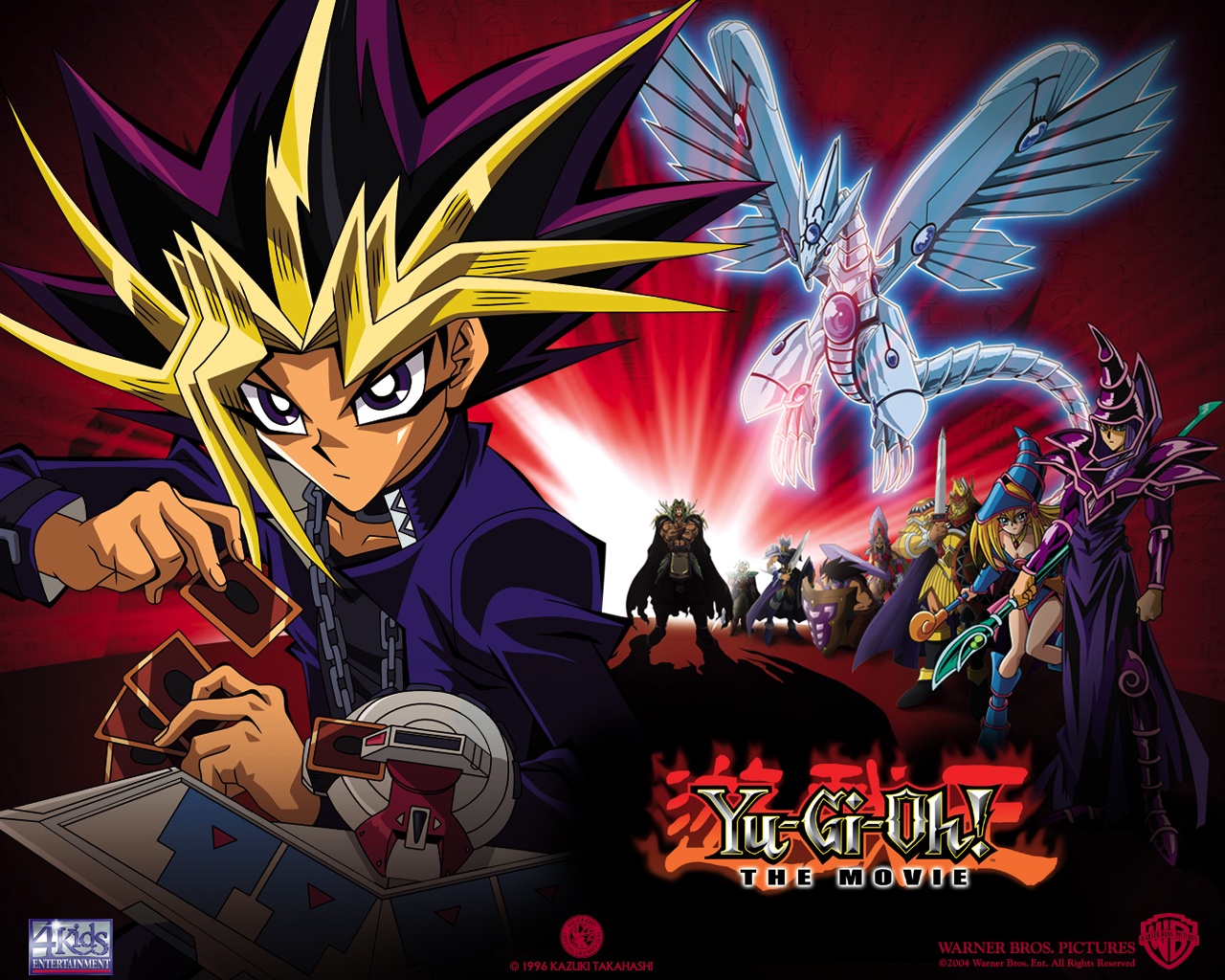
If you were a kid in 2004, you probably remember the hype. It was inescapable. You couldn’t walk into a Target or a hobby shop without seeing those shiny blue packs. Yu-Gi-Oh! The Pyramid of Light wasn't just a movie; it was a massive cultural event designed to sell trading cards, yet somehow it became a permanent, slightly confusing fixture in the history of anime.
I still have the movie promo cards. They’re beat up now. Honestly, the movie itself is kind of a fever dream. It’s a 90-minute spectacle that tries to bridge the gap between the Duelist Kingdom vibes and the high-stakes Ancient Egyptian lore of the later seasons. Looking back, it’s fascinating how much this film deviates from the source material while still feeling like a core memory for an entire generation of duelists.
What Actually Happens in the Pyramid of Light?
The plot is a bit of a mess, but in a fun way. It centers on Anubis, the Egyptian god of death, who was apparently defeated by the Pharaoh thousands of years ago. He wakes up because Yugi Muto completes the Millennium Puzzle. Standard stuff. But then Kaiba—classic, obsessed Seto Kaiba—decides he needs a card to beat Yugi’s Egyptian God Cards. He goes to Pegasus, wins a card called the Pyramid of Light, and all hell breaks loose.
The stakes feel high, but if you watch it now, the logic is... shaky. Anubis wants to use the Pyramid of Light to suck the life force out of the duelists to resurrect himself. It’s basically a high-stakes card game where losing means your soul gets eaten. Again.
There's this weird tension throughout the film. You have the English dub, handled by 4Kids Entertainment, which leans heavily into the "Heart of the Cards" melodrama. Then you have the actual mechanics of the game, which, let’s be real, the movie ignores whenever it’s convenient for the plot. Watching Yugi summon Blue-Eyes Shining Dragon is cool, sure, but the math rarely adds up if you’re a competitive player.
The Infamous "Movie Pack" and the Meta
The real reason people flooded theaters wasn't necessarily for the writing. It was for the cards. You got one of four random cards with your ticket: Blue-Eyes Shining Dragon, Sorcerer of Dark Magic, Watapon, or Pyramid of Light.
Imagine being the kid who pulled Watapon while your friend got the Shining Dragon. Brutal.
These cards actually changed how people looked at the game for a hot minute. Blue-Eyes Shining Dragon was the big chase. It required you to tribute a Blue-Eyes Ultimate Dragon. In 2004, actually getting an Ultimate Dragon onto the field was a monumental task. It wasn't like today where you can special summon ten monsters in one turn. Back then, if you saw a Shining Dragon, the game was basically over—not because the card was invincible, but because the effort to summon it meant your opponent was likely already winning.
Then there was Sorcerer of Dark Magic. This card was actually decent for a while in casual play because it could negate traps. In an era where Mirror Force and Torrential Tribute were everywhere, having a 3200 ATK beatstick that ignored traps was scary. But the movie made these cards look like literal gods. In reality? They were "bricks" more often than not. You’d draw them in your opening hand and just stare at them, unable to do anything while your opponent beat you down with a Gemini Elf.
Why the Animation Style Felt Different
If you compare Yu-Gi-Oh! The Pyramid of Light to the TV episodes airing at the same time, the difference is jarring. The movie was produced by Warner Bros. and Shueisha specifically with a Western theatrical release in mind. This led to a higher frame rate and more detailed character designs, but it also lost some of the "grit" of the original series.
The colors are brighter. The monsters look more "3D" in certain shots. Some fans hated it. Others thought it was the peak of the franchise's visual style.
The most interesting part is how it fits—or doesn't fit—into the timeline. Most fans agree it takes place right after the Battle City finals but before the Waking the Dragons arc. However, because it’s a non-canon movie, the events are never mentioned again in the show. Yami Yugi defeats a literal god of death and then goes back to worrying about some biker gang in the next season. It’s a classic anime movie trope: world-ending stakes that have zero impact on the long-term story.
The 4Kids Influence and the Soundtrack
We have to talk about the music. The soundtrack for the English version of the movie is a time capsule of early 2000s pop-rock. You’ve got "One Card Short" and "Step Up." It’s incredibly cheesy. It’s also incredibly nostalgic.
4Kids took a lot of heat for how they localized Yu-Gi-Oh!, cutting out the violence and the "Shadow Realm" being a euphemism for death. But with the movie, they leaned into the theatricality. They knew their audience. They knew we wanted Yami Yugi to give a speech about friendship while a guitar riff played in the background.
Critics absolutely panned it. Rotten Tomatoes has it at a dismal percentage. But critics weren't the target. The target was the kid who spent their allowance on Legend of Blue Eyes White Dragon booster packs. For that audience, seeing a giant holographic Blue-Eyes on a cinema screen was worth the price of admission alone.
Misconceptions About Anubis and the Lore
A lot of people get the lore of the movie confused with the final season of the anime (the Dawn of the Duel arc). Anubis is not the same thing as the Great Shadow Game or Zorc Necrophades. He's a separate entity entirely created for the film.
- Anubis isn't in the original manga.
- The "Pyramid of Light" card isn't one of the Seven Millennium Items.
- The movie introduces a "prophecy" that was never mentioned by Ishizu Ishtar, which is weird because her whole thing is seeing the future.
This disconnect is why many hardcore fans treat the film as a "side story" or an alternate universe. It’s best enjoyed if you don't try to make the pieces fit too perfectly. It’s a spectacle. It’s a long-form commercial that accidentally became a cult classic because of how weirdly intense the voice acting is. Dan Green (Yugi) and Eric Stuart (Kaiba) give it their absolute all, even when the dialogue is objectively ridiculous.
The Lasting Legacy of the Pyramid
Even twenty years later, the movie persists. It gets re-released in theaters for anniversary events. Why? Because it represents the peak of the Yu-Gi-Oh! "Mania."
There's something special about that era of gaming. No internet meta-decks to copy. No YouTube tutorials on how to win in two turns. Just you, your friends, and whatever weird cards you pulled from a movie theater promo pack. Yu-Gi-Oh! The Pyramid of Light captured that feeling. It made the card game feel like it actually mattered.
If you’re going to revisit it, do it for the nostalgia. Don't look for a tight plot. Look for the moments where Kaiba laughs like a maniac while piloting a jet shaped like a dragon. That’s the true essence of Yu-Gi-Oh!
How to Engage with the Film Today
If you're looking to dive back into this specific era of the franchise, here are a few ways to make it worth your while without getting bogged down in the dated animation:
Check the Card Prices Go through your old collection. Believe it or not, the original 2004 movie promos in "Near Mint" condition have actually held some value among collectors. The Reverse of Light or the original gold-bordered versions are especially nostalgic for collectors of the "TCG" era.
Watch the Remastered Version If you can find the remastered 4K or high-definition versions, the colors pop significantly better than the old DVD rips. The visual effects on the Egyptian God Cards—Slifer, Obelisk, and Ra—look surprisingly decent on modern screens.
Compare the Dubs If you're a real nerd for the medium, try to find the Japanese version (Hikari no Pyramid). The tone is significantly darker, and the music is completely different. It changes the entire vibe of the conflict between Yugi and Anubis.
Build a "Movie Era" Deck Try building a deck using only cards available up to 2004. It’s a great way to understand how much the game has evolved. Trying to summon Blue-Eyes Shining Dragon under 2004 rules is a genuine challenge that requires a lot more strategy (and luck) than modern play suggests.
The movie might be a product of its time, but its impact on the growth of the TCG in the West is undeniable. It was the moment Yu-Gi-Oh! went from a popular cartoon to a theatrical powerhouse.



