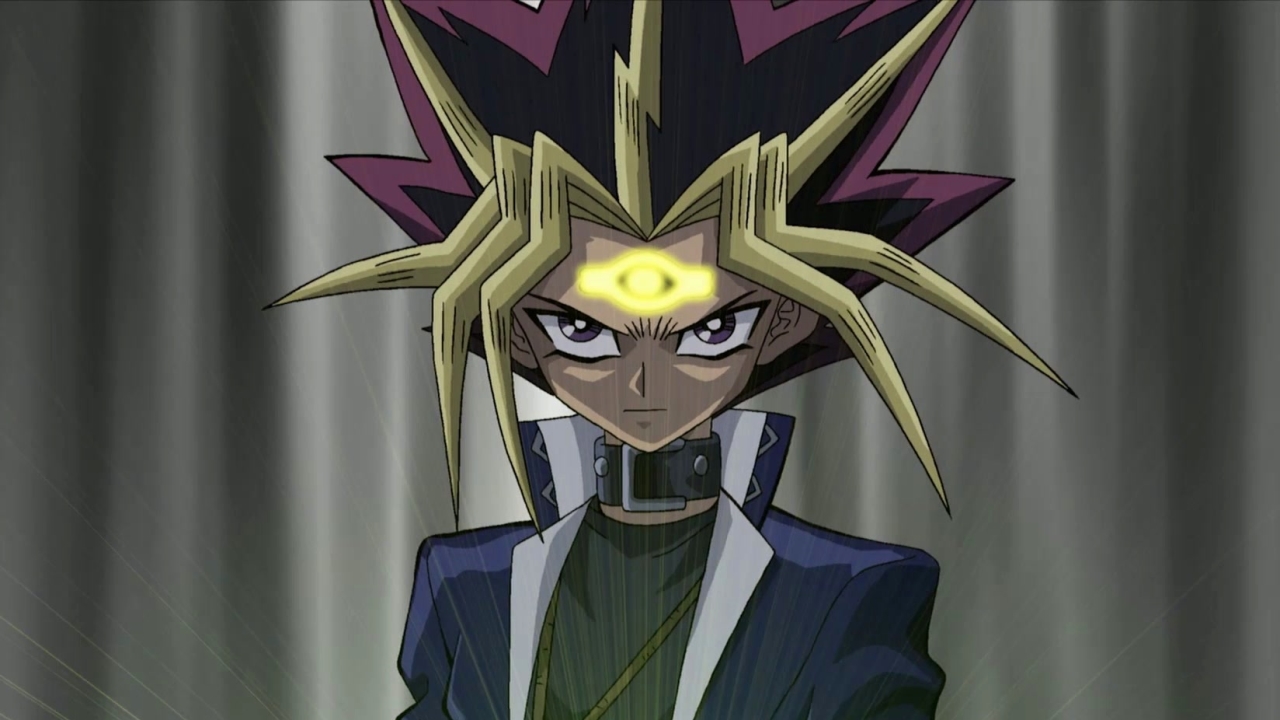
It was 2004. If you were a kid with a deck of cards in your back pocket, you remember the hype. Warner Bros. was bringing Yu-Gi-Oh! The Pyramid of Light to theaters, and honestly, the theater seats were just a delivery mechanism for the exclusive promo cards. We all wanted that shiny Blue-Eyes Shining Dragon. But looking back at the film now, it’s such a weird, chaotic piece of Yu-Gi-Oh! history that it deserves a second look—not just as a nostalgia trip, but as a fascinating example of how Western localization and Japanese production crashed into each other.
The movie isn't technically "canon" to the original manga by Kazuki Takahashi. That’s the first thing people usually get wrong. It was commissioned by 4Kids Entertainment specifically for a Western audience. Because of that, it feels different from the Duelist Kingdom or Battle City arcs. It’s louder. It’s flashier. It’s got a soundtrack featuring Sum 41 and The Black Eyed Peas. It’s a total time capsule of the early 2000s.
The Anubis Problem and the Lore Gap
The plot centers on Anubis, an ancient Egyptian god of the dead who was supposedly defeated by the Pharaoh (Atem) back in the day. Here’s the catch: Anubis doesn't exist in the original manga or the main anime series. He was invented for this movie. The story kicks off during the tail end of the Battle City tournament. Yugi has just won the three Egyptian God Cards—Slifer the Sky Dragon, Obelisk the Tormentor, and the Winged Dragon of Ra.
Kaiba, being Kaiba, is absolutely miserable about it. He goes to Pegasus, the creator of Duel Monsters, looking for a way to beat the God cards. Pegasus has conveniently developed a card called the Pyramid of Light.
Things go sideways immediately.
When Kaiba plays the card against Yugi in their big duel, it triggers a literal ancient prophecy. The card isn't just a card; it’s a conduit for Anubis to return and destroy the world. The stakes are hilariously high for a card game. While Yugi and Kaiba are dueling inside a massive, glowing blue pyramid that’s sucking their souls away, Joey and Tristan are fighting off mummies in a museum. It's peak Yu-Gi-Oh! logic.
Why the Dueling in Pyramid of Light is... Weird
If you play the TCG or Master Duel today, the duels in Yu-Gi-Oh! The Pyramid of Light will make your head spin. The rules are... flexible.
Kaiba plays a card called Deck Destruction Virus, which works way differently than the actual Deck Devastation Virus card we have in real life. In the movie, it just starts eating Yugi's deck every turn. Then there’s the Blue-Eyes Shining Dragon. In the film, this card is treated like the ultimate lifeform, able to negate any effect and gain power for every Dragon in the graveyard. In the real-life TCG, the card was famously difficult to summon and rarely saw competitive play because it required sacrificing a Blue-Eyes Ultimate Dragon.
Most fans remember the "double-cross."
Kaiba thinks he’s in control. He thinks he’s using the Pyramid of Light to prove his superiority over the Pharaoh. But the movie does a great job of showing how his obsession with winning actually blinds him to the supernatural danger right in front of him. It’s one of the few times we see Kaiba truly humbled, even if he’d never admit it.
The Promo Card Craze
We can't talk about this movie without talking about the gold packs.
When you went to see Yu-Gi-Oh! The Pyramid of Light in theaters, you got a small wax pack containing one of four cards:
- Blue-Eyes Shining Dragon
- Sorcerer of Dark Magic
- Watapon
- Pyramid of Light
This was a massive marketing move. For many kids, this was their first "secret rare" or "ultra rare" card. Sorcerer of Dark Magic was particularly cool because it looked like a leveled-up Dark Magician, though its summoning requirement (tributing two Level 6 or higher Spellcasters) made it a total brick in most decks. And then there was Watapon. Getting the little puffball instead of the Dragon felt like a personal insult from the universe at the time.
Critical Reception vs. Fan Reality
Critically? The movie was thrashed. It has a dismal rating on Rotten Tomatoes. Critics who didn't understand the game saw it as a 90-minute toy commercial. They weren't entirely wrong. But for the fans, the movie provided something the TV show couldn't: a massive budget for animation.
The God Cards looked incredible. The summons felt weighty. Seeing the Winged Dragon of Ra rendered with theatrical-quality shadows and lightning was a big deal in 2004. Even if the dialogue was cheesy—and let’s be honest, the 4Kids dub is legendary for its cheese—the voice acting from Dan Green (Yugi) and Eric Stuart (Kaiba) was at its absolute peak. They brought a level of intensity to "I draw a card!" that has never been matched.
The Sound of the Era
The soundtrack is a weird masterpiece. While the Japanese version of the film (which was actually released after the US version) had a more traditional score, the Western release was packed with pop-rock. The song "One Card Short" by James Chatton basically summarizes the entire theme of the franchise. It’s earnest, slightly dramatic, and incredibly catchy. It’s the kind of music that only exists in the "extreme" sports and anime era of the early 2000s.
Is it Worth Watching Now?
Honestly, yeah.
If you view it as a standalone "what if" story, it’s a blast. It’s the quintessential Yugi vs. Kaiba match. You get the Egyptian Gods, you get the Blue-Eyes Ultimate Dragon, and you get the ridiculousness of a card game nearly ending the world. It’s also much shorter than the multi-episode duels in the anime, making it a quick watch.
The animation holds up surprisingly well, especially the 3D models used for the monsters, which were cutting-edge for the time. It captures the "Dark Games" atmosphere of the early series before the franchise pivoted toward the more sci-fi elements of GX or 5D's.
Taking the Next Steps
If you’re looking to dive back into the world of Yu-Gi-Oh! The Pyramid of Light, there are a few things you should actually do rather than just reading about it:
- Check the Version: If you can find it, try to watch the "Remastered" version. The colors are much sharper, and it fixes some of the grainy issues from the original DVD release.
- Track Down the Cards: If you’re a collector, the original 2004 MOV-EN promo cards are still relatively affordable as singles on the secondary market. Just look for the "MOV" set code in the bottom right of the art box to make sure they are the theater originals.
- Watch the Japanese Cut: For a totally different experience, look for the Japanese version titled Yu-Gi-Oh! Duel Monsters: Pyramid of Light. It has about 12 minutes of different footage and a much more serious tone without the pop-rock soundtrack.
- Build the Movie Deck: Try building a "Movie Era" deck in Yu-Gi-Oh! Master Duel. Using only cards available up to 2004 makes for a fun, slow-paced challenge with friends that highlights just how much the game has evolved since the Pyramid was first raised.
The film stands as a monument to a specific moment in pop culture when anime was exploding in the West. It wasn't perfect, and it didn't always make sense, but it had heart. And more importantly, it had a very shiny dragon.



