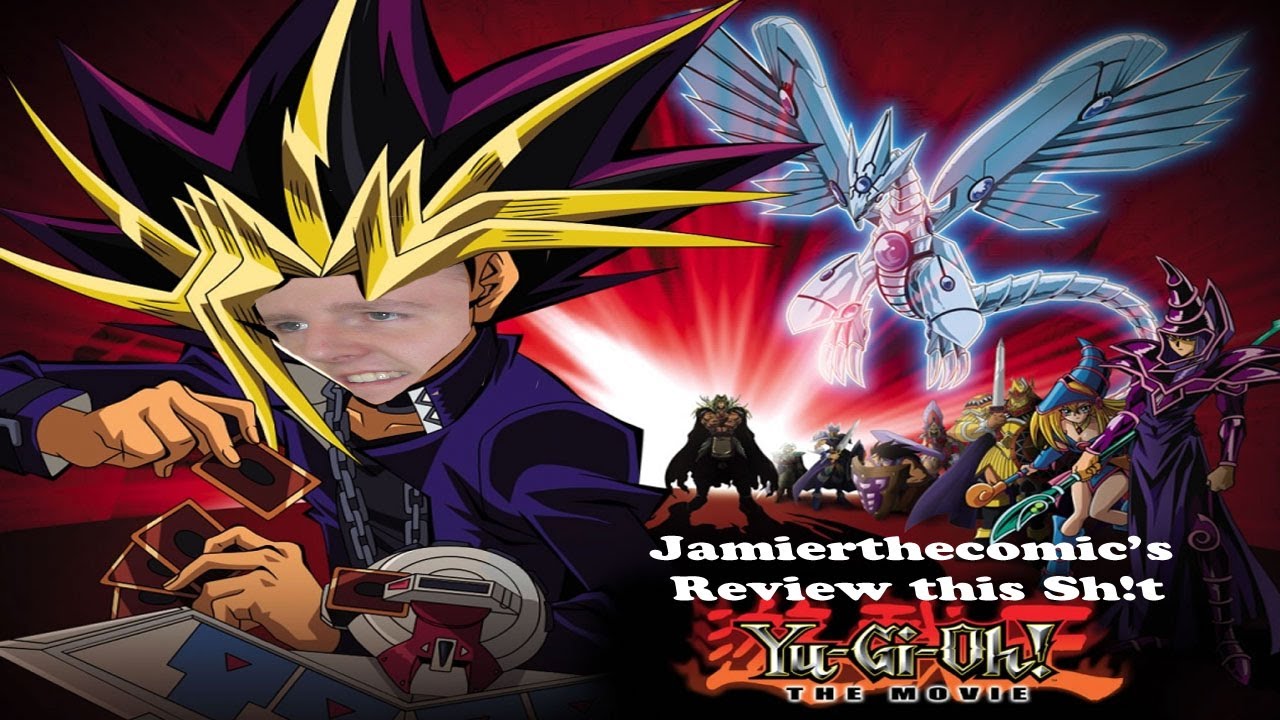
In 2004, you couldn't walk into a movie theater without seeing a kid clutching a deck of cards. It was a weird, specific moment in pop culture. Warner Bros. and 4Kids Entertainment decided to take the massive success of the Duel Monsters anime and shove it onto the big screen with Yu-Gi-Oh! The Movie: Pyramid of Light. Looking back, it wasn’t just a movie. It was a massive marketing event that came with a shiny Blue-Eyes Shining Dragon card if you were lucky enough to get a ticket early.
The film serves as a strange bridge between the Battle City arc and the eventual conclusion of the series. Honestly, if you try to fit it perfectly into the show's timeline, your brain might melt. It’s basically a non-canon fever dream that captures everything we loved—and everything that was totally ridiculous—about the early 2000s TCG craze.
Why the Plot of Pyramid of Light Makes Zero Sense (And Why We Loved It)
The story starts deep in the sands of Egypt. We see the awakening of Anubis, the Egyptian God of the Dead. He’s got a grudge against the Pharaoh that’s been brewing for three thousand years. While Yugi Muto is busy winning the Battle City tournament, this ancient evil is prepping his comeback.
Seto Kaiba, being his usual obsessive self, is frustrated. He can’t beat Yugi’s Egyptian God Cards. He goes to Maximillion Pegasus—who is somehow alive and well in this movie despite his darker fate in the original manga—to find a way to crush Slifer, Obelisk, and Ra. Pegasus has developed two specific cards to counter the Gods: Pyramid of Light and the Blue-Eyes Shining Dragon.
Then things get heavy.
During a duel between Yugi and Kaiba, the Pyramid of Light card is played, and it literally sucks the souls of Yugi’s friends into the Millennium Puzzle. It’s dramatic. It’s over-the-top. It’s exactly what 10-year-olds wanted. The stakes aren't just a card game anymore; they are cosmic. Anubis eventually takes over the duel, manifesting in the real world to bring about the "End of the World," which is a pretty standard Tuesday in the Yu-Gi-Oh! universe.
The Production Chaos Behind the Scenes
You might not know that this movie was actually commissioned by 4Kids Entertainment specifically for a Western audience. It wasn't a Japanese production that was simply "brought over." The animation was handled by Studio Gallop, but the creative direction was heavily influenced by the American distributors. This led to a very different feel compared to the darker, more methodical pacing of the original Japanese Pyramid of Light (titled Hikari no Pyramid).
The soundtrack is a time capsule. You've got tracks from artists like Black Eyed Peas and Fat Joe. It’s bizarre. Hearing "For The People" while Yugi struggles against an ancient deity is a tonal shift that only the early 2000s could produce.
Critics absolutely hated it. At the time of its release, it sat at an abysmal 5% on Rotten Tomatoes. Reviewers called it a "feature-length commercial." They weren't necessarily wrong, but they missed the point. For fans, it was the first time seeing the Dark Magician and Blue-Eyes White Dragon rendered with a higher animation budget. The spectacle mattered more than the script.
The Cards That Defined a Generation
Let’s talk about the real reason people went to the theater: the promo cards. If you saw the movie during its initial run, you received one of four exclusive cards:
- Pyramid of Light: A continuous trap card that was, frankly, terrible in the actual competitive game but looked cool.
- Watapon: A cute, fuzzy monster that let you special summon it if added to your hand by a card effect.
- Sorcerer of Dark Magic: This was the heavy hitter. It required sacrificing two Level 6 or higher Spellcasters.
- Blue-Eyes Shining Dragon: The ultimate "boss monster" of the film.
In the movie, Blue-Eyes Shining Dragon is an unstoppable god-slayer. In reality? It was a "win-more" card that was incredibly difficult to summon. You had to Tribute a Blue-Eyes Ultimate Dragon. Think about that. You needed three Blue-Eyes White Dragons, a Polymerization, and then the Shining Dragon itself. It was a logistical nightmare for players, yet every kid on the playground wanted one.
Acknowledging the Plot Holes
If you’re a lore nerd, the movie is a bit of a headache. In the Japanese manga, Pegasus is killed by Bakura. In the movie, he’s sipping wine in a mansion. The power scaling is also all over the place. The Egyptian God Cards are portrayed as being easily countered by a single trap card, which feels like a slap in the face to the entire Battle City saga.
Also, the character of Anubis is barely developed. He’s just "Evil Guy Who Likes Blue." Compared to villains like Marik or Pegasus, who had complex motivations and tragic backstories, Anubis is a bit of a cardboard cutout. But he looked cool, and his monster, Andro Sphinx, had some serious attack points.
The Legacy of the Pyramid
Despite its flaws, Yu-Gi-Oh! The Movie: Pyramid of Light remains a cult classic. It represents the peak of the "Duel Monsters" era before the franchise moved on to GX, 5D's, and the various spin-offs that introduced Synchro, Xyz, and Link summoning. It was the last hurrah for the original cast on the big screen until The Dark Side of Dimensions was released over a decade later.
It’s a film about friendship, sure. But it’s also a film about the sheer audacity of a card game determining the fate of the universe. There is something inherently charming about Kaiba building a high-tech duel stadium just to settle a grudge, only for a mummy to show up and ruin the party.
If you’re looking to revisit the film or experience it for the first time, keep your expectations in check. Don't look for a cinematic masterpiece. Look for a loud, vibrant, nostalgic explosion of Saturday morning cartoon energy.
How to experience the Pyramid of Light today:
- Watch the Remastered Version: The movie was remastered in HD for its 2018 theatrical re-release. The colors pop much more than the original DVD release, making the monster designs look significantly sharper.
- Check the Cards: If you still have your original promo cards, check their condition. An "Unused" Blue-Eyes Shining Dragon from the 2004 cinema pack can actually fetch a decent price among collectors today, especially if it’s graded.
- Contextualize the Lore: Treat the movie as an "alternate universe" story. It makes the inclusion of Pegasus and the sudden appearance of Anubis much easier to swallow.
- Listen to the Soundtrack: Seriously. Find the soundtrack on a streaming service. It is a fascinating look at what record executives thought "cool kids" were listening to in 2004. It’s a mix of pop-rock and hip-hop that is undeniably of its time.
The movie isn't perfect, but it is a vital piece of gaming history. It proved that a trading card game could carry a theatrical release, paving the way for the massive multimedia franchise that Yu-Gi-Oh! remains to this day. Grab some popcorn, ignore the logical inconsistencies, and just enjoy the heart of the cards.



