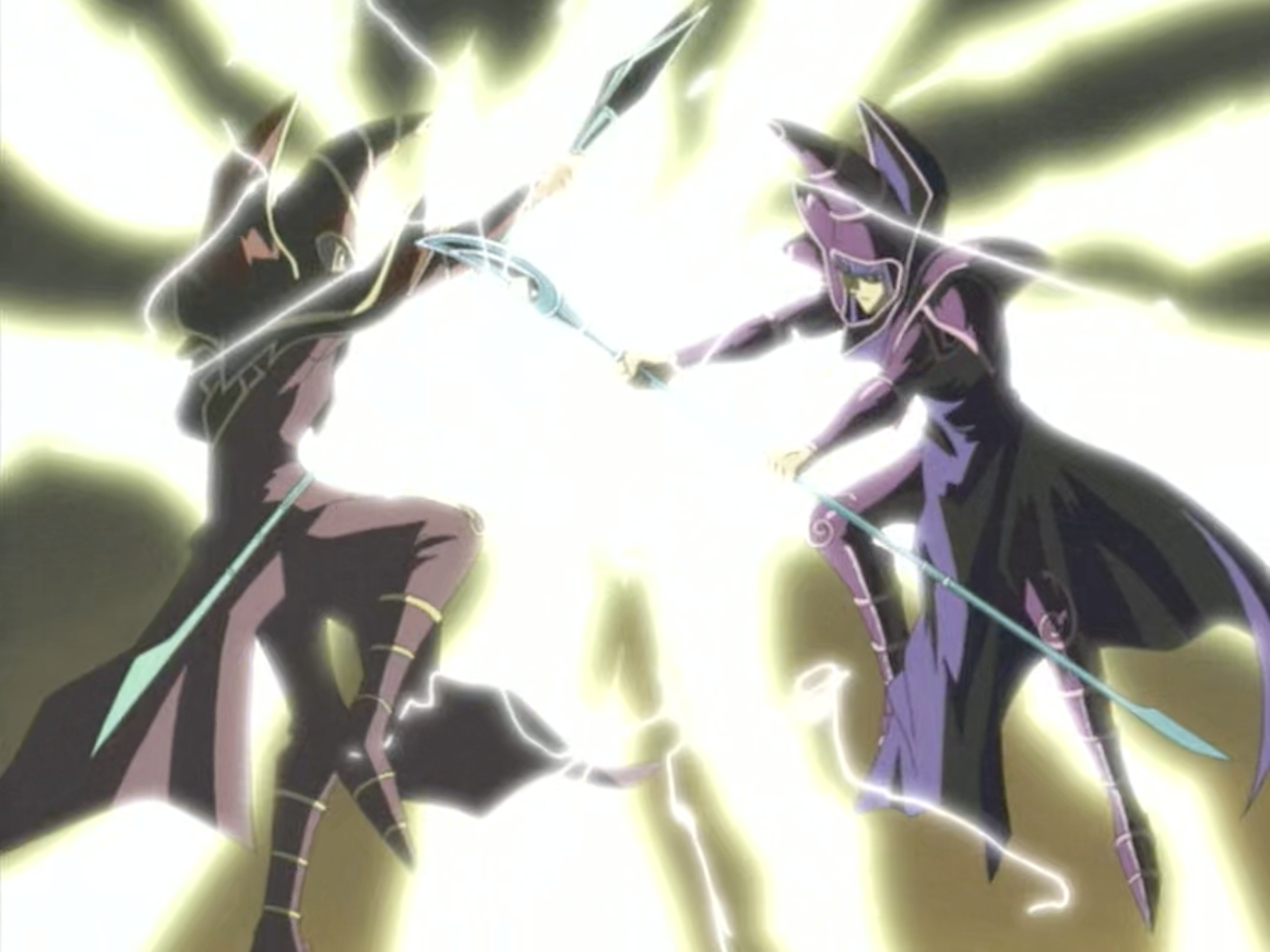
It is time to duel. You’ve probably heard that a thousand times if you grew up in the early 2000s, but figuring out how Yu-Gi-Oh seasons actually work is a nightmare. It’s not as simple as checking Netflix. Between the "Season 0" that never officially left Japan and the way 4Kids Entertainment chopped up the Duel Monsters run for Western audiences, the math almost never adds up.
Most people think there are five seasons. Some say six. If you’re a purist, you might even argue there’s only one long story arc that got butchered by localization teams. Honestly, it’s a mess. But if you want to understand why this franchise still makes billions of dollars and why people are still arguing about the "Waking the Dragons" arc twenty years later, you have to look at how these seasons were built.
The Phantom Start: What "Season 0" Actually Is
Before Yugi Muto ever touched a Duel Monsters card on screen, he was playing for much higher stakes. Most Western fans missed the 1998 Toei Animation series. It’s often called Season 0. It’s dark. It’s weird. In this version, Yami Yugi wasn’t just a card game ghost; he was a straight-up vigilante who punished bullies by trapping them in horrific "Penalty Games" that shattered their minds.
There was no card game focus here. It was about various games of chance and skill. Because it didn't align with the massive success of the Konami trading card game, it was basically buried when Studio Gallop took over for the 2000 reboot. If you watch it now, it feels like a fever dream compared to the polished, card-centric episodes we got later. It’s the foundational DNA of the Yu-Gi-Oh seasons, yet it’s the one part of the history that official English releases pretend doesn't exist.
Breaking Down the Duel Monsters Era
When people talk about the "original" show, they mean Yu-Gi-Oh! Duel Monsters. This is the one with the Blue-Eyes White Dragon and the Millennium Items. 4Kids broke this into five distinct seasons for the US market, but the Japanese broadcast had a slightly different rhythm.
The first season is the Duelist Kingdom arc. It’s iconic. It’s also mechanically insane because the rules of the card game didn't actually exist yet. Yugi was winning matches by "attacking the moon" or using "Multiply" on Kuriboh to create a literal wall of fluff. It didn't make sense, but we loved it. This season established the core rivalry between Yugi and Kaiba, which would carry the entire franchise.
Then came Battle City. This is widely considered the peak. Split across seasons two and three, it introduced the Egyptian God Cards: Slifer the Sky Dragon, Obelisk the Tormentor, and The Winged Dragon of Ra. The stakes shifted from a private island to the streets of Domino City. It was gritty, the stakes felt real, and it finally introduced the "Master Rules" of the card game, which made the duels feel less like magic and more like a tactical sport.
The Controversy of Filler Arcs
You can't talk about Yu-Gi-Oh seasons without mentioning the "Virtual World" and "Waking the Dragons" arcs. In the manga written by Kazuki Takahashi, these don't exist. The anime production caught up to the manga too quickly, so they had to invent stories to fill time.
The Virtual World arc (Noah Kaiba) literally interrupts the Battle City finals. It’s jarring. You’re in the middle of a high-stakes tournament, and suddenly everyone is trapped in a computer simulation fighting a kid with a grudge against Seto Kaiba. A lot of fans hate it. Some find it a nice break.
"Waking the Dragons" (Season 4) is a different beast entirely. It’s fan-favorite filler. It introduced the Seal of Orichalcos, a card so broken and edgy that every kid in 2003 wanted a copy. It took the show away from the Egyptian lore and moved into Atlantis. It’s weird, it’s non-canon, but it gave us some of the most emotional duels in the series, specifically Joey Wheeler’s growth as a duelist.
The GX Shift and the Multiverse Problem
Once Atem (the Pharaoh) finally moved on to the afterlife, the show didn't stop. It just changed the "Duel Monsters" subtitle to "GX." This is where the Yu-Gi-Oh seasons get even more confusing for casual viewers.
Jaden Yuki (Judai Yuki in Japan) replaced Yugi. The setting moved to a school—Duel Academy. For the first two seasons, it felt like a goofy "monster of the week" show. Then, Season 3 hit, and things got incredibly dark. Characters started dying. Jaden went through a psychological breakdown and became the Supreme King.
The kicker? The fourth season of GX was never dubbed into English. 4Kids decided to move straight to Yu-Gi-Oh! 5D’s because they wanted to sell the new "Synchro Summon" cards. This left Western fans with a cliffhanger that was never resolved on television. If you haven't seen the subtitled version of GX Season 4, you haven't actually seen the end of Jaden's story. It’s a huge gap in the English-speaking world's knowledge of the franchise.
Riding into 5D’s and Beyond
5D’s changed everything by putting the characters on motorcycles. "Card Games on Motorcycles" became a meme, but the show itself was surprisingly mature. It dealt with class warfare, social inequality, and a post-apocalyptic future. The first two seasons (the Dark Signer arc) are often cited as the best writing in the entire franchise history.
Then came ZEXAL, Arc-V, VRAINS, and the current Sevens and Go Rush. Each of these follows a similar pattern:
- Season 1: World-building and introducing the new gimmick (Xyz, Pendulum, Link, or Rush Duels).
- Season 2: A tournament that usually gets interrupted by a world-ending threat.
- Season 3/4: Escalation into higher dimensions or digital realities.
The problem with the later Yu-Gi-Oh seasons is that they became increasingly disconnected from the original lore. Arc-V tried to bridge the gap by bringing back legacy characters like Jack Atlas and Kite Tenjo, but it became so bogged down in its own "multiverse" plot that it tripped over its own feet.
Why the Order Actually Matters for Collectors
If you're looking at this from a financial or collecting standpoint, the seasons dictate the market. Cards featured in the early seasons of Duel Monsters—specifically the 1st Edition prints—are the ones fetching five and six figures at auction.
The "TCG" (Trading Card Game) follows the anime’s release schedule. When a new season starts, Konami launches a new "Starter Deck" or "Core Booster" set. For example, when 5D's launched, the introduction of Synchro monsters completely invalidated thousands of older decks. If you don't track the seasons, you can't track the "power creep" of the game.
The Real Legacy of the Pharaoh
The most fascinating part of the Yu-Gi-Oh seasons is how they handle the ending. The "Grand Championship" (filler) and the "Dawn of the Duel" (canon finale) were aired back-to-back in the West. The final duel between Yugi and Atem is still one of the most poignant moments in anime history. It wasn't about winning a world championship; it was about a boy proving he no longer needed his protector.
It’s a rare instance of a long-running shonen series actually sticking the landing. Even if the middle sections are bloated with filler about digital penguin deck masters or ancient Orichalcos knights, the core narrative arc of the Pharaoh remains intact.
Essential Viewing Strategy
If you're trying to jump back in or watch for the first time, don't just hit "play" on a streaming service and expect it to make sense. You need a roadmap.
- Watch the 1998 "Season 0" if you can find it. It's not necessary for the plot, but it's vital for understanding Yugi’s character and why he’s so feared.
- Skip the "Virtual World" arc in Season 3 of Duel Monsters if you want a tight, canon-focused story. You can come back to it later for the "Big Five" nostalgia.
- Prioritize the Japanese sub for GX and 5D’s. The 4Kids dub is nostalgic and has a great soundtrack, but they censored heavy themes and literally skipped entire seasons of content.
- Understand the "Rush Duel" era. If you watch Yu-Gi-Oh! Sevens, know that it is a complete reboot. It doesn't play by the same rules as the previous twenty years of the show.
The Yu-Gi-Oh seasons are more than just a marketing tool for cards. They represent a shifting landscape of 2000s pop culture—moving from occult mystery to high-tech sci-fi and eventually to lighthearted meta-humor. Whether you’re here for the "Heart of the Cards" or the complex "Link Summoning" chains of the modern era, the history of these seasons is the history of the TCG itself.
To get the most out of your rewatch, start by identifying whether you want the "nostalgia" experience (The 4Kids Dub) or the "intended" experience (The Japanese Sub). The tone shifts dramatically between them. Once you've picked a lane, use a filler guide to navigate the Duel Monsters era—specifically the Noah Kaiba and Capsule Monsters arcs—which can bog down the pacing of the Battle City and Millennium World storylines. Finally, track the release of the "Legendary Collection" card sets if you're a collector; these sets often mirror the seasonal structure and are the best way to snag iconic cards from specific eras without paying "vintage" prices.



