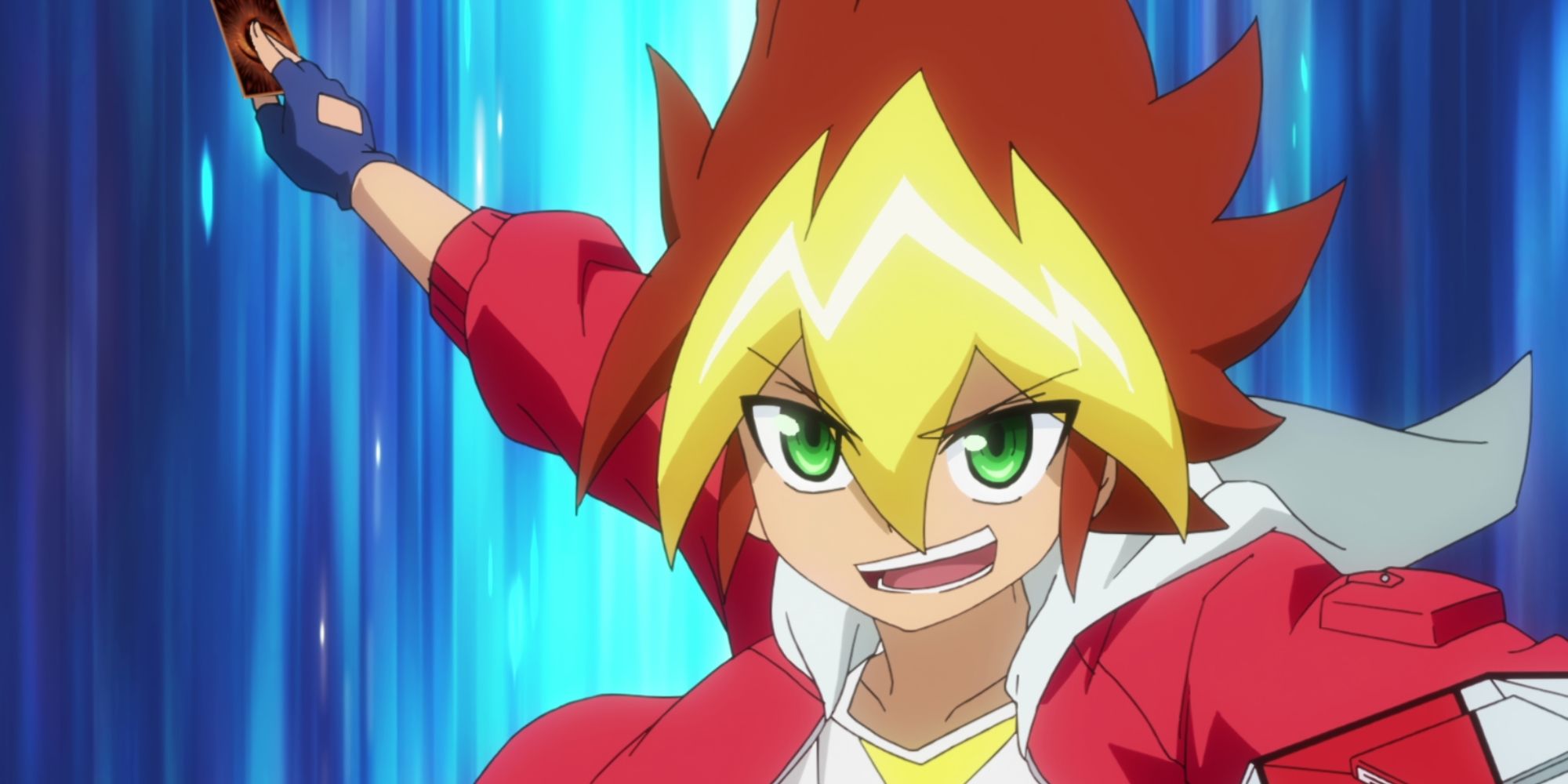
It’s been over twenty-five years since Yugi Muto first solved the Millennium Puzzle, and honestly, the franchise hasn't been the same since. When people talk about Yu-Gi-Oh protagonists, they usually start and end with the spiky-haired kid from Domino City. But there is a massive world beyond the original Duel Monsters era. Each lead character represents a specific shift in how the game is played, from the high-stakes shadow games of the 90s to the high-tech, data-driven Speed Duels of the modern age.
You’ve got guys like Jaden Yuki who just want to have fun, and then you’ve got someone like Yusei Fudo who acts like he’s carrying the weight of a dystopian society on his shoulders. It’s a wild range. Understanding these characters isn't just about nostalgia; it's about seeing how the mechanics of the TCG (Trading Card Game) evolved alongside their personalities.
Why the original Yu-Gi-Oh protagonists still dominate the conversation
Let's be real. Yugi Muto and Atem (Yami Yugi) are the blueprint. If you ask a random person on the street to name a duelist, they’re saying Yugi. What makes them so compelling is the duality. You have Yugi, this tiny, kind-hearted kid who just wants friends, and then you have Atem, an ancient Egyptian Pharaoh who is basically a gambling god.
Kazuki Takahashi, the late creator of the series, originally designed the manga as a horror-leaning story about "games" in general. It wasn't even strictly about cards at first. That's why Yugi feels so different from later leads. He wasn't just a card player; he was a master of games.
The dynamic changed when the card game became a global phenomenon. Suddenly, the Yu-Gi-Oh protagonists had to be walking advertisements for new mechanics. Yet, Yugi remains the favorite because his victories felt earned through "Heart of the Cards" logic—which we all know is just top-decking, but he made it look like a spiritual event.
The Jaden Yuki Pivot: From Dark to Light (and back)
When Yu-Gi-Oh! GX launched, fans were skeptical. Jaden (Judai in Japan) was the polar opposite of Yugi. He was loud, lacked academic focus, and used Elemental Heroes—a deck that focused on Fusions.
Jaden's journey is actually pretty dark if you sit down and watch the later seasons of GX. He starts as this "Get your game on!" optimist and ends up merging his soul with a demonic spirit named Yubel. It was a massive risk for the studio. They took the face of a kid-friendly franchise and gave him a massive mid-life crisis at seventeen. This shift proved that the series could survive without Yugi, provided the lead had enough charisma to carry the Elemental Hero archetype to the top of the sales charts.
The Gritty Realism of Yusei Fudo
If Jaden was the fun-loving slacker, Yusei Fudo from Yu-Gi-Oh! 5D’s was the hardworking mechanic from the slums. This is where the franchise peaked for many "hardcore" fans.
Yusei is unique among Yu-Gi-Oh protagonists because he rarely loses. In fact, he’s one of the few leads who feels like a functional adult from episode one. He builds his own Duel Runner (basically a motorcycle that plays card games) out of literal junk.
The introduction of Synchro Summoning changed the actual TCG forever. It made the game faster. Yusei’s Stardust Dragon became a symbol of this new, high-speed era. His stoic nature was a breath of fresh air after Jaden’s constant shouting, though some felt he was almost too perfect. He didn't have the same vulnerability Yugi had, but he made up for it by being a tactical genius.
Yuma Tsukumo and the Return of the Duo
Yu-Gi-Oh! ZEXAL tried to recapture the "Yugi and Atem" magic with Yuma and Astral.
Yuma is divisive.
Some people find his catchphrase "Kattobingu" (Feeling the Flow) incredibly annoying. Others appreciate that he actually sucked at the game when he started. Unlike Yusei or Atem, Yuma made mistakes. He misplayed. He lost.
The introduction of Xyz Monsters through the "Numbers" cards gave the show a "collect-'em-all" vibe similar to Pokémon. It was a blatant attempt to skew younger again. However, the stakes eventually escalated to a multiversal war, proving that even the "kiddie" versions of these shows eventually end up with someone trying to rewrite reality.
The Complexity of Yuya Sakaki and the Pendulum Problem
Yu-Gi-Oh! ARC-V gave us Yuya Sakaki, a protagonist who literally wanted to be a circus performer.
Yuya introduced Pendulum Summoning, which is arguably the most controversial mechanic in the game's history. It allowed players to summon a massive board of monsters all at once. For many veteran players, this was the "jump the shark" moment.
But as a character, Yuya was fascinating because he suffered from genuine performance anxiety. He used a smile to mask his trauma. His story involved alternate dimensions and three other versions of himself (Yuto, Yugo, and Yuri). It was a mess, honestly. A beautiful, ambitious mess that tried to unite all previous summoning methods—Fusion, Synchro, and Xyz—into one narrative.
Yusaku Fujiki: The Cyber-Introvert
Then came Yu-Gi-Oh! VRAINS.
Yusaku (Playmaker) is perhaps the most "modern" of all Yu-Gi-Oh protagonists. He’s a hacker. He has PTSD. He doesn't care about making friends or "the heart of the cards." He just wants revenge against the people who experimented on him as a child.
The duels moved into a virtual world, introducing Link Summoning. Yusaku’s cold, calculated approach to dueling mirrored the way the competitive TCG had become: highly optimized, combo-heavy, and somewhat impersonal. He was the hero we deserved for the era of "hand traps" and "negate boards."
The Evolution of the "Ace" Monster
You can't talk about these guys without talking about their dragons. Well, mostly dragons.
- Dark Magician: Yugi’s go-to, representing the "spellcaster" roots of the game.
- Elemental HERO Neos: Jaden’s space-alien buddy, leaning into the superhero aesthetic.
- Stardust Dragon: Yusei’s protector, symbolizing hope in a broken world.
- Number 39: Utopia: Yuma’s knight, which could literally negate attacks.
- Odd-Eyes Pendulum Dragon: Yuya’s circus act, which changed levels and scales.
- Decode Talker / Firewall Dragon: Yusaku’s digital warriors.
It's interesting to see how the ATK points almost always hover around 2500. It’s a tradition. Whether it’s a wizard or a cyberse-warrior, that 2500 ATK stat is the golden rule for a protagonist's main monster.
What people get wrong about the "New" Protagonists
There is a common misconception that the newer series like Yu-Gi-Oh! SEVENS or Go Rush!! are "ruining" the legacy. These shows feature Yuga Ohdo and Yudias Velgear.
The game changed to "Rush Duels," which are simplified versions of the TCG meant for a faster, younger audience. If you grew up with the original, it looks like a different game. Because it is.
Yuga Ohdo is actually a brilliant subversion of the trope. He’s a kid who is bored with the rules, so he hacks the game to create his own. That is a very "Gen Z" approach to a legacy franchise. He isn't trying to be the King of Games; he's trying to change the system entirely.
Comparing the Win Rates
If we look at the data—and fans have spent thousands of hours tracking this—the "strongest" duelist is a toss-up.
Yusei Fudo technically has the best win-loss record, having only "lost" in a flashback and one inconclusive duel. Yusaku is also undefeated in his series. Yugi, despite being the GOAT, actually lost several times (to Kaiba at Duelist Kingdom, to Rafael in Waking the Dragons, and famously to Joey Wheeler in an off-screen duel).
But strength in this universe isn't just about stats. It's about narrative weight. Yugi faces gods. Yusei faces the literal end of time. Yuya faces himself.
How to engage with the series today
If you’re looking to dive back into the world of Yu-Gi-Oh protagonists, don't just stick to the original anime. The manga versions of these characters are often vastly different and much darker.
- Read the original manga: It's more of a psychological thriller than a card game commercial.
- Check out Master Duel: This is the current "official" way to play the TCG online. You can see the legacy of all these protagonists in the various decks people play.
- Watch the movies: Dark Side of Dimensions is a direct sequel to the original manga (not the anime) and features some of the best animation in the franchise. It gives Yugi the closure he deserves as a standalone hero without Atem.
The franchise has moved far beyond just "I summon a monster in attack mode." It’s a complex tapestry of different genres—sci-fi, fantasy, sports, and even psychological drama. Each protagonist is a reflection of the era they were created in. Whether you prefer the ancient magic of the Millennium Items or the high-speed data streams of the VRAINS, there’s a version of the "King of Games" that fits your vibe.
The best way to appreciate the journey is to see the progression. Start with the "Duelist Kingdom" arc to see where it began, but don't be afraid to skip to "5D's" if you want to see the show at its most mature. The characters change, the cards get more complicated, but the core idea—two people sitting across from each other, trying to outsmart one another with a deck of 40 cards—remains the same.
To really get the most out of the modern scene, focus on learning one specific summoning mechanic at a time. Trying to learn Synchro, Xyz, Pendulum, and Link all at once is a recipe for a headache. Pick a protagonist whose deck looks cool, find a guide for that specific playstyle, and you'll find that the game is much more accessible than the 20-minute combo videos on YouTube make it out to be.



