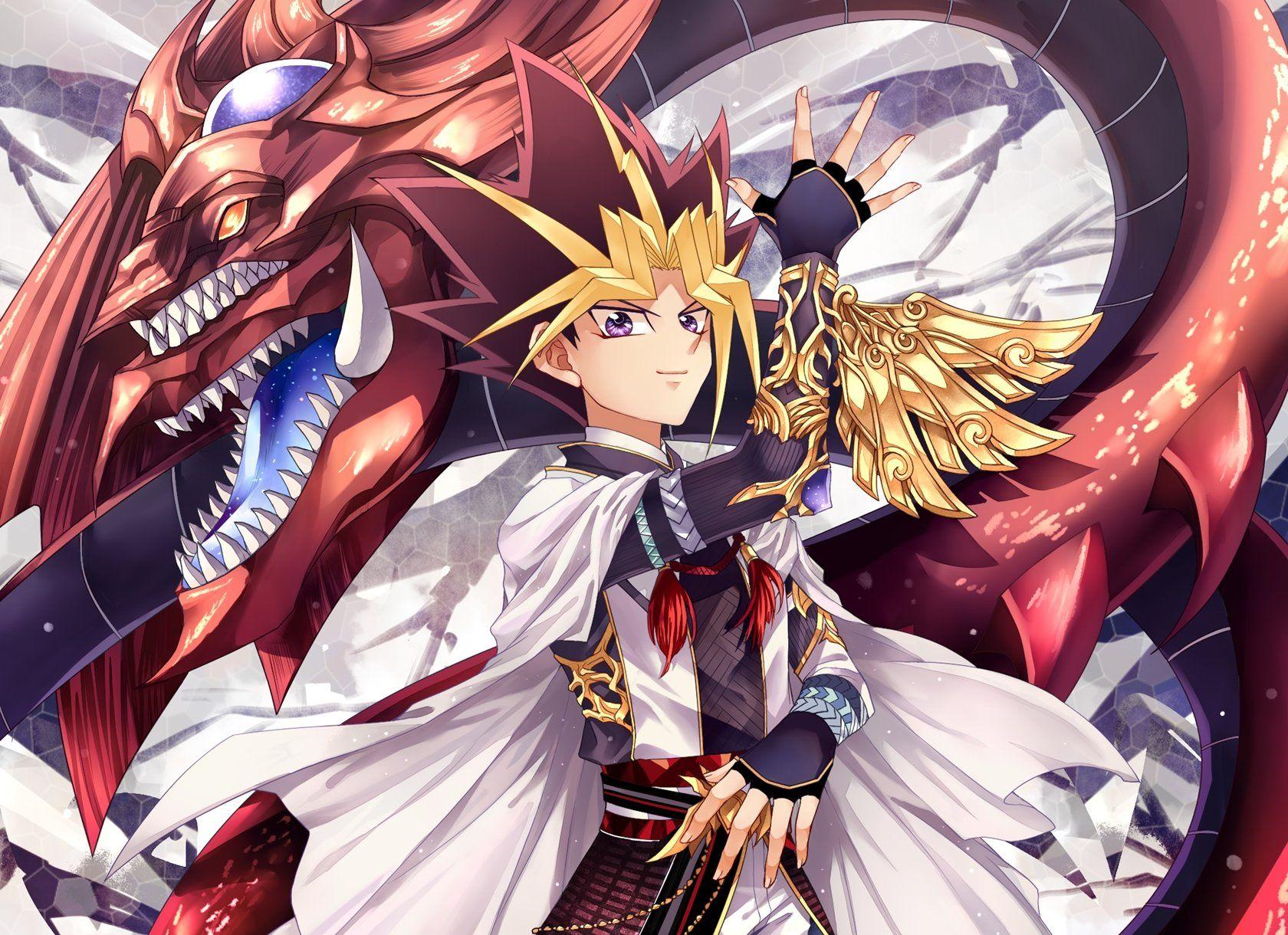
Kazuki Takahashi didn't just draw a card game. He birthed a visual language that defined a generation. If you grew up in the late 90s or early 2000s, specific Yu-Gi-Oh pictures are burned into your retinas. You know the exact shade of magenta on a Dark Magician’s robe. You can recall the jagged, intimidating silhouette of Blue-Eyes White Dragon without even looking at a screen. It’s weird, honestly, how a piece of cardboard no bigger than a credit card can carry so much aesthetic weight.
But here is the thing. Most people talk about the "meta." They talk about power creep and how Snake-Eyes or Fiendsmith is breaking the game in 2026. They forget that the soul of the franchise isn't in the effect text. It’s in the art box.
Why We Are Still Obsessed With Yu-Gi-Oh Pictures
Art sells. Always has. Back in 1996, when the manga first hit Weekly Shonen Jump, the drawings were scratchy and dark. It felt dangerous. When Konami took over the TCG from Upper Deck later on, the visual identity shifted into something more polished, yet it kept that "occult" edge.
Think about the Forbidden Memories era on PS1. The Yu-Gi-Oh pictures in that game were low-res, pixelated messes by today’s standards, yet they felt massive. There is a psychological phenomenon where our brains fill in the gaps of low-fidelity art. Those jagged pixels made Summoned Skull look more terrifying than a 4K render ever could.
The Aesthetic Split: OCG vs. TCG
Did you know that half the art you see in the West is censored? It’s a rabbit hole. The Japanese (OCG) versions of these pictures often feature pentagrams, realistic firearms, or slightly more suggestive designs. When these migrate to the TCG (North America and Europe), the "art police" at Konami get to work.
Haloes become glowing orbs. Crucifixes become pillars of light. Red wine becomes... purple juice? It's honestly a bit silly when you look at cards like Tragedy or Last Day of Witch. The original Japanese art for Last Day of Witch shows a literal execution. The TCG version? It looks like a vague magical gathering. This creates a massive secondary market. Collectors hunt for the "lost" Yu-Gi-Oh pictures because the original intent of the artist—often the legendary Takahashi himself—is preserved there.
The "Starlight" Effect and Visual Rarity
We need to talk about why some pictures cost $1,000 and others cost five cents. It isn't just the card's power. It’s the "foil."
- Quarter Century Secret Rares: Introduced for the 25th anniversary, these feature a distinct watermark.
- Ultimate Rares: These have embossed textures. You can literally feel the "picture" with your thumb.
- Ghost Rares: The image disappears unless you hold it at a specific angle.
Holding a Ghost Rare Cyber Dragon is a trip. The art is holographic and pale, looking like a silver specter. This isn't just a game piece anymore; it's a physical artifact. When people search for high-res Yu-Gi-Oh pictures, they aren't just looking for desktop backgrounds. They are looking for reference shots to see if the copy they’re buying on eBay has the right "texture" or "etching."
Misconceptions About Digital Card Art
People think digital versions like Master Duel just use the same files as the physical cards. Not exactly.
Konami had to upscale thousands of images for 4K monitors. If you look closely at the Yu-Gi-Oh pictures in Master Duel, you’ll notice details that were invisible on the physical cardboard. You can see the individual scales on Baronne de Fleur. You can see the tiny magical runes in the background of Spellbook cards.
However, some fans argue that the digital "crispness" kills the vibe. There was a certain grit to the old 2002-era card scans. The ink bleeding slightly over the borders gave it a tactile, "used" feel. New art often feels like it was made in a sterile 3D environment. It’s technically better but arguably has less "soul."
The Rise of AI and Fan Art
In 2026, the community is split on AI-generated images. Some "fans" use AI to generate "what if" versions of classic cards. They’ll prompt an engine to create "Blue-Eyes White Dragon in the style of Van Gogh."
Honestly? It usually looks like garbage.
The reason Yu-Gi-Oh pictures work is because of intentionality. A human artist chose to give Exodia those heavy chains to represent his sealed power. An AI just sees "yellow man with chains." True collectors and artists within the community, like those on DeviantArt or Pixiv, still spend hundreds of hours hand-drawing "Full Art" versions of cards. These are "Orica" (Original Cards), and while they aren't tournament legal, they represent the peak of the visual fandom.
How to Find the Best High-Resolution Yu-Gi-Oh Pictures
If you’re a creator, a deck builder, or just a nerd who wants a cool wallpaper, where do you go?
- Yugipedia: Not the "Wiki," but the "Pedia." They have the highest quality "HQ" crops of card art, often ripped directly from the digital games.
- DeviantArt (The "Vector" Community): Some users spend years recreating card art as vector files. This means you can scale the picture of a Dark Magician Girl to the size of a skyscraper and it won't lose a single pixel of quality.
- The Konami Database: The official source. It’s okay, but the images are often small to prevent people from printing their own fakes (proxies).
What Most People Get Wrong About Card Rarity
You might think the rarest Yu-Gi-Oh pictures are the ones from the first set, Legend of Blue Eyes White Dragon. You'd be wrong.
The truly rare stuff? Prize cards. Cards like Tyler the Warrior (a one-of-a-kind card made for a Make-A-Wish kid) or the stainless steel Blue-Eyes distributed in Japan. These aren't just pictures; they are historical records. When a high-res photo of Tyler the Warrior surfaced online, it was a massive deal because, for years, we only had blurry, "Bigfoot-style" sightings of it.
The Evolution of the "Vibe"
In the early days, the art was very "High Fantasy meets Body Horror." Cards like Parasite Paracide or Relinquished were genuinely gross.
As the years went by, Konami leaned into different archetypes:
- Sky Strikers: Pure "Mecha-Anime" aesthetic.
- Madolche: "Pastel/Candy" aesthetic.
- Burning Abyss: "Dante’s Inferno" classical art style.
This diversity is why the game stays relevant. You aren't just playing a game; you’re choosing an aesthetic identity. If you like dark, gothic Victorian vibes, you play Vampires. If you like giant Godzilla-style monsters, you play Kaijus. The Yu-Gi-Oh pictures are the hook that pulls you into the mechanics.
Actionable Steps for the Modern Collector
If you are looking to dive deeper into the visual side of the game, stop just scrolling through Google Images.
Start by looking at "Art Books." Konami released the Yu-Gi-Oh! Duel Monsters Artbook: Duel Art featuring Kazuki Takahashi’s personal illustrations. The scale and detail in these versions blow the card art away.
Secondly, check out uncensored OCG galleries. Seeing the original intent behind your favorite cards will change how you view them. You’ll notice the subtle religious or mythological references that were scrubbed for the Western market.
Lastly, if you're looking for high-quality Yu-Gi-Oh pictures for your own projects, prioritize "Render" sites. These are images where the background has been removed, leaving just the monster. They are perfect for thumbnails or custom playmat designs.
The art is the heart of the cards. Don't let the 2,000-word effect text on a modern card distract you from the fact that someone spent weeks painting that monster. Appreciate the lines. Study the shading. The game is a gallery you can carry in your pocket.