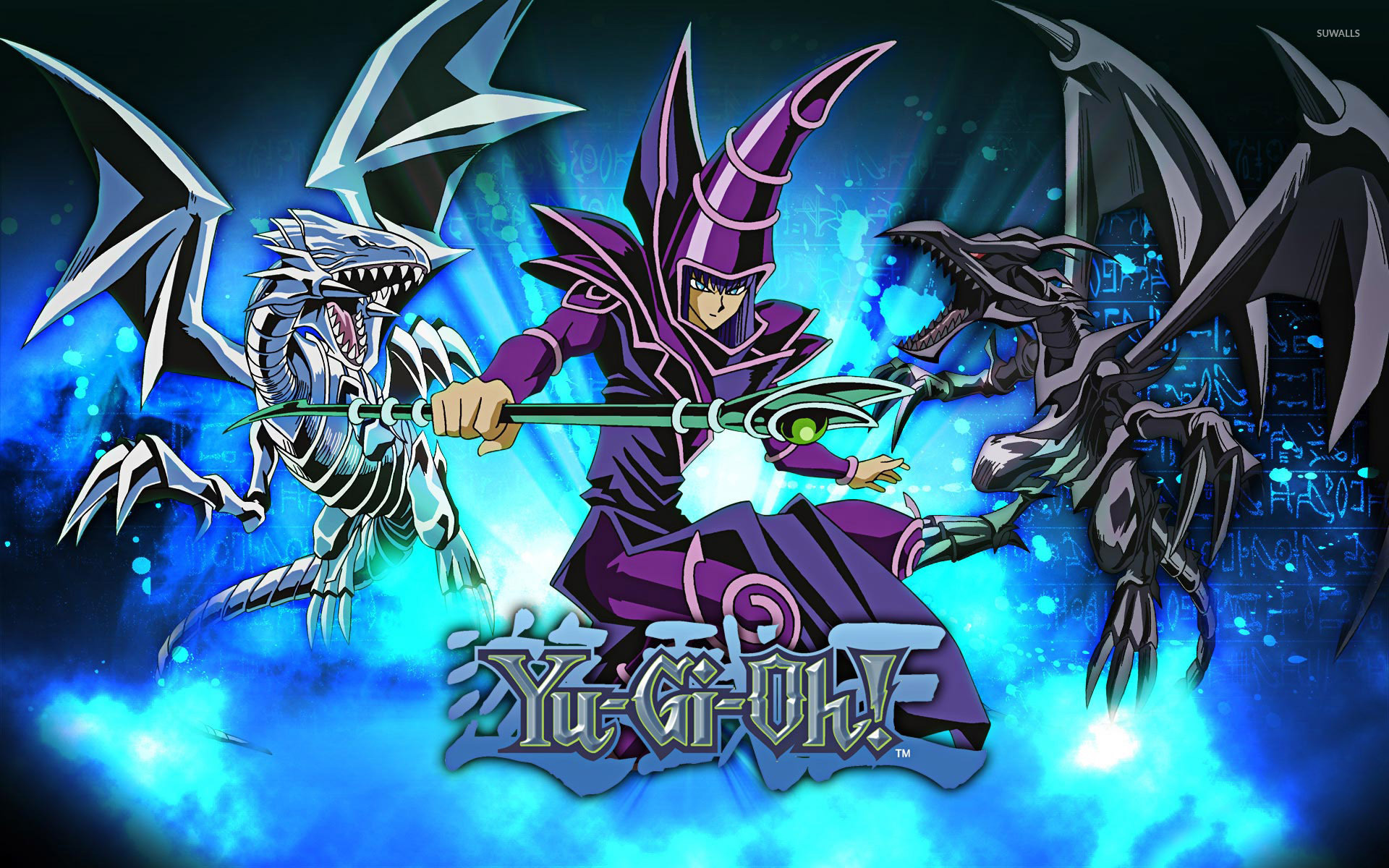
Believe it or not, the first time Yugi Muto appeared in a movie, it wasn't even about the Millennium Puzzle or saving the world from ancient Egyptian deities. It was about a kid named Shogo who found a Rare Card. That’s it.
Most fans today don't even know that 1999 film exists. When people search for Yu-Gi-Oh movies, they’re usually looking for the high-octane, holographic madness of the 4Kids era or the nostalgia-heavy finale that wrapped up the original series years after it ended. The cinematic history of this franchise is a weird, fragmented mess of different animation studios, varying English dub quality, and some truly bizarre plot choices. Honestly, it’s a miracle it works at all.
But it does.
The Lost "Season 0" Movie You Probably Haven't Seen
Back in 1999, Toei Animation—the same studio behind Dragon Ball Z—produced a thirty-minute feature simply titled Yu-Gi-Oh!. This was before the "Duel Monsters" card game became a global billion-dollar juggernaut. In this version, the focus was more on the shadows and the "Season 0" vibes. Yugi's hair was slightly different, the rules of the card game were practically non-existent, and the stakes felt oddly personal.
It centers on the Red-Eyes Black Dragon.
In this film, the dragon represents the potential of a "loser" to become a winner. It’s a bit on the nose, sure. But seeing a pre-global-phenomenon version of Seto Kaiba hosting a tournament in his private mansion feels like a fever dream. If you’re a purist, you've gotta track this down, even if the animation looks dated compared to what came later. It captures a specific era where the franchise was more about urban legends and scary games than selling starter decks at Target.
Pyramid of Light and the Peak 4Kids Era
Fast forward to 2004. Yu-Gi-Oh! The Movie: Pyramid of Light hit Western theaters with a massive marketing push. I remember being there. Everyone was in it for the exclusive promo cards—shoutout to anyone who still has their Watapon or Blue-Eyes Shining Dragon.
This movie is fascinating because it was specifically commissioned for the Western market. Warner Bros. saw the Pokémon movie success and wanted a piece of that pie. The plot introduces Anubis, an Egyptian god of the dead who was never mentioned in the original manga by Kazuki Takahashi. It basically retcons a new villain into the lore.
While critics absolutely shredded it, fans loved the spectacle. It gave us the definitive cinematic showdown between Yugi and Kaiba. We see the Blue-Eyes Ultimate Dragon evolve into the Shining Dragon, and the animation quality was a massive step up from the weekly TV broadcast. However, looking back, the script is kind of a disaster. The dialogue is 90% "It's my turn!" and "I believe in the heart of the cards!" yet it remains a foundational memory for millions of Millennials.
It’s the quintessential "guilty pleasure."
Why Bonds Beyond Time Was a Total Logistics Nightmare
If you think The Avengers was the first big crossover event, you clearly didn't see the 10th-anniversary special. Yu-Gi-Oh! 3D: Bonds Beyond Time brought together the three protagonists: Yugi Muto, Jaden Yuki, and Yusei Fudo.
Trying to make this work was a headache.
First, you have three different timelines. Second, you have three different game mechanics—Normal Summoning, Fusion, and Synchro. The movie solves this by having a time-traveling villain named Paradox who wants to destroy the game of Duel Monsters to save the future. It’s a very "anime" solution.
The runtime is incredibly short, barely hitting 45 minutes if you exclude the recap intro. This makes the pacing feel like it's on caffeine. There’s almost no character development; it’s just one long, triple-duel. But seeing the Dark Magician, Elemental HERO Neos, and Stardust Dragon on screen at the same time? That was a moment of pure fan service that actually delivered. It validated every kid who spent hours arguing about which protagonist was the strongest.
The Dark Side of Dimensions: A Proper Farewell
After years of silence, the late Kazuki Takahashi returned to write and design Yu-Gi-Oh!: The Dark Side of Dimensions in 2016. This isn't just another spin-off. It’s a direct sequel to the original manga, ignoring the anime’s filler arcs.
This film is stunning.
The animation by Studio Gallop is fluid, sharp, and expensive-looking. But the real draw is Seto Kaiba. In this movie, Kaiba is basically a billionaire madman who refuses to accept that Atem (the Pharaoh) is gone. He literally builds a space elevator and develops neural-link technology just to try and duel a ghost. It’s the ultimate character study of obsession.
The film introduces "Dimension Summoning," which basically lets characters ignore the rules if their "willpower" is strong enough. It sounds cheap, but in the context of the film’s high-stakes reality warping, it works. It’s the most mature the franchise has ever felt. It deals with grief, the digital frontier, and the idea that some rivalries never truly end.
What You Probably Missed in the Dub vs Sub
There’s a massive divide in how these films are experienced. The Japanese versions tend to be darker, with more philosophical undertones and a much more somber soundtrack. The English dubs, handled by 4Kids and later Konami, leaned heavily into the rock-and-roll aesthetic and the "friendship" themes.
For The Dark Side of Dimensions, the English voice cast (Dan Green and Eric Stuart) returned, and honestly, their chemistry is what carries the movie. Stuart’s Kaiba is more arrogant and hilarious than ever. If you only watched the dub as a kid, I highly recommend re-watching DSOD in its original language. The tone shift is jarring but gives you a whole new perspective on the characters' motivations.
Making Sense of the Timeline
Don't try to fit all these movies into a single linear timeline. You’ll get a migraine.
- The 1999 Movie: Stands alone in the Toei universe.
- Pyramid of Light: Fits somewhere after the Battle City arc but feels like an alternate reality.
- Bonds Beyond Time: Canon to the 5D’s anime timeline.
- The Dark Side of Dimensions: Canon only to the original manga (which explains why certain characters like Duke Devlin aren't really featured).
The franchise treats its films more like "events" than strict chronological entries. This allows the writers to crank up the stakes without worrying about how it affects the next fifty episodes of the TV show.
The Technical Leap: From Cels to CGI
One thing people rarely discuss is the technical evolution of these films. Pyramid of Light was still clinging to that early 2000s digital paint look—kind of flat, very bright. By the time we get to Dark Side of Dimensions, the blend of 2D character art and 3D monster models is nearly seamless.
The design of the "Quantum Cube" and the new Duel Disks in the latest film show a move toward a sci-fi aesthetic that the series eventually fully embraced in Yu-Gi-Oh! VRAINS. The movies acted as a testing ground for these visual shifts. They weren't just cash grabs; they were blueprints for where the brand was heading next.
Taking Action: How to Watch and What to Look For
If you’re looking to dive back into the world of Yu-Gi-Oh through its films, don't just go in blind. The experience is much better if you know what you're looking for.
- Start with The Dark Side of Dimensions: It’s the most "modern" and arguably the best written. It’s available on most major streaming platforms like Amazon Prime or Vudu.
- Track down the Japanese OST: The music in the Japanese versions (composed by Shinkichi Mitsumune and others) is often superior to the replaced Western scores, offering a much more epic, orchestral feel.
- Read "Transcend Game": This is a two-part manga prologue written by Takahashi that bridges the gap between the end of the original series and The Dark Side of Dimensions. It explains Kaiba's new tech and makes the movie's opening much clearer.
- Check for "Uncut" versions: If you’re watching Pyramid of Light, try to find the version that hasn't been overly compressed. The colors in the original theatrical run were much more vibrant than the early DVD releases.
The movies are more than just long episodes of a card game show. They are snapshots of a franchise trying to reinvent itself every five to ten years. Whether it's the 90s grit of the Toei film or the sleek, holographic futurism of the 2016 finale, there's a specific kind of magic in seeing a "Heart of the Cards" moment on a cinematic scale.
Go watch Dark Side of Dimensions first. Then, if you’re feeling brave and nostalgic, find that 1999 Toei relic. You’ll see just how far Yugi and his "worthless" cards have actually come.



