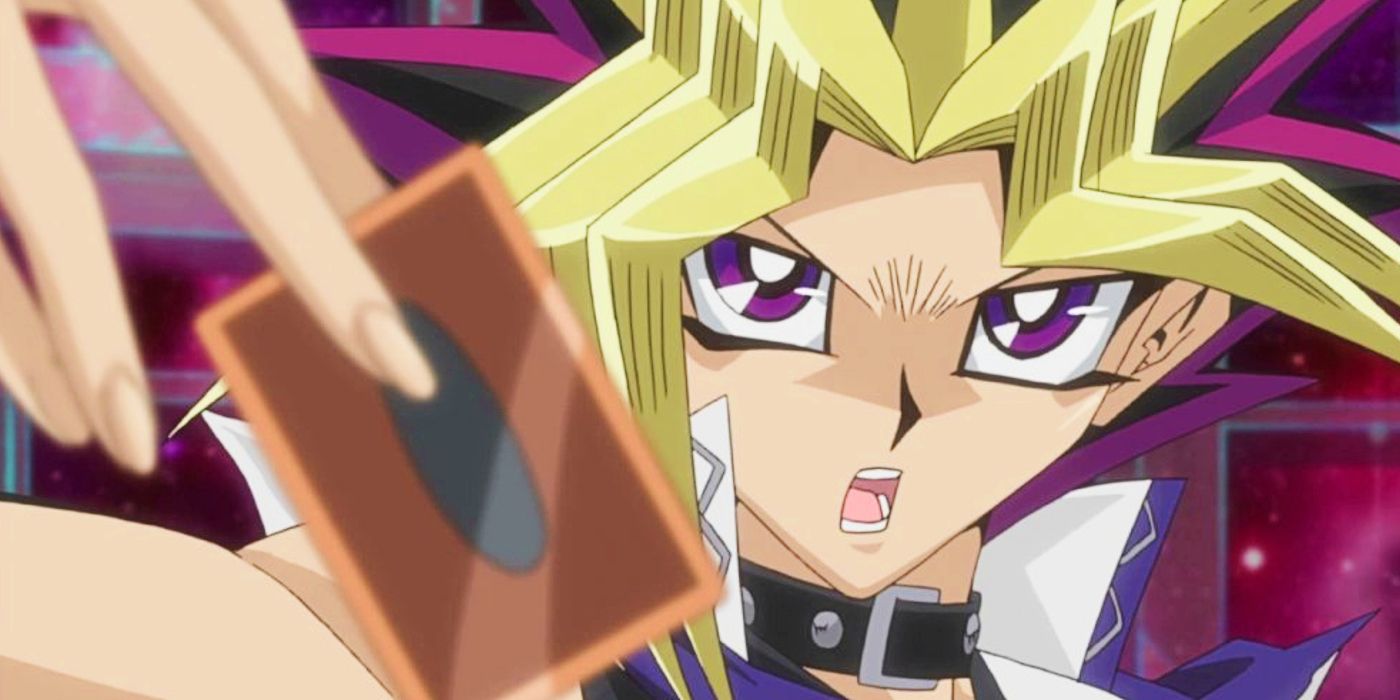
You've been there. It’s your last turn. Your Life Points are hovering at a precarious 200, while your opponent sits comfortably behind a wall of Blue-Eyes White Dragons. You put your fingers on the top of your deck. You close your eyes. You think about your friends, or maybe you just think about that one specific copy of Raigeki that could save your soul. You draw. It’s the card you needed. You win. This is the Yu-Gi-Oh Heart of the Cards in action, or at least, that’s how the anime wants us to feel about it.
But honestly? It’s kind of a lie. Or a misunderstanding.
In the original Japanese version of the show, they don't really talk about the "Heart of the Cards" as some magical force that fixes your bad deck-building habits. That was a localized invention by 4Kids Entertainment to give the show a more "Saturday morning cartoon" moral center. In the original Yu-Gi-Oh! Duel Monsters, Yami Yugi/Atem isn't just lucky. He is a master of mending fate. The concept is rooted in the idea that a duelist’s will can influence the outcome of the game. It’s less about "believing" and more about the spiritual connection between the player and their deck. If you've ever played the TCG at a high level, you know that "luck" is just a word people use when they don't want to admit their opponent accounted for the statistics better than they did.
What the Yu-Gi-Oh Heart of the Cards Actually Means
Most people think the Heart of the Cards is just a plot device to let Yugi win when he clearly shouldn't. And yeah, from a narrative standpoint, it totally is. If Yugi lost to Weevil Underwood in the first round of Duelist Kingdom because he bricked his opening hand, the show would have been about four episodes long. We needed that drama. However, if you look at the lore—specifically the Ancient Egyptian roots of the series—the "Heart of the Cards" is a manifestation of the Millennium Puzzle's power.
Atem doesn't just draw the right card; he commands the right card to appear.
In the final season, the Dawn of the Duel arc, we see that the Egyptian gods and the monsters aren't just holograms. They are "Ka," or spirits. The "Heart" is the bridge between the duelist’s soul and these spirits. When Yugi Muto finally faces Atem in the Ceremonial Duel, the stakes are about proving that Yugi has developed that same strength of will without needing a 3,000-year-old pharaoh inside his head. It’s a transition from supernatural luck to genuine mastery.
Probability vs. Destiny: How Modern Players See It
Ask a competitive Yu-Gi-Oh player today about the Yu-Gi-Oh Heart of the Cards, and they’ll probably laugh before explaining the "Math of the Cards" to you.
Modern Yu-Gi-Oh is incredibly fast. Most games are decided in the first two or three turns. Because of this, "drawing into the out" is the closest thing we have to the anime’s magic. If your opponent sets up a board with three negates, you have exactly one draw phase to find your "board breaker"—cards like Dark Ruler No More or Forbidden Droplet.
Is that the Heart of the Cards?
Maybe. But it's also just deck thinning. High-level players use cards like Pot of Prosperity or Triple Tactics Talent to dig through their decks. They are essentially forcing the Heart of the Cards to work by reducing the number of "bad" draws in their deck. If you run a 40-card deck and you've already searched out 10 cards, your odds of drawing that one specific win condition go up significantly. It’s math disguised as destiny.
There's a famous quote from the professional poker world that applies perfectly here: "The better I get, the luckier I get." In Yu-Gi-Oh, the better your deck is built, the more "Heart of the Cards" moments you’re going to experience. If your deck is a pile of random cool-looking dragons, you're going to "lose the heart" pretty often. If your deck is a finely-tuned machine with three copies of every essential starter, you’ll find that "believing in your cards" is a lot easier because your cards are actually reliable.
The Psychological Edge of "Believing"
There is a real psychological component to this. In a long tournament, like a Yu-Gi-Oh Championship Series (YCS) event, mental fatigue is your biggest enemy. If you lose focus, you make misplays.
The Yu-Gi-Oh Heart of the Cards acts as a sort of mental anchor. When Yugi says it, he's basically performing a "reset" on his brain. He is clearing out the noise, the fear, and the doubt. He focuses entirely on the next move. Athletes call this "The Zone."
When you believe that your next draw is going to be the one you need, you play differently. You don't give up. You look for lines of play that you might have missed if you had already accepted defeat. I’ve seen players win games with 100 Life Points simply because they didn’t tilt. They stayed calm, looked at their remaining resources, and realized they had a 4% chance to draw the one card that could chain into a win. They drew it, and they executed the combo perfectly. If they hadn't "believed" in that 4% chance, they might have rushed their previous turn and lost before the draw even happened.
Why the Meme Persists 20 Years Later
We still talk about it because it’s the ultimate underdog story. Everyone loves the idea that the universe (or a deck of laminated cardboard) has your back. It’s why we shout "Heart of the Cards!" before a big draw at the kitchen table. It turns a game of variables into a story of character.
It's also worth noting that the "Heart of the Cards" has become a shorthand for any top-deck win in any card game. Whether it’s Magic: The Gathering, Hearthstone, or Pokemon, if you draw the exact card you need to win the game on the spot, you are channeling Yugi Muto. It has transcended the anime and become a piece of general gaming culture.
Actionable Insights for Your Next Duel
If you want to stop relying on literal magic and start making the Yu-Gi-Oh Heart of the Cards work for you through strategy, here is what you actually need to do:
- Respect the 40-Card Limit: Every card over 40 lowers the percentage chance of drawing your best cards. If you want to "feel the heart," keep your deck as slim as possible.
- Use "Searchers" to Thin the Deck: Use cards that let you add other cards from your deck to your hand. Every time you remove a card from your deck this way, you are increasing the probability that your next natural draw will be a high-impact "top-deck."
- Analyze Your "Outs": Know exactly how many cards in your deck can save you in a specific situation. If you have zero cards that can break a certain board, no amount of believing is going to help you. Adjust your Side Deck to include specific answers for the current meta-game.
- Manage Your Mental State: Treat the "Heart of the Cards" as a focus technique. If you're stressed or angry, you will miss the winning play even if you draw the right card. Take a breath, visualize your path to victory, and then draw.
The Heart of the Cards isn't a ghost in the machine. It’s the intersection of a well-built deck, a clear head, and the statistical reality that eventually, the card you need will show up. Your job is just to be ready when it does.
To improve your consistency in-game, begin by tracking your "dead draws" over your next ten matches. Identify which cards sit in your hand without being played; these are the ones clogging your connection to your deck. Replace them with "engine pieces" or "hand traps" that offer utility in more scenarios. By refining the physical composition of your deck, you ensure that the "Heart of the Cards" is a mathematical certainty rather than a desperate hope. Check your local tournament meta-reports on sites like TCGPlayer or YGOPRODeck to see which "outs" are currently most effective against the top-tier decks.