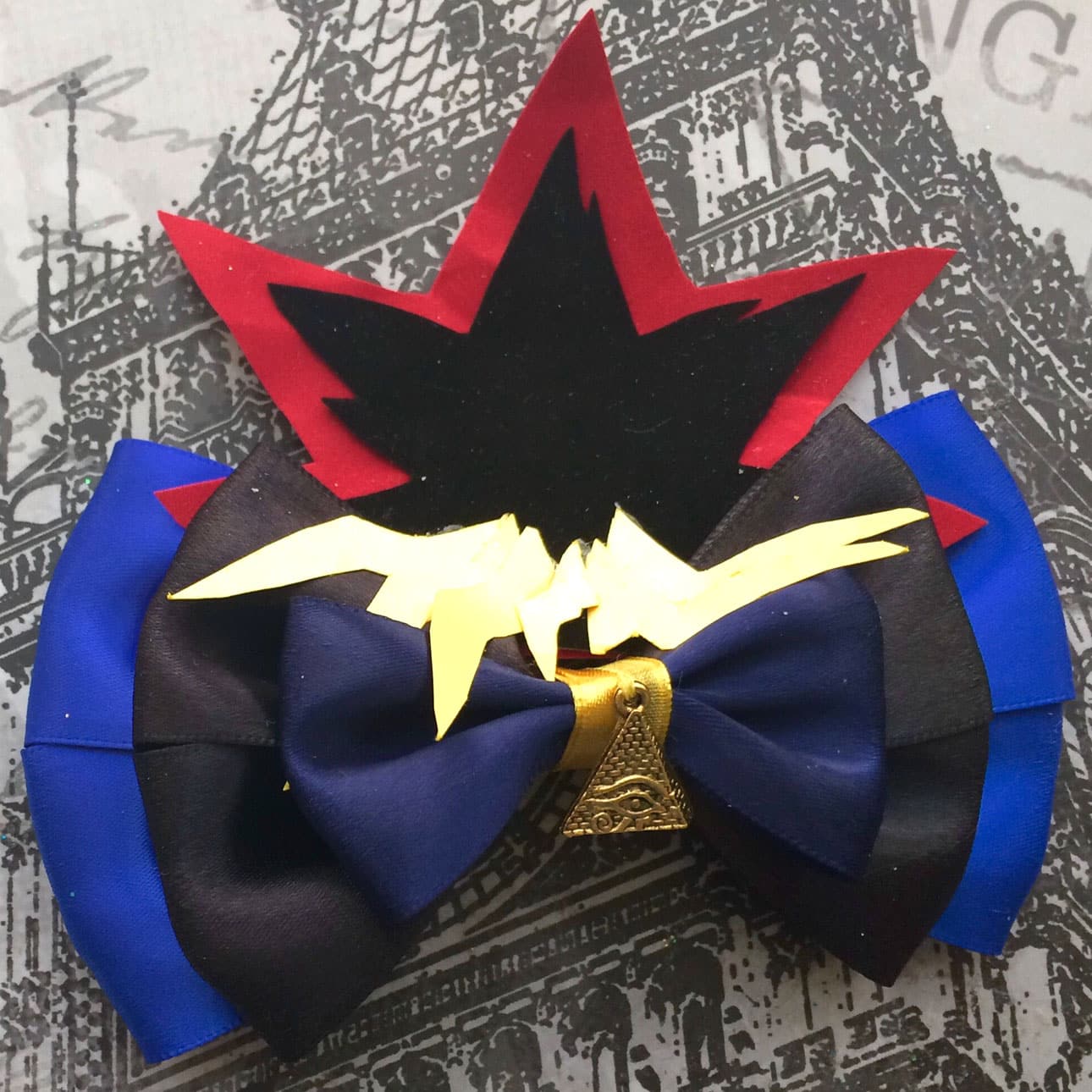
Walk into any anime convention and you’ll see it. A guy in a purple trench coat struggling to keep a massive, multi-colored wig from sliding off his forehead. It's the Yu-Gi-Oh hair. It's legendary. It's also, if we’re being honest, a complete architectural nightmare that defies every known law of physics and cosmetology.
Kazuki Takahashi, the late creator of the series, didn't just design characters; he designed silhouettes. He knew that in a crowded manga landscape, a character needed to be recognizable by their shadow alone. This led to the birth of Yugi Mutou’s iconic "starfish" look—a jagged explosion of black, red, and blonde that has puzzled hair stylists for decades. It isn't just hair. It's a statement of intent. Meanwhile, you can read similar events here: The Brutal Truth Behind the Summer Box Office Mirage.
The Architecture of Gravity-Defying Spikes
If you tried to recreate Yugi’s hair with actual human locks, you’d fail. Hard. Human hair has weight. It has follicles that grow in specific directions. Yugi’s hair, however, seems to be made of reinforced carbon fiber or perhaps sheer willpower.
The tri-color scheme is the first hurdle. You have the base black, the magenta-purple outlines, and those lightning-bolt blonde bangs that frame the face. In the manga, this was meant to look like a crown. Takahashi-sensei often mentioned in interviews and his art books, like Duel Art, that he wanted Yugi to look like he was wearing a crown of thorns or flames to represent his burgeoning power as the King of Games. To explore the complete picture, check out the excellent article by IGN.
Why it doesn't work in real life
Most professional cosplayers don't even use real hair for this. They use "expanded polystyrene" or "EVA foam" as a base. They literally build a sculpture and then glue synthetic fibers over it. Why? Because the amount of Got2b Glued hairspray required to hold up a eighteen-inch horizontal spike would probably trigger a localized ozone depletion event.
Think about Jaden Yuki from Yu-Gi-Oh! GX. His "kuriboh" style is actually the most realistic of the bunch, but even that requires a level of layering and thinning that would make a suburban barber weep. Then you get to Yusei Fudo. His hair has yellow "racing stripes" and looks like a bird of prey taking flight. It’s meant to look aerodynamic because he spends his time on a motorcycle. Form follows function, even when the form is ridiculous.
The Cultural Impact of the Spiky Silhouette
We have to talk about how this style changed anime forever. Before Yu-Gi-Oh!, anime hair was mostly about volume. Think Dragon Ball Z. It was big, sure, but it was usually one color and moved as a single mass. Takahashi changed the game by introducing "multi-tonal structuralism."
It’s about the silhouette.
In character design theory, the silhouette is everything. If you can identify Yami Yugi just by a black cutout, the designer won. This influence bled into other series. You see the DNA of Yu-Gi-Oh hair in Cardfight!! Vanguard or Future Card Buddyfight. It became a shorthand for "this person is a protagonist in a high-stakes card game."
Evolution Across the Eras
Every new series tried to outdo the previous one. It became a bit of an arms race.
- Yugi Mutou: The original. Tri-color. Starfish shape. Classic.
- Yuma Tsukumo: This is where things got weird. Pink and black with literal "horns" made of hair. It looks more like an organic helmet than a hairstyle.
- Yuya Sakaki: Green and crimson. It looks like a tomato. Fans literally call him "Tomato."
- Yusaku Fujiki: This one is a headache. Dark blue, light blue, and pink highlights. It looks like a fiber-optic cable exploded.
Honestly, by the time we got to Yu-Gi-Oh! SEVENS, the hair started to chill out a bit, but the damage was done. The "Protagonist Hair" trope was cemented. It represents the "inner fire" of the duelist. The crazier the hair, the more likely they are to draw exactly the card they need at the last possible second. It’s basically a power level indicator that you wear on your head.
The Cosplay Struggle is Real
Ask any veteran cosplayer about the "Yugi Wig." They will tell you stories of burnt fingers from hot glue guns and the literal weeks spent "crimping" hair to add volume. A high-quality Yugi wig can weigh several pounds.
Imagine wearing that for twelve hours at a convention. Your neck starts to ache. People keep bumping into your spikes. You can't fit through standard doorways without ducking. This is the price of being the King of Games.
There's a famous hair stylist on YouTube, Vogey, who does professional-grade anime hair tutorials. Even he acknowledges that some of these styles require internal wire skeletons. You aren't just styling hair; you're performing structural engineering. You're building a bridge that just happens to be attached to someone's scalp.
The Hidden Symbolism You Probably Missed
It isn't just about looking cool. There’s a psychological component to Yu-Gi-Oh hair. When Yugi transforms into Yami Yugi (Atem), his hair actually changes. It becomes more rigid. The blonde bolts stand more upright. It’s a visual cue that the "soft" Yugi has been replaced by the "hard" Ancient Egyptian Pharaoh.
The hair is a mask. It’s armor.
When you see a character with "normal" hair in this universe, you know they’re either a side character or someone who is about to get their deck absolutely shredded. The hair is the first line of defense. It warns the opponent: "I have a very complicated backstory and I will probably win this game with the power of friendship."
How to Actually Achieve the Look
If you’re brave enough to try this for a costume or just because you have a very bold sense of style, you need to abandon traditional hair products.
- Forget Mousse: It’s too heavy. It will make your hair go limp.
- Caulk and Glue: Many high-end wigs use "tacky glue" or even clear silicone to maintain the sharp points at the end of the spikes.
- Heat is Your Friend: Synthetic wigs can be "set" with a steamer. Once they cool in a specific shape, they stay that way until they’re heated again.
- Layering: You have to glue different colored tracks of hair together. You can't just dye a wig three colors and hope it looks right. The colors need to be distinct, like a cartoon.
The reality is that Yu-Gi-Oh hair is an artistic abstraction. It was never meant to exist in three dimensions. But the fact that people keep trying to bring it into the real world is a testament to how iconic Takahashi's vision really was. It shouldn't work. It looks insane. And yet, we can't look away.
Moving Forward with Your Styling
If you’re looking to dive into the world of extreme styling, start with a character like Jaden or Yusei before attempting the "Full Yugi." Focus on the "crimping" technique to create a base of volume that can support the outer "skin" of smooth hair. Invest in a high-quality wig head that is the same size as your own head, otherwise, the spikes will be off-center when you actually put it on. Most importantly, accept that you will use an entire bottle of hairspray for one single afternoon of glory. It's the only way to truly honor the Duelist spirit.



