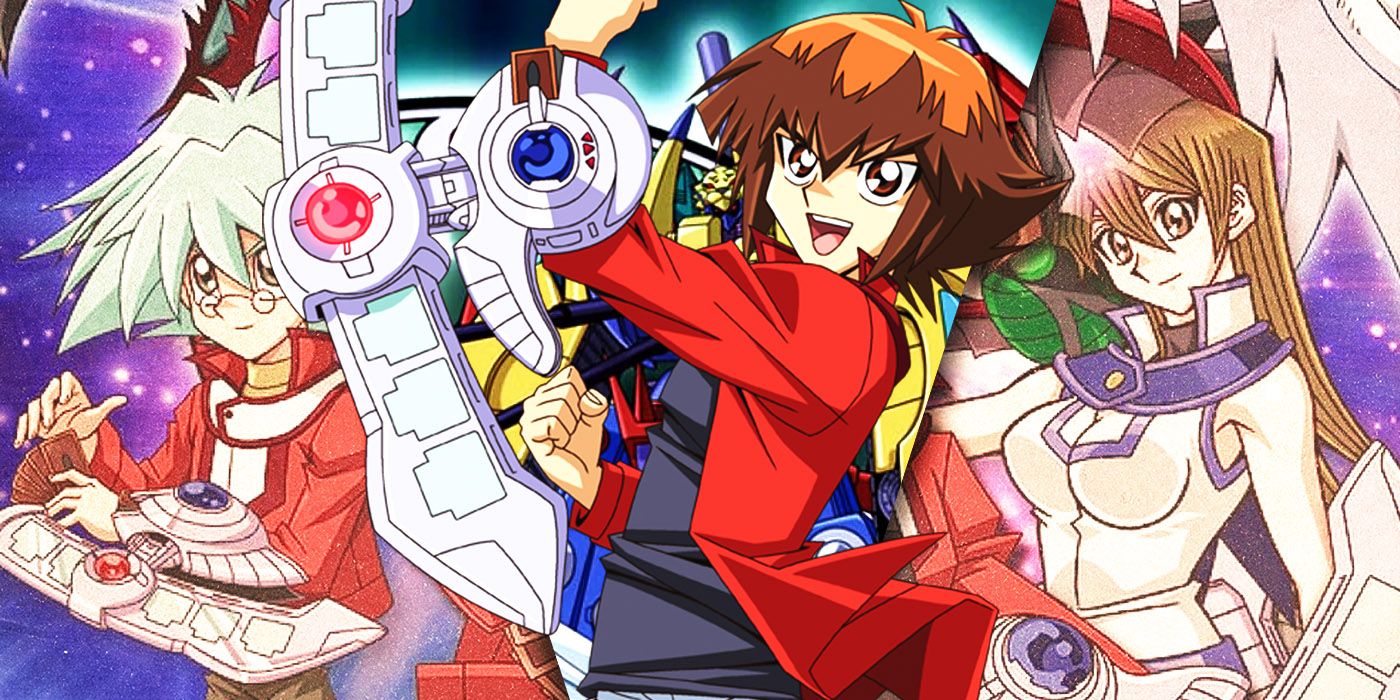
Aster Phoenix was always supposed to be the "anti-Jaden." While Jaden Yuki spent the first season of Yu-Gi-Oh! GX laughing off life-or-death shadow games and treating Dueling like a high-stakes recess, Aster showed up to remind everyone that this was a professional sport. He was the first character to really bring the "Pro League" vibe to the show. Honestly, he was a massive wake-up call for the fans.
People usually remember him for his Destiny Heroes. Those dark, British-inspired warriors were a huge aesthetic shift from the bright, superhero-style Elemental Heroes we were used to seeing. But Aster wasn't just a deck showcase. He was a character driven by a legitimate, dark tragedy involving his father’s disappearance and a stolen card. He brought a level of gravitas that GX desperately needed before it spiraled into the weirdness of the Yubel and Darkness arcs. If you found value in this post, you might want to read: this related article.
The Pro League Reality Check
When Yu-Gi-Oh! GX Aster Phoenix first stepped onto the screen, he didn't just beat Jaden; he dismantled him. It wasn't a fluke. It wasn't some magical interference. He just played better.
Most rivals in the franchise, like Seto Kaiba or Chazz Princeton, come from positions of extreme wealth or institutional power. Aster was different because his power came from being a literal world-famous celebrity. He was a child prodigy. Imagine being 15 years old, having a PhD, and being the top-ranked professional athlete on the planet. That was Aster. He had actual endorsements. He had a manager, Sartorius, who was secretly a cult leader, though Aster didn't know that at the time. For another angle on this story, check out the recent coverage from E! News.
His arrival shifted the stakes of the series from "Academy drama" to "Global professional circuit." He made the world feel bigger. Suddenly, Duel Academy wasn't the only place that mattered.
The Elemental Hero Grudge
One of the coolest, and honestly most disrespectful, things Aster ever did was use Jaden’s own deck against him. Before he revealed his signature Destiny Heroes, Aster played a standard Elemental Hero deck. He wanted to prove that Jaden’s "bond" with his cards was secondary to raw skill and professional optimization.
He beat Jaden using Elemental Hero Shining Phoenix Enforcer. It was a brutal moment. Seeing the protagonist lose to his own archetype felt like a slap in the face to the "Heart of the Cards" philosophy. It forced Jaden to evolve, eventually leading to the introduction of the Neo-Spacians. Without Aster pushing him to the brink, Jaden would have stayed a big fish in a small pond forever.
Why Destiny Heroes Changed the Meta
If we're talking about Yu-Gi-Oh! GX Aster Phoenix, we have to talk about the cards. Destiny Heroes (D-Heroes) were designed to be the mechanical opposite of Elemental Heroes. Where Jaden focused on Fusion Summoning high-ATK beatsticks, Aster’s deck was all about time, graveyard manipulation, and tricky effects.
Look at a card like Destiny Hero - Diamond Dude. In the real-life TCG, this card was a staple because it bypassed activation costs. It was technical. It was smart.
Then you have the "boss" monsters:
- Destiny Hero - Dogma: A massive card that literally cuts your opponent's Life Points in half. It felt like a ticking clock.
- Destiny Hero - Plasma: This was the "Ultimate D-Card." It could absorb an opponent's monster and negate all their monster effects on the field. It was basically a one-sided Skill Drain on legs.
- Destiny End Dragoon: The fusion of Plasma and Dogma. It was a nightmare to get rid of because it kept coming back from the graveyard.
Aster’s playstyle reflected his personality. He was calculating. He wasn't looking for a "fun" duel; he was looking for a win. He treated the Duel Disk like a scalpel.
The Tragic Backstory That Actually Held Up
A lot of Yu-Gi-Oh! backstories feel a bit forced, but Aster's motivation was surprisingly grounded for a show about card games. His father, a card designer for Industrial Illusions (Maximillion Pegasus's company), was kidnapped. The only clue was a missing "Ultimate Hero" card that his father had been working on.
This turned Aster into a vigilante. He wasn't just dueling for fame; he was dueling to find a criminal.
This led to the infamous showdown with The D, his legal guardian and the reigning Pro League champion. It turns out The D was the one who stole the card—Destiny Hero - Plasma—and murdered Aster’s father. The card was possessed by "The Light of Destruction," an eldritch cosmic entity.
When Aster finally won that duel and reclaimed Plasma, it wasn't just a victory for his record. It was closure. It’s one of the few times in the franchise where a character’s personal arc feels like it has a definitive, satisfying resolution. He didn't just beat a rival; he solved a cold case.
The Sartorius Connection
Aster’s relationship with Sartorius (Takuma Saiou) is where things got complicated. Sartorius was his best friend and manager, but he was also the primary antagonist of Season 2.
Aster’s loyalty was his greatest weakness. He truly believed in Sartorius’s "Destiny" philosophy until he realized that his friend was being puppeted by an alien force. Watching Aster have to turn against the person who helped him achieve his professional dreams was legitimately heartbreaking. It showed that despite his "cool guy" exterior, he was still just a kid looking for a family.
Aster Phoenix in ARC-V: A Controversial Return
Years later, the creators brought Aster back for the Yu-Gi-Oh! ARC-V series. But this wasn't the Aster we knew.
In the Xyz Dimension arc of ARC-V, Aster is the Commander-in-Chief of the Fusion Dimension's invasion forces. He’s cold, ruthless, and hates the idea of dueling for "smiles." He uses a new wave of Destiny Hero support, including Destiny Hero - Dystopia.
Some fans hated this version. They felt it stripped away his nuance. Others loved seeing him as a straight-up antagonist again. Eventually, he gets redeemed by Yuya Sakaki, but the "ARC-V Aster" remains a polarizing topic in the community. It’s a testament to how popular the character is that his cameo caused such a massive stir in the fandom.
How to Play Like Aster Today
If you want to channel your inner Yu-Gi-Oh! GX Aster Phoenix in the modern game, you're in luck. Destiny Heroes are still very relevant, mostly as an engine for other decks.
Destiny Hero - Destroyer Phoenix Enforcer (DPE) was one of the most dominant cards in the game's recent history. It’s a modern retelling of Aster’s old Enforcer cards, and it’s a nightmare to play against because it can destroy a card on the field and then revive itself every single turn.
To play a "pure" Aster deck, you need to focus on:
- Fusion Destiny: This is your best friend. It lets you Fusion Summon using materials from your deck. It’s fast, efficient, and professional—exactly how Aster would want it.
- Clockwork Strategies: Use cards like Destiny Hero - Malicious to generate constant field presence. Malicious has been on and off the Forbidden/Limited list for over a decade because it’s just that good.
- The Plasma Win-Con: Even in 2026, a well-timed Destiny Hero - Plasma can shut down most modern decks. Most players rely entirely on monster effects; take those away, and they don't know what to do.
Aster Phoenix wasn't just a secondary character. He was the bridge between the goofy early days of GX and the serious, high-stakes drama of the later seasons. He proved that you could be a "hero" without being a "superhero."
If you're looking to rebuild a Destiny Hero deck, start with the "Legendary Hero Decks" box sets or look into the Power of the Elements expansion packs. Focus on the "Vision Hero" engine—specifically Vision Hero Faris and Vision Hero Increase—to speed up your plays. This is the modern way to bring Aster's ruthless efficiency to the table. Stick to the graveyard-recursive loops and don't be afraid to sacrifice your own monsters to bring out the big hitters. That's the Destiny Hero way.



