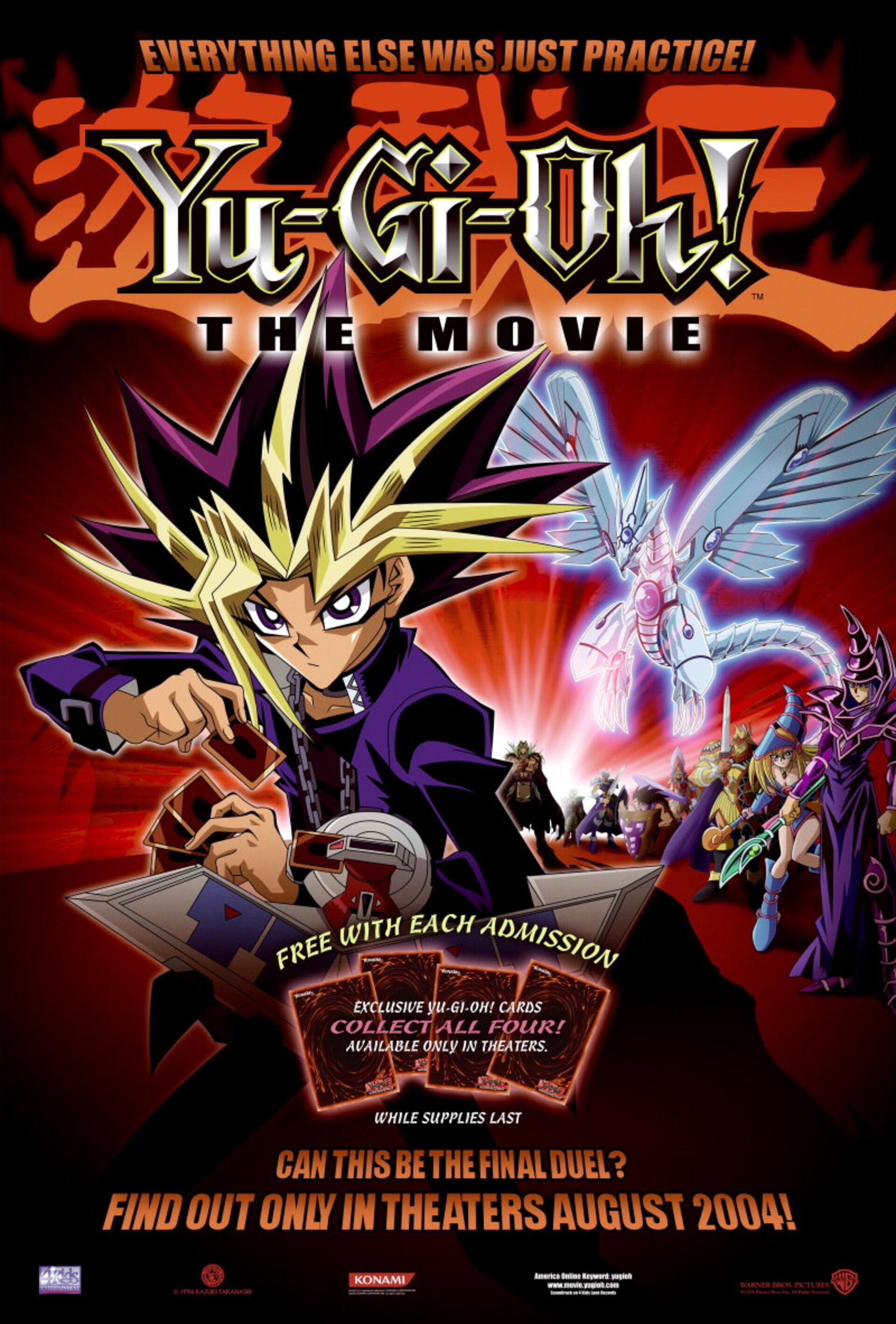
It is 2004. You’re sitting in a darkened theater, holding a limited-edition "Pyramid of Light" trading card that’s still slightly sticky from the pack. The lights dim. The high-pitched, metallic "Yu-Gi-Oh!" scream echoes through the speakers. For a generation of kids, that wasn't just a movie—it was a cultural reset. Honestly, looking back at the Yu-Gi-Oh filme catalog today, it’s a wild ride through peak early-2000s angst, corporate marketing experiments, and some surprisingly deep storytelling that actually holds up if you squint past the "Heart of the Cards" cheese.
People often forget how weird the transition from a 20-minute TV episode to a feature-length film was for this franchise. It wasn't always smooth. In fact, some of it was downright chaotic. But there is a reason fans still argue about Dark Side of Dimensions in Reddit threads years after its release. It’s not just about the card games; it’s about how these films managed to wrap up character arcs that the original anime sometimes left hanging in the wind.
The Weird History of Yu-Gi-Oh Filme and the 1999 "Lost" Movie
Most people think the cinematic journey started with the WB-produced flick in 2004. They’re wrong. The very first of the Yu-Gi-Oh filme was actually a 30-minute short released in Japan in 1999 by Toei Animation. It’s basically a fever dream. This was back when Seto Kaiba had green hair and the Duel Disk hadn't even been invented yet. The plot? A kid named Shogo finds a rare "Red-Eyes Black Dragon," and Yugi has to show him that having a powerful card doesn't mean anything if you don't have the "courage to fight."
It’s simple. It’s short. It’s also incredibly important because it set the tone for everything that followed. It established that in this universe, a single card could represent a person’s entire soul. If you can track down a subbed version of this today, do it. The animation is grittier, and it feels more like the original manga’s "Shadow Games" roots than the shiny, polished product we got later.
Then came the big one. Yu-Gi-Oh! The Movie: Pyramid of Light.
This was a bizarre moment in pop culture history. 4Kids Entertainment basically willed this movie into existence to capitalize on the TCG craze in the West. Because of that, it feels distinct from the Japanese series. It’s loud. It’s flashy. It features Anubis, an Egyptian god of the dead who was never in the original manga, just so Yugi and Kaiba would have an excuse to team up. Critics absolutely hated it. Rotton Tomatoes was not kind. But for the kids who got those physical cards at the door? It was everything. It solidified the rivalry between Blue-Eyes and Dark Magician as the central pillar of the brand.
Why Dark Side of Dimensions Changed the Game
If Pyramid of Light was a cash-in, Yu-Gi-Oh!: The Dark Side of Dimensions (2016) was a love letter. This is widely considered the gold standard of Yu-Gi-Oh filme because it was actually written by the original creator, Kazuki Takahashi.
The stakes felt different here. It wasn't about saving the world from a generic ancient evil—well, it was, but that was secondary. The real meat of the story was Seto Kaiba’s grief. He couldn't handle the fact that Atem (the Pharaoh) was gone. He literally built a space elevator and a neural-link VR system just to try and resurrect a dead rival for one last game. That’s peak Kaiba. It’s obsessive, it’s unhealthy, and it makes for incredible cinema.
The animation in DSoD is genuinely stunning. They traded the flat 2D cells for high-budget digital compositing and fluid monster summons that make the original series look like a flipbook.
- The Duel Disks: They went from mechanical toys to holographic "brain-link" tech.
- The Pacing: It’s faster. No more three-episode-long turns.
- The Ending: It leaves things on a hauntingly beautiful note that respects the manga’s ending more than the anime did.
Honestly, if you only watch one movie in this franchise, make it this one. It bridges the gap between childhood nostalgia and adult-oriented storytelling. It treats the audience like they grew up. Because we did.
Bonds Beyond Time: The Ultimate Crossover Fever Dream
We have to talk about Yu-Gi-Oh! 3D: Bonds Beyond Time. It’s only about 45 minutes long, but it packs in Yugi, Jaden (GX), and Yusei (5D’s).
Think about the technical nightmare of making this work. You have three different eras of the card game happening at once. Jaden is using Fusion. Yusei is doing Synchro summons. Yugi is just vibing with his classic Tribute summons. The villain, Paradox, is stealing monsters from across time, which is a classic trope, but seeing the Stardust Dragon and Dark Magician on screen together was a massive "Avengers Assemble" moment for anime fans before that was even a common phrase.
It’s a bit of a mess, though. The 3D effects were clearly designed for those 2010-era theaters where things fly at your face. On a standard TV today, it looks a little dated. But the interaction between the protagonists is gold. Jaden’s goofy energy playing off Yusei’s "I grew up in a dystopian slum" seriousness is a highlight. It’s pure fanservice, and it doesn't pretend to be anything else.
The Evolution of the "Card Game Movie"
What’s fascinating about these Yu-Gi-Oh filme is how they reflect the state of the industry. In the early 2000s, anime movies in the West were often heavily edited and treated as "kids' stuff." By the time Dark Side of Dimensions rolled around, the industry realized that the "kids" were now 25-year-olds with disposable income and a deep emotional connection to the lore.
The movies stopped trying to explain the rules of the game to outsiders. They leaned into the complexity. They assumed you knew what a "Banished" zone was. They assumed you knew the history of the Millennium Items. This shift allowed the writers to focus on the psychology of the characters rather than the mechanics of the product.
Key Takeaways from the Cinematic Run:
- The 1999 Movie: A rare relic of the "Season 0" era that most Western fans missed.
- Pyramid of Light: A Western-driven spectacle that defined the 2004 hype.
- Bonds Beyond Time: A technical bridge between three generations of the franchise.
- Dark Side of Dimensions: The definitive ending to the original story that we actually deserved.
Real Talk: Are They Actually Good?
Look, if you aren't into the TCG, these movies can be a hard sell. There is a lot of standing around and shouting card names. But if you look at them as character studies—specifically the obsessive rivalry between Yugi and Kaiba—they are surprisingly layered. Kaiba’s refusal to accept loss or death is a recurring theme that gets explored with more nuance in the films than it ever did in the 200-episode TV show.
The soundtracks are also underrated. The transition from the rock-heavy 4Kids score to the orchestral, epic themes in the later Japanese productions shows the maturing of the brand. It went from "Let’s sell toys" to "Let’s create a legacy."
What to Do Next
If you’re looking to dive back into the world of Yu-Gi-Oh filme, don't just go in chronologically. Start with Dark Side of Dimensions to see the peak of what the series can be. Then, go back to the 1999 Toei film for a bit of historical context and to see how much things have changed.
Check out the "Remastered" versions of the original series if you need a refresher on the lore before hitting the movies. Most streaming platforms have the "Duelist Kingdom" and "Battle City" arcs, which provide the necessary emotional weight for the films. Finally, if you can find the Japanese "uncut" version of Pyramid of Light, it’s a vastly different experience than the one we saw in theaters, featuring a different score and slightly more breathing room for the plot.
Grab some popcorn, maybe dust off your old deck, and appreciate the fact that a story about a kid with pointy hair playing a card game managed to command the big screen for over twenty years.
Practical Steps for Collectors:
- Search for the 10th Anniversary Secret Rares: Many of the cards released alongside Bonds Beyond Time have become legitimate collector's items.
- Watch the Sub vs. Dub: For Dark Side of Dimensions, the English dub features the original voice cast (Dan Green and Eric Stuart), which is a massive nostalgia hit, but the Japanese sub contains a more philosophical script.
- Verify Region Codes: If you're buying physical DVDs or Blu-rays of the older films, be careful with Japanese imports as they are often Region 2 and won't play on standard US players without a region-free mod.
The legacy of these films isn't just in the animation or the sales—it's in the way they managed to make a high-stakes supernatural drama out of a tabletop game. They are a snapshot of a very specific era of media, and honestly, we probably won't see anything quite like them again.



