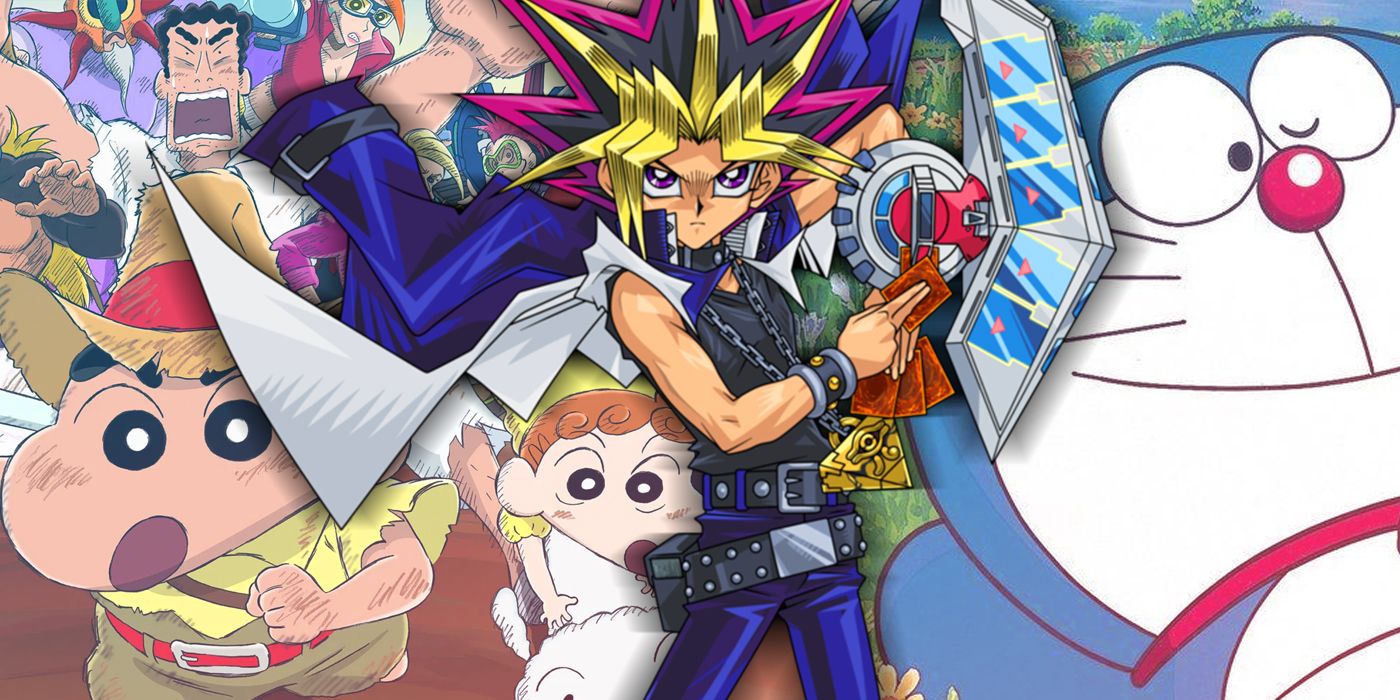
It is 2002. You just got home from school. You’ve got a bowl of sugary cereal, and the TV is blaring a localized Japanese theme song about the "Heart of the Cards." Honestly, looking back at Yu-Gi-Oh episodes now, some of it is absolutely ridiculous. We’re talking about a universe where the literal fate of the world depends on a high-stakes game of Duel Monsters. If a villain wants to take over a multi-billion dollar corporation, they don't use a hostile takeover or legal maneuvers. They challenge a teenager to a card game in a dark alley.
And yet, we watched every second.
The staying power of the original Duel Monsters run, specifically the 224-episode marathon starring Yugi Muto and Seto Kaiba, isn't just about nostalgia. It’s about the weird, gritty, and often terrifying stakes that the 4Kids dub tried its hardest to hide from us. If you grew up with the English version, you probably remember the "Shadow Realm." In reality? Most of those characters were just straight-up dying. The original Japanese Yu-Gi-Oh episodes were dark. Like, "saw blades moving toward your legs" dark.
The Duelist Kingdom Arc and the Rules That Didn't Exist
When you revisit the early Yu-Gi-Oh episodes, specifically the Duelist Kingdom arc, you realize something pretty fast. The rules are complete nonsense.
Yugi literally wins a duel against Mako Tsunami by attacking the moon. Not a card called "The Moon." He has his Giant Soldier of Stone attack the literal holographic moon on the field to change the tides. It makes zero sense in the context of the actual trading card game (TCG) we play today. But that's the charm. Kazuki Takahashi, the creator of the manga, was still figuring out how the game worked.
The stakes were personal. Yugi wasn't just playing for glory; he was playing to save his grandfather’s soul, which Maximillion Pegasus had sucked into a video tape. Imagine explaining that to someone who doesn't watch anime. "Yeah, the guy with the golden eye trapped the old man in a VHS." It's peak 90s/early 2000s storytelling.
Why Battle City Changed Everything
If Duelist Kingdom was the experimental phase, Battle City was where the series became a titan. This is where the Egyptian God Cards—Slifer the Sky Dragon, Obelisk the Tormentor, and The Winged Dragon of Ra—entered the fray.
These episodes shifted the tone. Suddenly, we were in a city-wide tournament. Losers had to give up their rarest card. It introduced the "Antithesis" dynamic between Yugi and Kaiba that defines the franchise. Kaiba is a man of pure science and ego. Yugi (and the Pharaoh Atem) represents fate and spirituality. Their clash atop the Duel Tower remains one of the most-watched sequences in anime history.
Honestly, Seto Kaiba is the most relatable character because he refuses to believe in magic even when a giant flaming phoenix is melting his life points. He’s just like, "This is a very impressive holographic projection." That level of denial is legendary.
The "Filler" That Actually Mattered
Most people tell you to skip filler. In most anime, that’s good advice. But Yu-Gi-Oh episodes during the "Waking the Dragons" arc (the Orichalcos saga) are surprisingly compelling despite not being in the original manga.
It gave us "Berserker Soul."
"Draw! Monster Cardo!"
The moment where Yami Yugi loses his cool and keeps attacking Weevil Underwood long after the duel is over is a core memory for the fandom. It showed that the "hero" had a dark side that wasn't just "cool edgy Pharaoh," but someone who could be consumed by grief and rage. It added a layer of E-E-A-T (Experience, Expertise, Authoritativeness, and Trustworthiness) to the writing—even if the writers were just trying to stall for time while the manga caught up.
The Misunderstood Final Season
By the time we got to the Dawn of the Duel arc, the card games actually took a backseat to ancient Egyptian mythology. We finally saw the origin of the Millennium Items. We saw the Pharaoh’s true name.
It’s a bit of a slow burn. Some fans found the transition from card tables to literal stone tablets jarring. But the final duel? Yugi Muto vs. Atem? That is how you end a series. It wasn't about the cards. It was about a boy proving he didn't need a protector anymore. It’s one of the few long-running Shonen series that actually sticks the landing.
How to Watch Yu-Gi-Oh Today Without Going Crazy
If you're looking to binge Yu-Gi-Oh episodes in 2026, you have options. But you need to be smart about it.
- The Dub vs. Sub Debate: The 4Kids dub is iconic for its voices (Dan Green and Eric Stuart are irreplaceable), but it censors a lot. If you want the intended experience, watch the subtitled version. The music is better, the stakes are higher, and nobody talks about "Shadow Realms."
- Skip the Virtual World: If you’re watching the Battle City arc and suddenly they’re trapped in a digital forest with Kaiba’s stepbrother, Noah? That’s filler. It interrupts the most exciting part of the tournament. You can skip it and lose nothing, though Kaiba’s backstory gets some extra flavor there.
- The Movie Problem: Pyramid of Light is fun but non-canonical. The Dark Side of Dimensions, however, is a direct sequel to the manga and is visually stunning. It’s a must-watch after you finish the main series.
The landscape of anime has changed. We have Jujutsu Kaisen and Demon Slayer now with high-budget animation and tight pacing. Yu-Gi-Oh episodes are relics of a different time—one where a single turn could take three weeks of television. But there is a soul in those hand-drawn cels and the over-the-top voice acting that modern, polished shows sometimes miss.
It’s about the absurdity. It’s about the heart. It’s about the fact that no matter how bad things get, you might just draw the one card that saves everything.
Actionable Steps for the Aspiring Duelist
If you want to dive back in, start with the "Remastered" versions available on streaming platforms like Crunchyroll or Hulu. They’ve cleaned up the graininess of the original broadcast. For a true deep dive, track down the "Season 0" episodes by Toei Animation. They never officially aired in the West and feature a much more violent Yami Yugi who plays "Shadow Games" involving fire and explosions instead of just cards.
Check the episode count before you start; 224 is a lot. Focus on the "Battle City" and "Ceremonial Battle" arcs if you want the high-density quality. Most importantly, don't take the rules too seriously in the first 50 episodes. Just enjoy the ride.
The legacy of these episodes lives on in the TCG, which is more complex than ever. But for many of us, the game will always be about a spiky-haired kid, a billionaire with a dragon obsession, and the ridiculous belief that a deck of cards could change the world.



