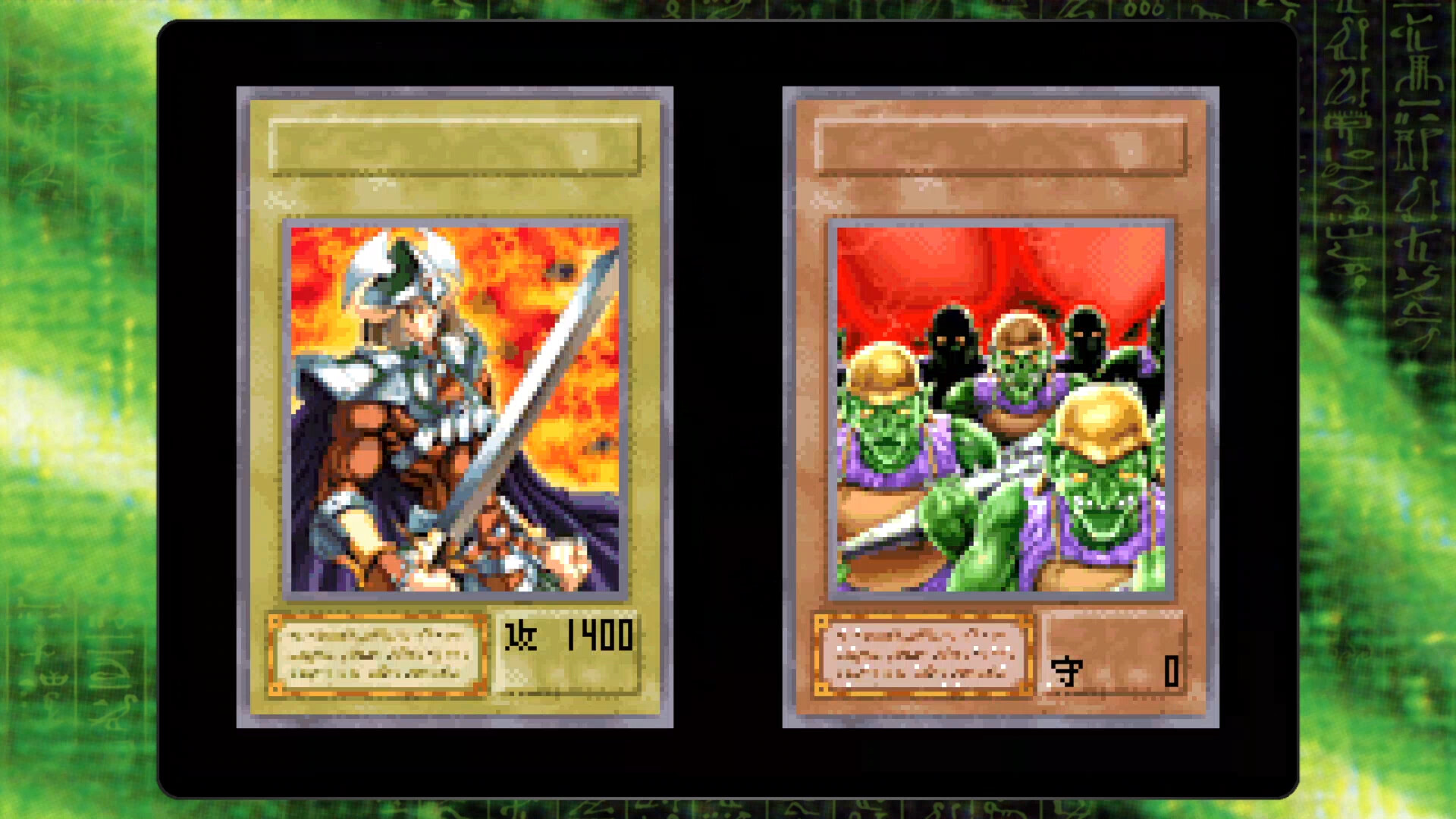
Honestly, if you grew up holding a Game Boy Color or a bulky original GBA, you probably remember the absolute chaos of early handheld card games. They weren't like the modern Master Duel experience. They were weird. They were often unfair. Sometimes, they barely followed the actual rules of the TCG. But they had a soul that modern simulators often lack. Now, Konami is finally leaning into that nostalgia with the Yu-Gi-Oh! Early Days Collection, a bundle that is basically a digital museum for the era of Duel Monsters that started it all.
It's a big deal.
For years, these titles were trapped on dying hardware or relegated to the world of emulators. You couldn't just "buy" Duel Monsters 4: Battle of Great Duelists unless you were scouring eBay for Japanese cartridges or dealing with fan translations. The Yu-Gi-Oh! Early Days Collection changes the math by bringing these titles to Nintendo Switch and PC. It’s not just a port; it’s a preservation effort for a time when Konami was still figuring out how to turn a complex card game into a functional video game.
What is actually in the Yu-Gi-Oh! Early Days Collection?
The lineup is surprisingly deep, especially for fans who missed the Japanese exclusives. We aren't just getting the hits; we are getting the deep cuts.
One of the heavy hitters is Yu-Gi-Oh! Duel Monsters 4: Battle of Great Duelists. Released back in 2000 for the Game Boy Color, this game was a massive phenomenon in Japan but never officially touched Western soil in its original form. It famously split its card pool across three different versions—Yugi, Kaiba, and Joey—much like Pokémon. If you wanted the God Cards, you had to pick the right version. This collection finally lets us play it without a fan-made patch.
Then there is Yu-Gi-Oh! Duel Monsters 6: Expert 2. If you played Yu-Gi-Oh! Worldwide Edition: Stairway to the Destined Duel on the GBA, this is going to feel very familiar. It’s basically the foundational blueprint for what would become the "Master Rule" format we know today. It’s snappy, it’s fast, and it represents that sweet spot where the game started to feel less like a schoolyard brawl and more like a tactical esport.
We also see Yu-Gi-Oh! The Eternal Duelist Soul. This was the gateway drug for an entire generation of Western players. I remember staying up way too late under the covers with a worm light just to beat Rare Hunter for the hundredth time. Seeing it included in the Yu-Gi-Oh! Early Days Collection is a massive win for anyone who wants to revisit that specific GBA crunchiness.
The weirdness of early mechanics
The most striking thing about these old games is how they handled "elemental" advantages. Before the TCG rules were fully codified in digital form, Konami used a "Rock-Paper-Scissors" system for Attributes.
A Water monster would instantly destroy a Fire monster, regardless of Attack points. It was wild. It made the games feel more like an RPG than a traditional card game. In Duel Monsters 4, you couldn't even summon high-level monsters without specific "alignment" requirements. It was frustrating, sure, but it gave those early titles a distinct flavor that you simply don't get in modern Yu-Gi-Oh.
The Yu-Gi-Oh! Early Days Collection preserves these quirks. It’s a warts-and-all look at the franchise's evolution. You get to see the moment when the developers realized that "Hey, maybe Blue-Eyes White Dragon shouldn't lose to a Penguin Soldier just because of a hidden elemental property."
Online play and quality of life
One of the biggest questions fans had was about multiplayer. Konami confirmed that certain titles in the collection will support online play. This is a game-changer. Back in 2002, you needed a physical Link Cable and a friend who actually owned the same game to duel. Now, you can take a deck built in Expert 2 and challenge someone across the world.
They are also adding "Rewind" features. Let’s be real: the AI in these old games cheated. Hard. They knew what was in your hand and would top-deck the exact card they needed to ruin your day. Being able to rewind a turn is a mercy. It makes the grind for rare cards—which was notorious in the Game Boy era—much more bearable for a modern audience with limited free time.
Why this matters for the TCG community
There is a growing movement in the community called "Retro Format" gaming. People are tired of 10-minute turns and "negate boards" in the current Meta. They want to go back to 2004 (Goat Format) or 2005 (Reaper Format).
The Yu-Gi-Oh! Early Days Collection serves as a perfect entry point for this. It’s a time capsule of a slower, more deliberate game. You set a monster. You set a backrow. You pass. There's a tension in that simplicity that many players miss.
Konami is also leaning into the physical aspect by including a promotional card with physical copies of the collection. In Japan, they’ve already teased "Harpie's Feather Duster" with a specific retro rarity. It’s a smart move. It bridges the gap between the digital collectors and the physical players who still haunt their local game stores every Saturday.
Misconceptions about the collection
Don't go into this expecting a 4K remaster. These are ports of handheld games. On a 65-inch OLED TV, a Game Boy Color game is going to look... well, like a Game Boy Color game.
Some people expected the collection to include every single game up to the 5D’s era. It doesn't. The focus is strictly on the "Early Days"—the DM era. This means no Synchro monsters, no Xyz, and certainly no Pendulums. It is a very specific slice of history. If you didn't like the game before 2005, this collection isn't going to change your mind. But if you think "Pot of Greed" is the greatest card ever printed, you're in heaven.
Actionable steps for prospective duelists
If you're planning on picking this up, don't just jump into the first game on the list. The difficulty curves are all over the place.
- Start with The Eternal Duelist Soul or Expert 2 if you want a recognizable version of the TCG rules. These are the most "modern" of the bunch and will feel the most intuitive.
- If you want to see the "Dark Souls" of Yu-Gi-Oh, try Duel Monsters 4. The deck-building restrictions are brutal, and you will lose often. It requires a completely different mindset.
- Check the version differences. Since some of these were originally released as multiple versions (like Pokémon Red and Blue), look up which cards are exclusive to which "in-game" path if you're hunting for specific powerhouses like Slifer the Sky Dragon.
- Prepare for the grind. These games were designed to be played for hundreds of hours to unlock every card. Use the new save-state and rewind features to bypass the most frustrating RNG moments.
- Keep an eye on the official Konami social channels for the full localized tracklist. While many titles are confirmed, there are still "hidden" slots that could include Western fan favorites like The Sacred Cards or Reshef of Destruction.
The Yu-Gi-Oh! Early Days Collection isn't just a cash grab; it's a necessary piece of gaming history. It honors the messy, experimental, and incredibly fun roots of a global phenomenon. Whether you're a veteran looking to relive your childhood or a new player curious about why your older brother keeps talking about "Link Cables," this collection is the definitive way to experience the origins of the King of Games.