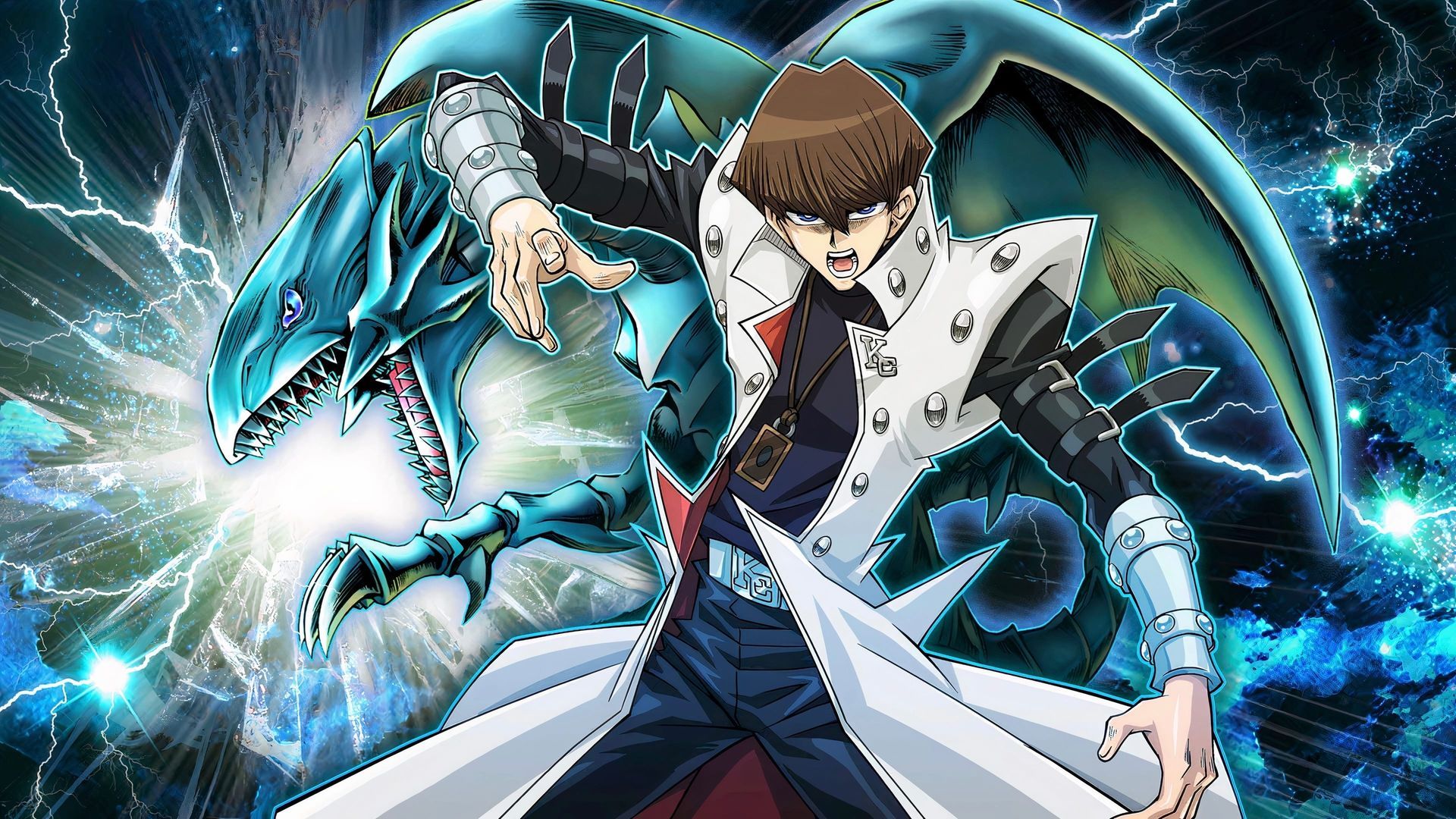
Kazuki Takahashi didn't actually set out to create a card game phenomenon. Not at first. When the manga debuted in Weekly Shonen Jump back in 1996, it was a horror-tinted series about a kid with a mystical puzzle who punished bullies with lethal "Shadow Games." But then came Chapter 9. The introduction of "Magic & Wizards." Suddenly, fans weren't interested in the Egyptian curses or the yo-yo battles anymore. They wanted the cards. This pivot birthed Yu-Gi-Oh! Duel Monsters, an anime that didn't just sell plastic-coated cardboard; it defined an entire generation’s Saturday morning ritual.
It’s weirdly easy to dismiss this show as a toy commercial. On the surface, it is. But if you actually sit down and rewatch the Duelist Kingdom or Battle City arcs today, you’ll find a narrative that is surprisingly dark, emotionally heavy, and obsessed with the concept of ancient trauma. It’s a show where teenagers gamble their souls while wearing leather straps and sporting hair that defies every known law of physics.
The Messy Reality of the Yu-Gi-Oh! Duel Monsters Rules
Let’s be honest: the first season of Yu-Gi-Oh! Duel Monsters was absolute chaos. If you try to play the modern Trading Card Game (TCG) using the logic from the Duelist Kingdom arc, you’ll be kicked out of a tournament in five minutes. Yugi Muto—or rather, the Nameless Pharaoh living inside his jewelry—basically made up the rules as he went along.
Remember the duel against Mako Tsunami? Yugi literally attacked the moon card to drain the tide and strand Mako’s sea monsters. That isn't how card games work. It’s how Dungeons & Dragons works. This discrepancy exists because Takahashi was still figuring out the mechanics of his own fictional game while the studio, NAS/TV Tokyo, was rushing to animate it. By the time we hit the Battle City arc, the rules solidified into something resembling the real-life TCG, introducing the "Tribute Summon" mechanic which finally stopped players from just dropping a Blue-Eyes White Dragon on turn one without any cost.
The shift from "anything goes" magic to a structured game mirrors the growth of the characters. Yugi moves from a helpless kid relying on a ghost to a strategist who can actually stand on his own. It’s a subtle bit of writing that often gets overshadowed by the giant holographic dragons and the screaming.
Why Seto Kaiba is the Best Antagonist in Anime
Kaiba is a psychopath. Let’s just put that out there. In the original manga, he was even worse—a genuine villain who built a "Death-T-Park" to kill children. The Yu-Gi-Oh! Duel Monsters anime softened him into a "rival," but his intensity remained unmatched. He is a billionaire orphan who spent his entire fortune building a virtual reality system just so he could beat a ghost at a card game.
That’s a level of pettiness we have to respect.
What makes Kaiba work as a character isn't his deck; it's his absolute refusal to believe in magic. Even when he’s staring at a three-thousand-year-old Egyptian god or witnessing a soul being ripped into a Shadow Realm, he blames it on "advanced illusions" or "cheap tricks." He represents the ultimate cynical materialist standing in the face of destiny. His dynamic with Yami Yugi is the engine that drives the show. It’s not about good vs. evil; it’s about the past vs. the future, and magic vs. technology.
The Cultural Weight of the Shadow Realm
If you grew up watching the 4Kids dub in the West, you probably remember the "Shadow Realm." This was actually a clever bit of censorship. In the original Japanese version, Yu-Gi-Oh! Duel Monsters featured real death. People weren't being "sent to a purple dimension"—they were jumping off buildings, being incinerated by fire, or having their minds shattered.
Oddly enough, the invention of the Shadow Realm actually made the show scarier for some kids. The idea of an eternal void of suffering felt much more existential than just "falling into the ocean." This tension between the "children's card game" and the high stakes is why the show has such a strange staying power. It took itself incredibly seriously. The voice acting (shout out to Dan Green and Eric Stuart) treated a card game match like a Shakespearean tragedy.
The Egyptian Roots and the Nameless Pharaoh
The backbone of the series is the "Millennium World" arc. This is where we learn about Atem, the Pharaoh who sacrificed his life and his very name to seal away the Great God of Evil, Zorc Necrophades.
The historical accuracy here is... questionable. It’s a fantasy version of Egypt. But the themes of identity and legacy are real. Yami Yugi spends the entire series as a man without a memory. He is a warrior who won a war but lost his soul. Watching him slowly piece together his history while playing cards with a blonde kid named Joey (Katsuya Jonouchi) creates a bizarre but effective emotional hook.
The finale, "The Ceremonial Battle," is widely considered one of the best endings in shonen history. It doesn't end with a big explosion. It ends with the two protagonists—the two Yugis—facing each other. It’s a story about the necessity of letting go. Yugi has to defeat his mentor so the Pharaoh can finally find peace in the afterlife. It’s a heavy, tear-jerking moment for a show that also features a card called "Baby Dragon."
Strategies That Actually Defined the Era
If you’re looking back at the meta-game depicted in Yu-Gi-Oh! Duel Monsters, it was dominated by iconic cards that still see play or references today.
- Exodia the Forbidden One: The ultimate "win condition." It taught kids about the concept of card advantage before they even knew what that meant.
- The Egyptian God Cards: Slifer, Obelisk, and Ra. These were the "boss monsters" that every kid wanted. In the show, they were basically invincible; in the real game, they were notoriously difficult to actually use effectively.
- Pot of Greed: "I draw two cards!" This became a meme because the characters explained what it did every single time they played it. In reality, it was so powerful it has been banned in the official TCG for decades.
How to Revisit the Series Today
If you're planning a rewatch, you've got choices. The original Japanese version (Duel Monsters) has a significantly different tone, better music (the "Passionate Duelist" theme is legendary), and more visceral stakes. The English dub is a nostalgia powerhouse with an iconic rock soundtrack, though it cuts out a lot of the darker subtext.
Skip the filler if you're short on time. The "Noah’s Virtual World" arc and the "Waking the Dragons" (Orichalcos) arc are technically filler—they weren't in the original manga. However, "Waking the Dragons" is surprisingly well-loved by fans because it leans hard into the lore of Atlantis and gives the main characters some of their darkest moments.
Yu-Gi-Oh! Duel Monsters isn't just about cards. It's about the "Heart of the Cards," which is really just a fancy way of talking about confidence and the bond between friends. It sounds cheesy because it is. But in an era of hyper-competitive gaming, there’s something genuinely refreshing about a show that insists a game can save the world.
To truly appreciate the series now, you should look into the "Speed Duel" format of the TCG, which mimics the smaller field and faster pace of the anime. It’s a great entry point if the modern game feels too complicated with its Link Summons and ten-minute turns. Also, checking out the movie Yu-Gi-Oh!: The Dark Side of Dimensions is a must. It serves as a direct sequel to the manga and features some of the most beautiful animation the franchise has ever seen, specifically closing the loop on Kaiba’s obsession with Atem.
Grab a deck, ignore the laws of physics, and remember that sometimes, the only way to win is to believe you’re going to draw exactly what you need. Or just have a billionaire's budget to buy all the best cards. Either way works.



