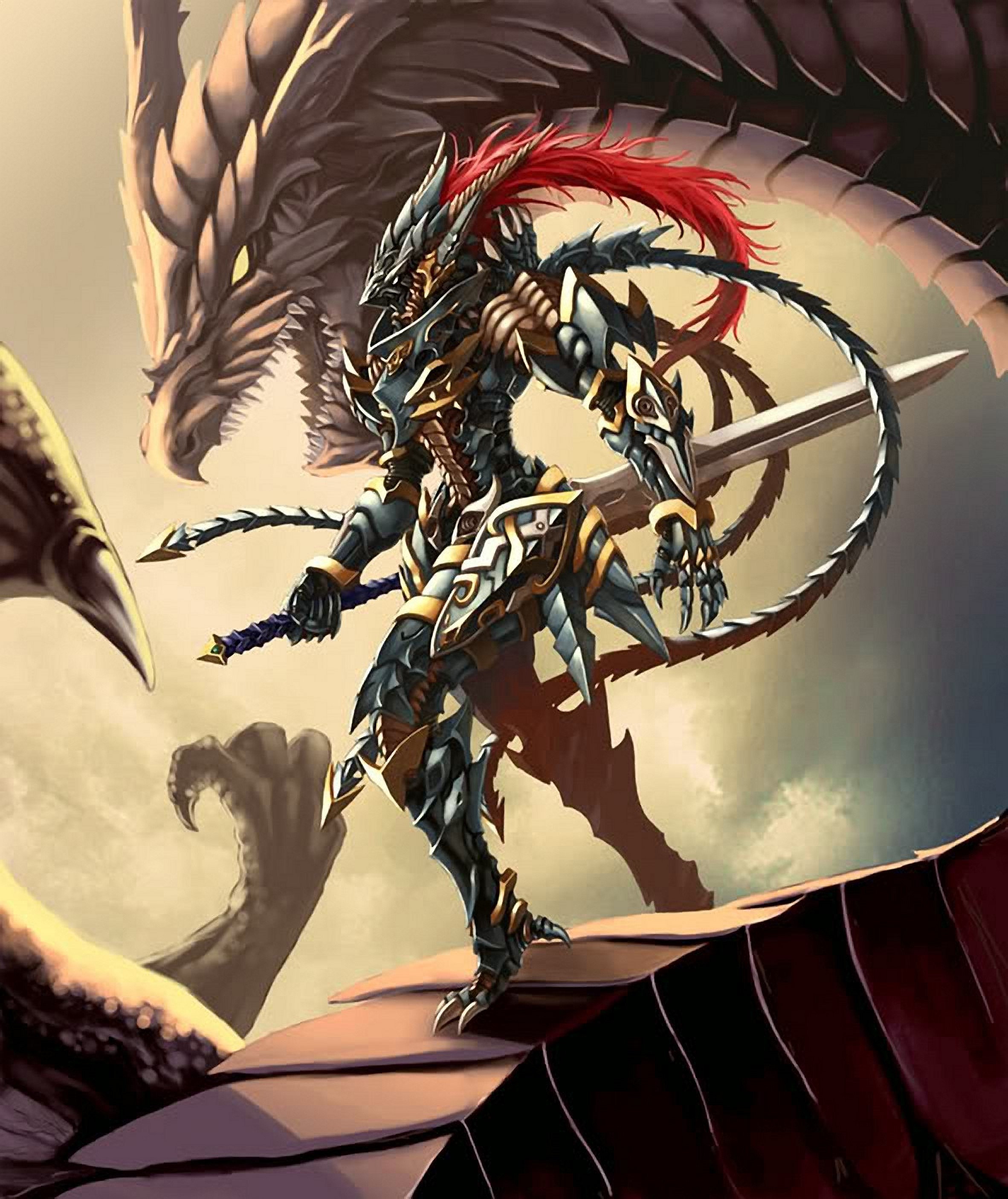
Let's be real for a second. If you’ve ever touched a trading card game, you know the trope. Big, scaly, fire-breathing monsters are everywhere. But Yu Gi Oh dragons are just... built different. They aren't just high-attack beatsticks that look cool on a holographic foil; they are the literal DNA of the game. From the moment Kaiba ripped up that fourth Blue-Eyes White Dragon in the first episode of the anime, the trajectory of the entire franchise was set in stone. Dragons became the gold standard.
They're everywhere.
You see them in top-tier tournament decks, you see them in casual "kitchen table" games, and you definitely see them in the price tags of high-end collector pieces. But why? Why did Konami decide that one specific monster type deserved to be more supported, more broken, and more iconic than everything else? It’s not just about aesthetics. It’s about how their mechanics have evolved from simple "summon and swing" tactics into the most complex combo engines in gaming history.
The Blue-Eyes Obsession and the Power of Nostalgia
The foundation of the Yu Gi Oh dragons craze starts with Blue-Eyes White Dragon. Honestly, by modern standards, the card is terrible. It’s a "brick." You have to tribute two monsters just to get a 3000 ATK vanilla beatstick on the board. In a world of hand traps and one-card combos, that’s suicide. Yet, Konami refuses to let it die. They keep pumping out support like Blue-Eyes Alternative White Dragon and The Melody of Awakening Dragon because the player base simply won't let go of the legend.
It's a weird paradox.
You've got veteran players who scoff at the "Blue-Eyes player" archetype, yet those same veterans usually have a playmat or a deck box featuring a dragon. It's ingrained. The 3000 ATK stat line became the benchmark for every boss monster that followed. If your "boss" has less than 3000, it better have a damn good protection effect, or it’s just not going to cut it in the dragon-dominated landscape.
Chaos Dragons changed everything
If Blue-Eyes was the childhood crush, Chaos Dragons were the toxic relationship that everyone loved to hate. This is where the game truly shifted. We're talking about the era of Chaos Dragon Levianeer and the infamous Black Luster Soldier - Envoy of the Beginning (okay, he's a Warrior, but he's the honorary captain of the Dragon squad).
The mechanic was simple but devastating: banish one Light and one Dark monster from your graveyard to special summon a god-tier threat.
Suddenly, the graveyard wasn't a discard pile anymore. It was a second hand. This specific subset of Yu Gi Oh dragons taught players that "cost" is actually a "benefit." Sending a dragon to the grave wasn't losing a resource; it was setting up for a game-ending play. This philosophy birthed the "Dragon Link" decks that dominated the competitive scene for years, utilizing cards like Starliege Seyfert and White Dragon Wyverburster to create infinite loops of resources.
Why the "Dragon" Type is Mechanically Superior
Konami has a favorite child. It's obvious. Look at the support cards available to the Dragon type compared to, say, Pyro or Sea Serpent (though Fire is having a moment recently).
You have Hieratic Seal of the Heavenly Spheres. This thing is a Link-2 monster that doesn't just provide a bounce-to-hand interruption; it also summons any dragon from your deck when it's tributed. That is insane value. Then you have Dragon Shrine and Foolish Burial (which every deck wants, but Dragons use best). Dragons have a dedicated graveyard-filling spell that lets you send a second dragon if the first one was a normal monster.
They also have the best "generic" extra deck monsters. Borreload Savage Dragon and Baronne de Fleur (not a dragon, but usually summoned via dragon engines) have been staples because dragons are the best at "climbing" the Extra Deck ladder.
Basically, if you play Dragons, you’re playing on Easy Mode regarding resource management. You have more ways to search your deck, more ways to recur from the grave, and more ways to protect your board than almost any other archetype. It's not a conspiracy; it's just twenty-five years of power creep centered on a single creature type.
The Disaster of the Dragon Rulers
We have to talk about 2013. If you were playing back then, you still have the scars. The Dragon Rulers—Blaster, Tempest, Tidal, and Redox—were a mistake. They were so dominant that they essentially deleted every other deck from existence.
They could summon themselves from the hand or grave. They could search each other. They had high stats.
They were the "perfect" Yu Gi Oh dragons, and they were so broken that Konami had to ban all four of them eventually. Even now, as they slowly peel them off the Forbidden list one by one (Tempest and Blaster are back), the community holds its breath. It shows the sheer raw power inherent in the Dragon type. When you give dragons too much generic synergy, the game breaks. It doesn't just bend; it snaps.
Red-Eyes vs. Blue-Eyes: The Eternal Struggle
While Blue-Eyes represents "Power," Red-Eyes B. Dragon was always meant to represent "Potential." Sorta. In reality, Red-Eyes has a bit of an identity crisis. One year it’s a burn deck, the next it’s a Fusion deck, then it’s an Xyz deck.
It’s the "lovable loser" of Yu Gi Oh dragons.
But this highlights a key point: variety. Even within a single monster type, you have sub-themes that play completely differently. Dragonmaids turn the game into a battle-phase bounce-fest where cute maids transform into massive dragons. Rokket dragons act like literal ammunition, destroying themselves to trigger effects and "reloading" during the End Phase. This variety is why the "Dragon" tag is so persistent. It’s not just one playstyle; it’s a dozen different ones wearing the same scaly skin.
The Financial Side of the Scales
Check the market. A first-edition LOB (Legend of Blue Eyes White Dragon) booster box or a high-grade Blue-Eyes can sell for the price of a mid-sized sedan.
Collectors love dragons.
There is a "Dragon Tax" in the secondary market. If a new, powerful generic dragon gets printed—think S:P Little Knight (not a dragon) vs. something like Bystial Disater—the dragon-adjacent cards always seem to hold their value longer. People just like owning them. They look better in binders. They feel more "Yu Gi Oh" than a generic machine or a plant.
How to Actually Play Dragons in the Modern Era
If you're looking to jump back in, don't just throw 40 random dragons into a pile. You'll get washed. The modern game is about the "Bystial" engine.
Cards like Bystial Magnamhut and Bystial Druiswurm are the current kings. They function as "hand traps" that can banish a Light or Dark monster from either graveyard to special summon themselves. Against certain decks, this is an instant win. They also happen to be level 6, which opens up easy access to powerful Rank 6 Xyz monsters or Level 10 Synchros.
Step 1: Get your hands on the Bystial core. It's the most splashable dragon engine in years. Step 2: Understand the "Link Climbing" process. You aren't just summoning one big dragon; you are using small dragons to make medium dragons, which then fetch the big dragons. Step 3: Learn the graveyard. Your graveyard is basically your second hand. If a dragon effect says "send to the GY," that’s usually a good thing.
What Most People Get Wrong
People think dragons are all about "unga bunga" big attack points. Honestly? Most of the time, the attack points don't even matter.
The best Yu Gi Oh dragons are the ones that provide utility. Stardust Dragon didn't become a legend because it had 2500 ATK; it became a legend because it could sacrifice itself to stop destruction. Borrelsword Dragon didn't see play because it was a dragon; it saw play because it could OTK (One Turn Kill) out of nowhere by changing battle positions.
Stop looking at the bottom right of the card. Look at the text box. The most dangerous dragons are the ones that let you play the game on your opponent's turn.
The Future of the Type
We’re seeing a shift toward "Tenpai Dragon" recently. It’s a theme that focuses entirely on the Battle Phase, which is a bit of a throwback. It’s refreshing. It reminds us that at the end of the day, Yu Gi Oh dragons are supposed to be terrifying forces of nature that end games quickly.
Whether it's through complex Link-summoning loops or just a massive "Battle Phase?" declaration, the Dragon type remains the undisputed heavyweight champion of the game. It’s been that way since 1999, and based on the way Konami designs cards, it isn't changing anytime soon.
If you want to stay competitive, you need to either learn how to play with them or learn exactly how to stop them. There is no middle ground. You’re either the dragon slayer or the dragon.
Actionable Next Steps for Dragon Players:
- Audit your Extra Deck: If you aren't running Hieratic Seal of the Heavenly Spheres, you're missing out on the best generic Dragon disruption in the game.
- Study the "Bystial" interactions: Learn which matchups are most vulnerable to graveyard banishing; it's the difference between a Gold and Diamond ranking in Master Duel.
- Invest in "The Melody of Awakening Dragon": Even if you aren't playing Blue-Eyes, this card searches any dragon with 3000+ ATK and 2500- DEF, which covers a surprising amount of modern boss monsters.
- Watch the Ban List: Dragons are the most frequent targets for Konami's "ban hammer." Always have a backup engine ready in case your favorite "Link-1" gets the axe.