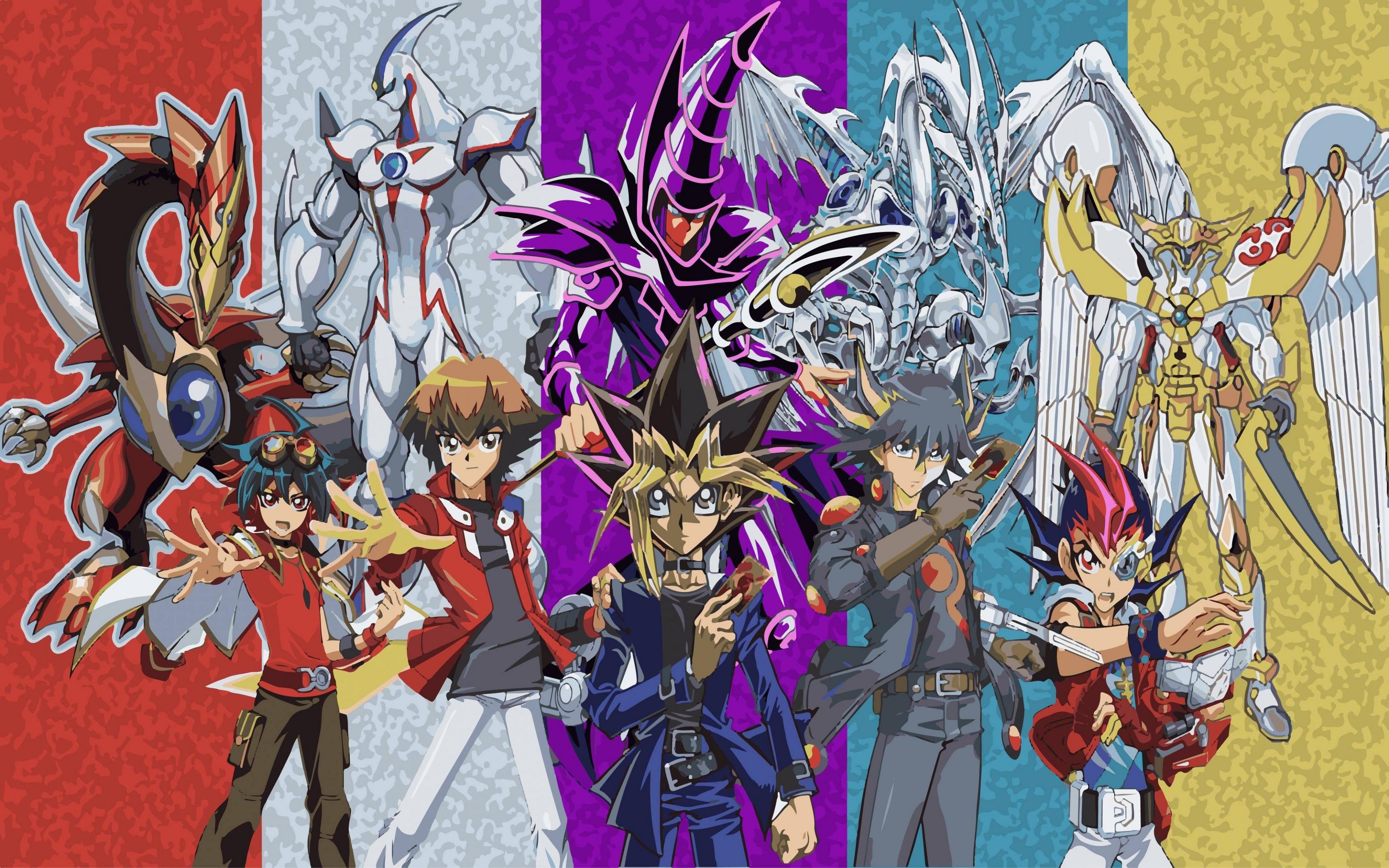
Growing up in the early 2000s, you couldn't escape it. The hair. The leather. The ancient Egyptian artifacts that somehow dictated the fate of the entire world through a card game. It sounds ridiculous when you say it out loud. Honestly, it is. But there’s a reason why Yu-Gi-Oh characters have a staying power that most modern anime franchises would kill for. It isn't just about the nostalgia of opening a booster pack and smelling that fresh ink. It’s about how Kazuki Takahashi (the late, legendary creator) managed to weave genuine trauma, friendship, and ego into a story about teenagers playing a tabletop game.
Yugi Muto isn't your typical shonen protagonist. Most of these guys start off strong or have some hidden demon. Yugi? He was just a lonely kid who wanted friends. He spent eight years of his life—think about that, nearly a decade—trying to solve a puzzle just to make a wish for companionship. That's heavy. Then you have Atem, the nameless Pharaoh trapped inside him. The dynamic between the "King of Games" and the timid boy is the heartbeat of the show. It’s a literal internal dialogue between who you are and who you want to become.
The Rivalry That Defined a Generation
If you ask any fan about their favorite Yu-Gi-Oh characters, Seto Kaiba is usually top three. Why? Because he’s a jerk. But he’s a jerk with a very specific, tragic motivation.
Kaiba represents the ultimate skeptic. He lives in a world where magic is objectively real—he’s seen dragons materialize, he’s been sent to the Shadow Realm (or "the stars" if you watched the censored dub), and he’s faced literal gods. Yet, he refuses to believe in any of it. To Kaiba, everything is a result of technology or a lack of personal will. He’s the guy who built a space elevator just to duel a ghost. That is a level of petty we have to respect.
His relationship with his brother, Mokuba, is the only thing that humanizes him. It’s a classic trope, the "cold executive with a soft spot," but it works because the stakes in the Battle City arc felt so personal. Kaiba didn't want to save the world; he wanted to prove he was better than the destiny the Egyptian tablets carved out for him.
Joey Wheeler and the Underdog Spirit
Then there's Katsuya Jonouchi, or Joey Wheeler. He’s the most "human" of all the Yu-Gi-Oh characters. He doesn't have an ancient relic. He isn't a billionaire. He doesn't even have particularly good cards for the first half of the series. He’s just a guy with a lot of heart and a gambling problem—seriously, his deck is almost entirely based on luck-based coin flips and dice rolls.
Joey's growth from a former bully to a world-class duelist is arguably the best arc in the franchise. When he stood his ground against Marik Ishtar during the Battle City semi-finals, he should have died. The "Shadow Game" was literally burning his soul. But he didn't lose because he was a bad duelist; he lost because his body physically gave out before he could finish the final attack. That moment did more for his character than any win ever could. It proved that in the world of Yu-Gi-Oh, spirit counts for more than the Rarity of your deck.
The Villains Who Actually Had A Point
We have to talk about Pegasus. Maximillion Pegasus (or Pegasus J. Crawford) is a masterclass in villain design. He’s flamboyant, he drinks wine while watching cartoons, and he steals souls. But his motivation is incredibly grounded: he just wanted to see his dead wife again. He used the Millennium Eye to try and resurrect Cecelia. It makes him sympathetic, even when he’s being a total creep to a group of teenagers on a private island.
Marik Ishtar, on the other hand, is pure, unadulterated trauma. The Gravekeepers' lore is dark. Like, really dark. Being forced to have ancient secrets carved into your back with a hot knife is enough to make anyone snap. Marik wasn't just a guy who wanted to rule the world; he was a victim of a cult-like upbringing who created a second, more murderous personality just to cope with the pain.
Bakura is the wildcard. Yami Bakura is the ultimate "lurker." He’s always there, in the background, waiting for the right moment to strike. He’s not interested in the card game at all, which makes him terrifying. To him, the cards are just a medium for a much older, much more violent game of power.
Supporting Cast and the "Friendship" Meme
Tea Gardner (Anzu Mazaki) gets a lot of flak for her "friendship speeches." People find it cheesy. And yeah, it is. But she’s the glue. Without Tea, the group falls apart. She represents the audience's moral compass. Tristan Taylor (Honda), meanwhile, is... well, he’s there. He provides the muscle and the comic relief, though in the original manga, he was much more of a street-tough character.
The diversity of the cast expands significantly in later series like GX, 5D’s, and VRAINS. Jaden Yuki brought a sense of fun back to the game, while Yusei Fudo introduced a grittier, post-apocalyptic vibe where "Card Games on Motorcycles" was actually a serious plot point. But the original crew? They set the blueprint.
Why We Still Care About These Duelists
The complexity of these Yu-Gi-Oh characters comes from their flaws. They aren't perfect. Yugi is too passive. Kaiba is arrogant to a fault. Joey is impulsive. They feel like real people caught in an absurd situation.
The original manga by Takahashi was actually a horror story. The "Magic & Wizards" card game was only supposed to appear in two chapters. But the fans went wild for it, and the series shifted focus. Despite that shift, the "Dark Games" (Yami no Games) roots stayed. The stakes always felt life-or-death because, for these characters, they were.
- The Millennium Items: These aren't just power-ups. They are burdens. Every character who holds one is eventually corrupted or destroyed by it, except for Yugi, who has the purity of heart to handle the Pharaoh's soul.
- The Egyptian Connection: This gave the story a sense of weight. It wasn't just a fad; it was a 3,000-year-old destiny finally reaching its conclusion.
- The Evolution of the Game: We watched these characters learn. They didn't start as masters. We saw them misplay, we saw them struggle with the rules (which were honestly a mess in the beginning), and we saw them build decks that reflected their personalities.
Practical Ways to Reconnect with the Series
If you’re looking to dive back into the world of these iconic Yu-Gi-Oh characters, don't just rewatch the anime. The original manga is significantly darker and provides much more context for why characters like Shadi or Bakura act the way they do.
- Read the original manga (Yu-Gi-Oh! volumes 1-7): This is before the card game took over. It's violent, weird, and brilliant. It explains the "Shadow Games" in a way the anime never quite did.
- Watch the "Season 0" (Toei Animation): It’s hard to find, but it shows a much more vengeful Yami Yugi who literally sets people on fire or drives them insane for being bullies.
- Check out the "Dark Side of Dimensions" movie: This is the true canon ending to the manga. It focuses heavily on Kaiba’s inability to let go of his rivalry with Atem, and the animation is breathtaking.
- Play Master Duel or Duel Links: If you want to feel like these characters, these games use the modern rules but often feature "Character IDs" or voice acting that brings the old school vibe back.
The legacy of these characters isn't just in the cards they played—the Dark Magician or the Blue-Eyes White Dragon. It’s in the way they handled loss and the way they defined themselves outside of the game. Whether you're a "third-rate duelist with a fourth-rate deck" or a King of Games, there’s a piece of these characters that sticks with you.
Next Steps for Fans:
To truly understand the depth of the original cast, start by comparing the "Dawn of the Duel" arc in the anime to the "Millennium World" arc in the manga. You’ll notice massive differences in how the Pharaoh’s past is handled, particularly regarding the character of Thief King Bakura and the origin of the Blue-Eyes White Dragon (Kisara). This provides the most complete picture of the series' lore and the ultimate fate of its protagonists.