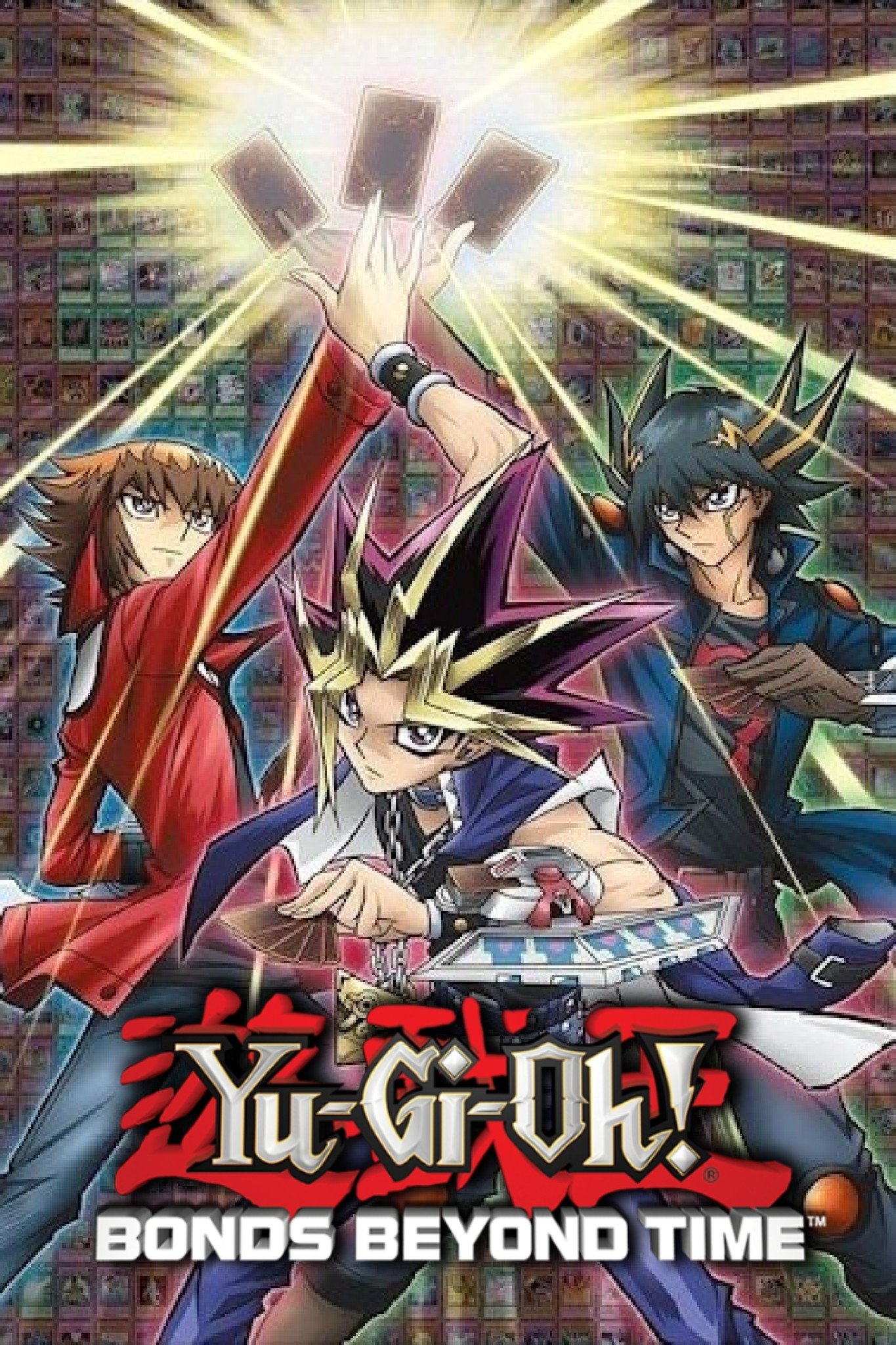
It was basically the Avengers: Endgame of the trading card world before anyone knew what a "Cinematic Universe" really was. Back in 2010, the idea of throwing Yugi Muto, Jaden Yuki, and Yusei Fudo into a single pot felt like a fever dream for anyone who grew up yelling "It's time to duel!" at their TV screen. Yu-Gi-Oh! Bonds Beyond Time wasn't just a movie; it was a frantic, 50-minute celebration of a decade of card games, crazy hair, and the kind of friendship speeches that would make a stoic monk roll their eyes.
Honestly, the plot is kind of a mess if you think about it for more than ten seconds.
A mysterious masked man named Paradox—who looks like he wandered out of a high-fashion goth club—is stealing the most iconic dragons from across the timeline. He wants to destroy Duel Monsters to save the future. Naturally, the only way to stop a time-traveling terrorist is for three generations of protagonists to team up and play a three-on-one card game.
It’s absurd. It’s glorious.
The Paradox of Paradox: Why the Villain Matters
Paradox isn't just a generic bad guy with a cool mask. Well, he is that, but his motivations actually tie back into the deeper lore of the Yu-Gi-Oh! 5D's universe. He’s one of the Four Noble Knights of Yliaster. If you haven't watched the later seasons of 5D's, that might not mean much, but basically, he's from a future where the world was ruined because of Synchro Summoning and Ener-D.
His logic? If he kills Pegasus or destroys the game's history, the apocalypse never happens.
It creates this weirdly sympathetic, albeit genocidal, motivation. You almost feel for the guy until he starts using Malefic World to turn fan-favorite monsters like Blue-Eyes White Dragon and Red-Eyes Black Dragon into edgy, monochromatic shadows of themselves. The "Malefic" archetype introduced here became a legitimate deck in the real-life TCG, though it was always a bit "glass cannon" in the actual competitive meta.
A Masterclass in Fan Service
Seeing the interaction between the three leads is where the movie actually earns its keep. You’ve got Yusei, the serious, brooding mechanic from a dystopian future. You’ve got Jaden (post-Yubel fusion), who is significantly more mellow and "haunted" than the hyperactive kid we met at the start of GX. And then there’s Yugi—or rather, Atem—who remains the undisputed King of Games.
The banter works because they don't try to make them identical.
Yusei is baffled by the concept of "Fusion" being the peak of dueling, while Jaden thinks Synchro Summoning is the coolest thing he's ever seen. Seeing Yusei’s Stardust Dragon get snatched and then reclaimed through the combined efforts of Elemental HERO Neos and Dark Magician is a core memory for anyone who spent their Saturdays at a local card shop.
The 3D Gimmick and Production Woes
Let’s be real for a second: the 3D was a gimmick.
Back in 2010, every movie was trying to ride the post-Avatar wave. Yu-Gi-Oh! Bonds Beyond Time was originally released in Japanese theaters as a "3D Experience." While some of the monster summoning sequences look decent, the CGI often feels a bit dated by today's standards. The monsters occasionally look like they're made of plastic, popping out against the hand-drawn backgrounds in a way that’s slightly jarring.
But does it matter? Not really.
The animation by Studio Gallop is generally high-octane. The speed of the duel is breakneck. Because the movie is so short—clocking in at under an hour—there is absolutely zero filler. It’s all action, all the time. This was a double-edged sword. Some fans felt cheated that they didn't get a full two-hour epic, but others appreciated that the movie didn't overstay its welcome with twenty minutes of side characters reacting to the sky falling.
The Duel Itself: Breaking the Rules
If you're a hardcore TCG player, watching this movie is an exercise in "That's not how the cards work." But Yu-Gi-Oh! has always played fast and loose with the rules for the sake of drama. The three-on-one format allows for some creative chain links.
- Yusei sets the stage with his speed-based tactics.
- Jaden provides the mid-game muscle and utility.
- Yugi delivers the "Protagonist Luck" to finish things off.
The climax involving Malefic Truth Dragon is peak Yu-Gi-Oh. It's a monster with 5000 ATK that takes up the entire screen. The way the trio combines their signature cards—essentially pooling their life force and their decks—is the ultimate expression of the "Bonds" mentioned in the title.
The Impact on the TCG
You can’t talk about Bonds Beyond Time without talking about the cards it gave us. The Movie Pack was a big deal.
Malefic Paradox Dragon and Malefic Blue-Eyes were everywhere for a minute. While the archetype struggled because you needed a Field Spell to keep them alive, they offered a way to cheat out massive beatsticks with almost no effort. It changed how people thought about "easy" special summons. For a while, Malefic Cyber End Dragon was a popular tech choice in Skill Drain decks because it could just beat over almost anything in the game.
Even now, collectors hunt for the secret rare versions of these cards. There’s a nostalgia attached to the "Malefic" aesthetic—that cracked, skeletal armor over legendary monsters. It’s metal as hell.
Why It Still Matters in 2026
Looking back from 2026, Bonds Beyond Time stands as a bridge between the "old school" era and the modern complexity of the game. It was the last time the franchise felt truly unified before the summoning mechanics (Xyz, Pendulum, Link) started to segment the fanbase.
It reminds us of a time when the biggest threat was just a guy with a time machine and some corrupted dragons, rather than a ten-minute combo that ends in a five-negate board.
There's a specific kind of warmth in seeing Yugi's grandpa and Pegasus make cameo appearances. It’s a love letter to the fans who stayed through the transition from Egyptian magic to card games on motorcycles. It’s not a perfect film—the pacing is too fast, and the villain’s plan is foiled a bit too easily—but as a celebration of a legacy, it hits all the right notes.
Actionable Takeaways for Fans
If you’re looking to revisit this era of the franchise or want to appreciate the movie more, here’s how to do it right:
- Watch the Extended Cut: The North American theatrical release had some extra footage and a recap of the three series. If you're a purist, seek out the original Japanese version (Gekijōban Yu-Gi-Oh! ~Chō-Fusion! Toki o Koeta Kizuna~) for a slightly different tone and the original soundtrack, which is arguably more "epic."
- Build a Malefic Deck for Casual Play: They aren't meta-relevant in 2026, but with newer support like Malefic Selector and Malefic Territory, the deck is surprisingly functional and fun for "kitchen table" Yu-Gi-Oh.
- Analyze the Timeline: Pay attention to Yusei’s arm. The movie takes place after the Dark Signer arc but before the end of the series, which explains why certain characters are where they are.
- Check the Art Books: The character designs for Paradox and the Malefic monsters are some of the most detailed in the franchise. The conceptual art shows just how much work went into making the "dark" versions of Blue-Eyes and Red-Eyes look distinct.
The movie ends with the three heroes parting ways, returning to their respective eras. It’s a simple conclusion, but it leaves you with the feeling that the game of Duel Monsters is something that transcends time itself. Whether you're a veteran player or someone who just remembers the theme song, Bonds Beyond Time is a frantic, colorful reminder of why we fell in love with these characters in the first place.



