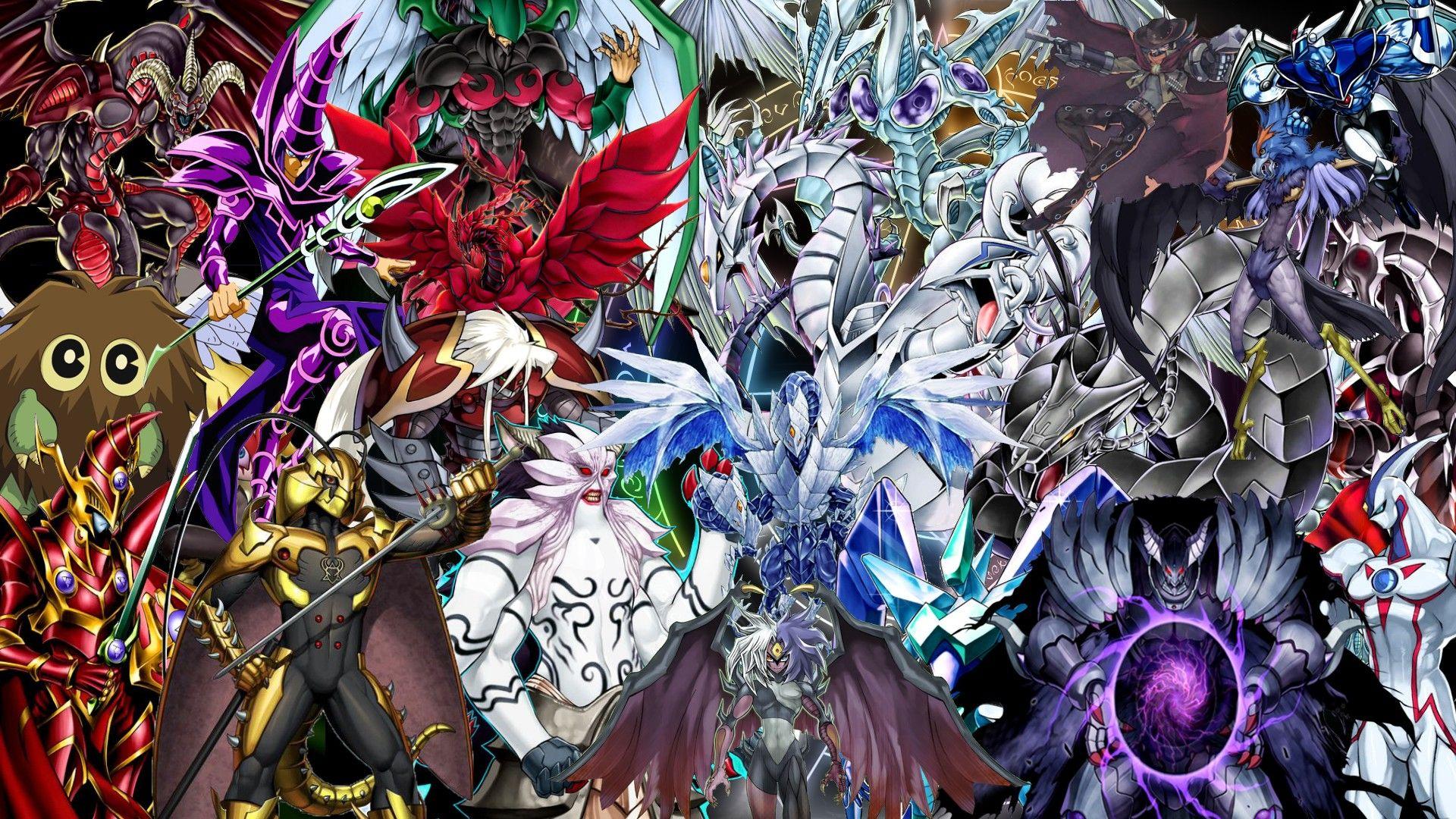
It started with a high school kid and a golden puzzle. If you grew up in the early 2000s, you probably remember the "Heart of the Cards" memes or the way everyone at school suddenly started carrying around decks of cards that were mostly fake. But Yu-Gi-Oh didn't stop when Yugi Muto walked into the sunset. Honestly, it got weird. Since the original Duel Monsters ended, we’ve seen card games on motorcycles, kids summoning monsters through literal portals in space, and a shift toward "Rush Duels" that totally resets the rules. If you're looking at Yu-Gi-Oh all series today, it's basically a massive, sprawling multiverse that can feel pretty intimidating to jump into if you've been away for a decade.
The franchise has evolved through eight distinct anime iterations, each trying to capture a new generation while keeping the "old guard" buying packs. It’s a delicate balance. Sometimes they nail it. Sometimes they alienate everyone who remembers when a Blue-Eyes White Dragon was the scariest thing on the table.
The Original Era: Where the Obsession Began
The first thing you have to understand is that the original series—Yu-Gi-Oh! Duel Monsters—wasn't even supposed to be about cards. Kazuki Takahashi, the creator, originally wrote a manga about a kid who played various "Shadow Games." The card game was just one chapter, but fans went nuts for it.
The anime we all know and love follows Yugi and his ancient Egyptian alter-ego, Atem. It’s messy. The rules in the first season make zero sense. Remember when Panik's Castle of Dark Illusions fell on his monsters because Yugi destroyed the "floatation ring"? Yeah, that's not in the rulebook. But that's why it worked. It was about drama and ancient destiny. Even though the power creep in the TCG (Trading Card Game) has made most of Yugi’s deck unplayable today, the emotional weight of his duel with Seto Kaiba on top of Pegasus's castle remains the gold standard for the entire franchise.
GX and the First Major Shift
When Yu-Gi-Oh! GX launched, fans were skeptical. No Yugi? A school for duelists? It felt like a "Yu-Gi-Oh Lite" at first. Jaden Yuki (Judai in the Japanese version) was a total 180 from the brooding, stoic Atem. He was upbeat and just wanted to have a good time.
But GX did something crucial: it introduced Archetypes. Before this, decks were just piles of strong cards. GX gave us Elemental HEROes, Cyber Dragons, and Ancient Gears. It changed how the game was played in real life. If you watch the later seasons of GX, the tone takes a massive, dark turn that most Western fans missed because the 4Kids dub never finished the final season. It deals with depression, isolation, and the burden of growing up. It’s arguably the most "human" the series has ever felt.
When Things Got Fast: 5D’s and Beyond
"Card games on motorcycles." It’s a meme for a reason. Yu-Gi-Oh! 5D’s introduced Synchro Summoning and Turbo Duels. It sounds ridiculous. It is ridiculous. But here’s the thing: 5D’s is frequently cited by hardcore fans as the best written entry in Yu-Gi-Oh all series.
The setting is a dystopian future where society is divided by class. Yusei Fudo isn't a rich kid or a chosen one; he’s a grease monkey from the slums. This era introduced the "Extra Deck" mechanic in a way that fundamentally broke the speed of the game. Suddenly, you could turn two weak monsters into one massive boss monster in a single turn. This started the "combo" meta that defines the modern game. If you like gritty storytelling and high-stakes tension, 5D's is the peak.
The Gimmick Era: Zexal, Arc-V, and VRAINS
After 5D's, the franchise entered what I call the Gimmick Era. Each new show had to have a "hook" to sell a new type of card.
- Zexal brought us Xyz Summoning (stacking cards on top of each other). It was much more "kid-friendly" and colorful, which turned off some older viewers, though the ending is surprisingly epic.
- Arc-V tried to do everything. It featured all the previous summoning methods and introduced Pendulums. It’s a show about a multi-dimensional war. It started incredibly strong but famously crashed and burned in the final act due to production issues.
- VRAINS took us into a VR world. It focused on Link Summoning and Cyberse monsters. The protagonist, Yusaku, is an anti-social hacker. It’s a much more technical show, mirroring how complex the real-life card game had become by 2017.
The complexity of these three series actually caused a bit of a crisis for the brand. The game got so fast that a new player couldn't survive three turns. You'd sit down, your opponent would play solitaire for ten minutes, and you'd lose before you drew a card.
The Great Reset: SEVENS and Go Rush!!
This is where the divide in the community happened. Konami realized the main game (the OCG/TCG) was becoming too complicated for seven-year-olds. Their solution? Yu-Gi-Oh! SEVENS.
They introduced "Rush Duels." It’s a completely different game with different cards. You can summon as many monsters as you want in one turn, and you always draw until you have five cards in your hand. The anime style changed too—it looks more like a modern Saturday morning cartoon than the sharp, "Yu-Gi-Oh" look of the past. Go Rush!! followed this trend, continuing the focus on these simplified rules. While some veteran fans feel left behind, these shows have been huge hits in Japan, proving there's still a massive appetite for the brand if you lower the barrier to entry.
Why Does Every Series Matter?
You can't just pick one and say "this is Yu-Gi-Oh." Each series represents a different philosophy of game design and storytelling.
- Original/GX: Focuses on the "Spirit" of the cards and character growth.
- 5D's/VRAINS: Focuses on technology, society, and high-level strategy.
- SEVENS/Go Rush: Focuses on pure, unadulterated fun and accessibility.
Looking at Yu-Gi-Oh all series reveals a franchise that is terrified of standing still. Most long-running anime try to keep the status quo. Yu-Gi-Oh burns the status quo to the ground every three to four years.
The Real-World Impact
If you’re a collector or a player, these series dictate your wallet. When a "legacy" character from Arc-V or 5D's gets new support in a modern booster set, the secondary market prices explode. The anime drives the meta. Even now, decades later, cards used by Yugi or Kaiba fetch thousands of dollars because the nostalgia is that potent.
But it's not just about the money. There is a genuine complexity to the later series that teaches logic and probability. It's basically math disguised as wizards and dragons.
How to Navigate the Multiverse
If you're looking to dive back in, don't try to watch everything at once. It’s thousands of episodes.
If you want nostalgia with a bit of an edge, stick to the Original Japanese version (subtitled) of the first series. The 4Kids dub is nostalgic, but it cuts out a lot of the actual plot and stakes. If you want the best "modern" experience, watch 5D’s. If you want to understand how the game is played today, VRAINS is your best bet, though be prepared for a lot of techno-babble.
Actionable Next Steps for Fans:
- Watch the Subs: If you only saw the English dubs, re-watch the original series or GX in Japanese. It’s a completely different, much more mature experience.
- Try Master Duel: If you want to play the game featured in the first six series, download Yu-Gi-Oh! Master Duel. It’s free and has a great tutorial system for Synchro, Xyz, and Link summoning.
- Check out Rush Duel: If the main game is too fast, look into Yu-Gi-Oh! Duel Links or the Rush Duel titles. It captures that "playground" feel of the early 2000s.
- Follow the OCG News: Keep an eye on the Official Card Game (OCG) releases in Japan, as they usually signal which older series is about to get a "revival" in the card game.



