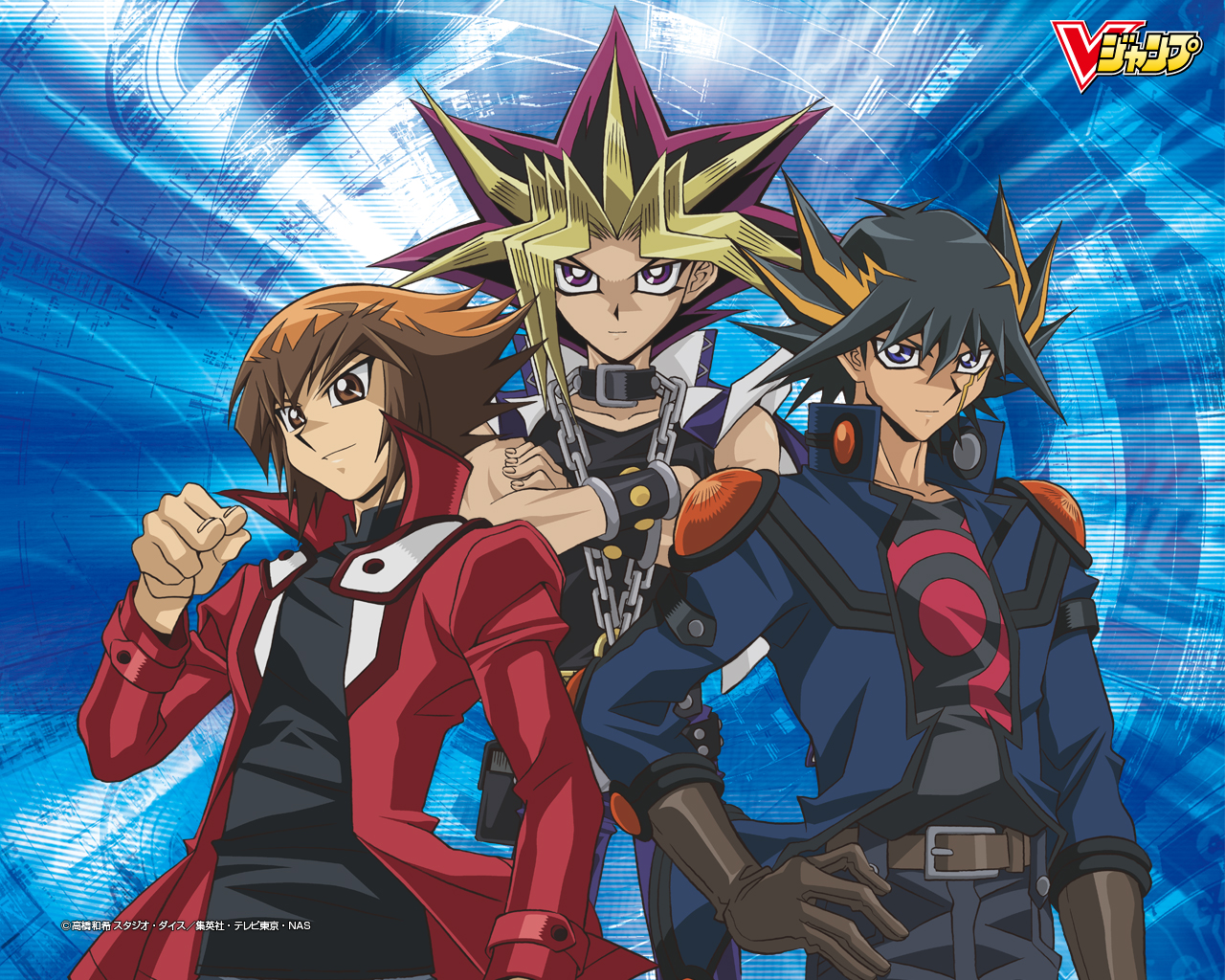
Let's be real: when we first heard the premise of Yu-Gi-Oh! 5D's, most of us laughed. It sounded like a fever dream cooked up in a boardroom where someone took "extreme sports" and "children's card games" and shoved them into a blender. Card games on motorcycles? Seriously? It felt like the franchise had finally jumped the shark after the high-stakes magic of the original series and the school-life drama of GX. But then we actually watched it.
What we got wasn't a joke. Instead, we were slapped in the face with a gritty, dystopian cyberpunk narrative that felt way more mature than anything the franchise had attempted before. It was dark. It was oily. It felt like Akira met Duel Monsters.
The Turbo Duel Mechanic and the Speed Spell Controversy
The heart of the show was the Turbo Duel. In the world of Neo Domino City, duelists hopped on "Duel Runners"—customized motorcycles—and played cards while tearing down high-speed tracks. Logistically, it's a nightmare. If you lose your concentration at 150 mph because someone played a Mirror Force, you aren't just losing life points; you're hitting a concrete barrier.
But from a gameplay perspective, Yu-Gi-Oh! 5D's introduced a massive change: Speed World. This field spell was mandatory. It replaced traditional spells with Speed Spells, which relied on Speed Counters that built up over time. If you went too fast, you gained counters; if you took damage, you lost them. This changed the tempo of the game entirely, forcing characters to manage a secondary resource besides just their hand size. Honestly, it was a clever way to prevent the "one-turn-kill" scenarios that were starting to plague the real-life competitive scene back in 2008.
Why Yusei Fudo Was the Protagonist We Needed
Yusei Fudo wasn't Yugi Muto. He wasn't Jaden Yuki.
He was a stoic, mechanical genius from the Satellite—the literal trash heap of Neo Domino City. Unlike the previous leads who often relied on destiny or the "Heart of the Cards" to bail them out, Yusei felt like a guy who built his life out of scrap metal. He literally built his Duel Runner from junk. His deck reflected this. He used "Synchron" monsters and low-level "Tuner" monsters to create something greater than the sum of its parts.
The social commentary here was surprisingly heavy for a show meant to sell trading cards. The divide between the wealthy Topside and the impoverished Satellite was a central theme. Yusei's journey wasn't just about winning a tournament; it was about class struggle and breaking the cycle of systemic oppression. That’s a lot of weight for a show about dragons.
The Revolution of Synchro Summoning
We can’t talk about Yu-Gi-Oh! 5D's without mentioning the mechanic that fundamentally broke and then rebuilt the TCG: Synchro Summoning.
Before 5D's, the Extra Deck was mostly just for Fusion Monsters, which were slow and expensive to play. Synchro Summoning changed everything. By adding the levels of a Tuner monster and a non-Tuner monster, you could "tune" them together to summon a powerful Synchro Monster from the Extra Deck. It was fast. It was fluid.
- You summon Junk Synchron.
- You use its effect to bring back a Level 2 monster from the graveyard.
- Suddenly, you have a Level 5 Junk Warrior.
It made the game more mathematical and explosive. In the real world, the "Tele-DAD" meta (Teleport Dark Armed Dragon) became legendary for its power, often utilizing the Synchro mechanics introduced in the early 5D's sets like The Duelist Genesis. For many players, this was the golden age of the game. For others, it was the beginning of the "Power Creep" that eventually made the game unrecognizable to old-school fans.
The Dark Signers Arc: Peak Yu-Gi-Oh!
Most fans agree that the Dark Signer arc is the absolute pinnacle of the series. It leaned hard into the supernatural horror elements. The stakes weren't just "save the world"; they were deeply personal. Each of the protagonists—the Signers—had to face a Dark Signer who was often someone from their past, someone they had failed or lost.
Take the duel between Akiza (Aki) and Misty, or the heartbreaking clash between Kalin (Kyosuke) Kessler and Yusei. Kalin was a former friend who felt betrayed and returned as a literal corpse-like avatar of revenge. The Earthbound Immortals, these massive, neon-outlined gods that towered over the city, were terrifying. They didn't just stand on the field; they required human souls to be summoned. It was bleak.
The Production Issues and the "Crow" Factor
There is a long-standing rumor—and some evidence—that the show's direction shifted midway through because of real-life events. Originally, Akiza was positioned as a much more central, perhaps even darker character. However, many fans point to the sudden popularity of Crow Hogan and his "Blackwing" archetype as the reason the plot shifted.
Blackwings were a literal goldmine for Konami. They were a top-tier competitive deck for years. Suddenly, Crow, who was supposed to be a secondary character or even a villain in some early drafts, became one of the "Legendary Signers," pushing characters like Akiza and Leo to the sidelines. This is a common gripe among the 5D's faithful. The first 64 episodes feel like a tightly written masterpiece, while the later "World Racing Grand Prix" arc feels a bit more like a traditional, stretched-out shonen tournament.
The Cult of the Crimson Dragon
The lore of the Crimson Dragon and the Star Siphon tied the whole thing together. It wasn't just random magic; it was tied to the Nazca Lines in Peru. By grounding the fantasy in real-world geography and ancient mythology, the writers gave the show a sense of history. The Five Dragons—Stardust Dragon, Red Dragon Archfiend, Black Rose Dragon, Ancient Fairy Dragon, and Black-Winged Dragon (which was added later)—became icons.
Why 5D's Still Holds Up Today
If you go back and watch Yu-Gi-Oh! 5D's today, you’ll notice the animation in the Turbo Duels is surprisingly fluid. The CGI for the Duel Runners has aged, sure, but the hand-drawn monster designs are some of the best in the franchise's history.
More importantly, the ending of the series actually provides closure. Yusei doesn't just ride off into the sunset; he stays to help rebuild the city as a scientist. It’s a mature ending for a mature protagonist. It respects the audience's intelligence.
If you're a returning player or a fan of the anime, there are a few things you should actually do to appreciate this era:
- Check out the "Legendary Collection 5D's" if you can find it. It's a nostalgia trip that contains some of the most iconic cards from the era, including the elusive "Quasar Dragon" types.
- Play the "Over the Rainbow" or "Reverse of Arcadia" DS games. These are arguably some of the best Yu-Gi-Oh! video games ever made because they actually let you drive the Duel Runners and explore a semi-open world Neo Domino City.
- Watch the Japanese version (subbed). The 4Kids dub isn't the worst thing in the world, but it cuts out a massive chunk of the final arc and tones down the darker, more philosophical elements of the Z-ONE storyline. The original score, especially "Clear Mind" by Masaaki Endoh, is essential for the full experience.
- Look into the "Edison Format." This is a specific point in the 2010 competitive TCG meta (around the time of Shonen Jump Championship Edison) that players still play today. It’s widely considered one of the most balanced and fun ways to play the game, heavily featuring 5D's-era cards.
Yu-Gi-Oh! 5D's was an era of transition. It moved the game from a slow, back-and-forth battle of attrition into the high-speed, combo-heavy spectacle it is now. Whether you loved the motorcycles or hated them, you can't deny that it had a soul. It was a show that dared to be different, and 15 years later, it still stands as the most "adult" entry in a franchise that could have easily stayed stuck in the playground.



