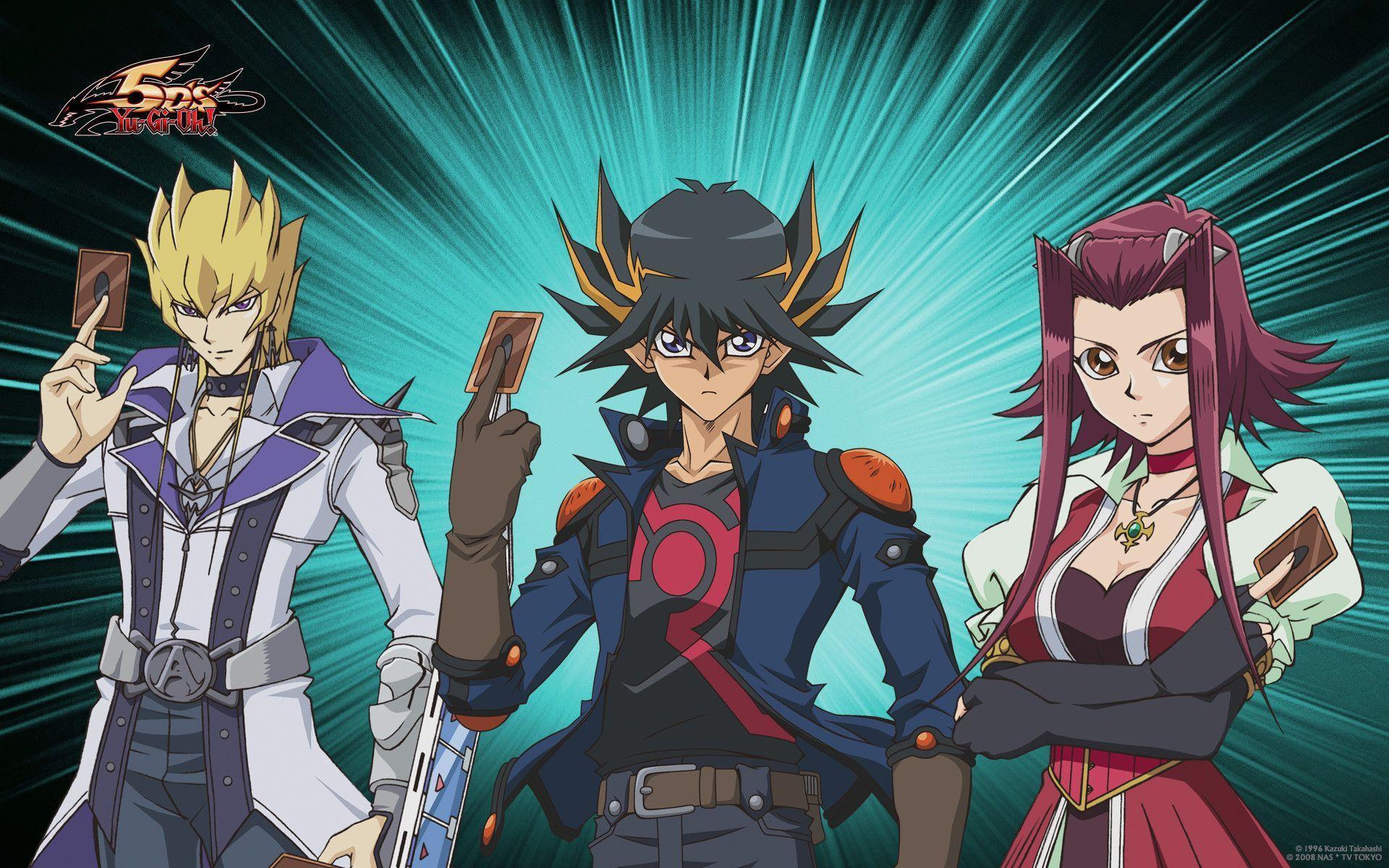
Ask any long-term Yu-Gi-Oh! fan about the moment things got weird, and they’ll point straight at Yu-Gi-Oh! 5D’s Season 3. It’s jarring. You go from the high-stakes, literal end-of-the-world apocalypse of the Dark Signer arc—where characters were actually dying—to a sudden, bright-colored shift into a tournament arc that feels like a totally different show. This isn't just a "filler" problem. It’s a fundamental identity crisis that changed the trajectory of the franchise forever.
The Chaos Behind the Scenes of Yu-Gi-Oh! 5D’s Season 3
To understand why the vibe shifted so hard, you have to look at the mess happening off-camera. There’s been a ton of debate over the years about the "cult" controversy involving the voice actress for Carly Carmine. While Konami and Studio Gallop have never officially confirmed every gritty detail, the timing is suspicious. Suddenly, Carly, who was a pivotal emotional anchor, was relegated to a background gag character.
This matters because it gutted the narrative momentum.
Then you have the introduction of the WRGP (World Riding Duel Grand Prix). After the grit of the Satellite, we’re suddenly in a shiny, high-tech stadium. The show tried to pivot from a dark supernatural thriller back to a traditional "shonen" tournament structure. Honestly, it’s a miracle it worked at all. The shift felt forced because it likely was. Fans often cite the change in head writers during this period as the reason the "Psychic Duelist" subplot involving Akiza and Sayer just... evaporated. It's one of the biggest "what-ifs" in anime history.
The New Villains: Placido, Luciano, and Jose
The Three Emperors of Yliaster are a weird bunch. Initially, they feel like Saturday morning cartoon villains compared to the tragic complexity of Rex Goodwin or Kiryu. But if you stick with it, the subtext is actually pretty dark. These guys aren't just evil for the sake of it; they are literally trying to erase the future to save the planet from "Ener-D" destruction. It’s a classic "ends justify the means" trope, but executed with cyborgs on motorcycles.
Placido (or Primo in the English dub) is the standout here. His obsession with defeating Yusei leads to some of the most frantic dueling in the season. When he literally merges with his Duel Runner? That was the moment fans either doubled down or walked away. It was peak "Card Games on Motorcycles" absurdity.
Changing the Game: Accel Synchro and Beyond
If you were playing the TCG around 2010 or 2011, Yu-Gi-Oh! 5D’s Season 3 was basically a giant commercial for the "Power of the Duelist" and "Starstrike Blast" era. The introduction of Accel Synchro was a massive mechanical leap.
Think about it.
Yusei basically had to learn how to move so fast he could manipulate time and space just to summon a bigger dragon. Shooting Star Dragon wasn't just a new card; it was a response to the power creep the show had introduced. The animation for the first Accel Synchro summon remains some of the best work Studio Gallop ever did. The frame rate spikes, the music (Clear Mind by Masaaki Endoh) kicks in, and for a second, you forget that the plot is currently about a ghost fleet of robotic duelists.
Why Akiza Fans Feel Betrayed
We need to talk about Akiza Izinski. In the first two seasons, she was a powerhouse. She was terrifying, broken, and arguably the most interesting female character the franchise had ever seen. In Yu-Gi-Oh! 5D’s Season 3, she gets her Turbo Duel license.
Sounds cool, right?
Not really. She spends most of the WRGP on the sidelines or being "the third wheel" to Yusei and Jack. The fierce "Black Rose Witch" was essentially domesticated into a supportive cheerleader. It’s one of the most frequent complaints in the community. The narrative shift toward the "Team 5D's" camaraderie meant individual character arcs—especially the darker ones—got sanded down to fit a team dynamic. It’s a common trope in long-running series, but here, it felt like a regression.
The Mystery of Team Catastrophe and the Filler Slump
Before the WRGP really heats up, there is a significant stretch of episodes that most fans struggle to get through. Team Catastrophe? The guys with the "Hidden Knight -Hook-" card that caused actual crashes? It felt like a detour.
However, these episodes served a purpose. They established that the stakes weren't just about winning a trophy. The Yliaster plot was infiltrating the very infrastructure of Neo Domino City. Even the "filler" episodes involving Jack Atlas getting scammed or Crow taking care of kids were trying to build a sense of "community" that the Dark Signer arc lacked. They wanted us to care about the city so that when the Ark Cradle (Z-one’s fortress) eventually shows up, we actually have something to lose.
Is Season 3 Actually Good?
It depends on what you value. If you want the cohesive, gothic horror vibes of the first 64 episodes, you're going to be disappointed. It’s messy. It’s inconsistent.
But.
The duels are objectively more complex. The introduction of Tech Genus (T.G.) cards and the concept of "Synchro Tuners" added a layer of strategy that the "Power Up" wins of Season 1 lacked. You started seeing actual combos that mirrored the real-life competitive meta of the time. This season is where the "Expert" level of Yu-Gi-Oh! really began to manifest in the scriptwriting.
Key Moments You Probably Forgot:
- The Crash Town Arc: Technically the start of this production block, it’s a weird "Western" side story with Kiryu. It’s arguably the best part of the entire mid-series.
- Lazar’s Redemption: The creepy clown guy actually becomes a sympathetic character. Who saw that coming?
- The Introduction of Bruno: A mysterious amnesiac mechanic who is totally not a cyborg from the future. (Spoiler: He is).
How to Watch Season 3 Today
If you’re watching the English dub (4Kids), be warned: they cut a lot. The dub actually stops before the final arc of the show, meaning you miss the entire resolution of the Yliaster plot. To get the full experience of Yu-Gi-Oh! 5D’s Season 3, you absolutely have to watch the subbed version. The original Japanese score is much more intense, and the dialogue isn't scrubbed of the more "existential dread" elements that make the ending work.
You’ve got to look past the "tournament" facade. Underneath the bright lights of the WRGP, the show is still grappling with the same questions: Can we change the future? Is technology a tool for salvation or a weapon of mass destruction?
Actionable Insights for the Modern Fan:
- Skip the "Pure" Filler: If you're short on time, use a filler guide to skip the standalone "mystery" episodes and jump straight to the Team Taiyo and Team Ragnarok matches.
- Study the Deck Construction: For Master Duel players, many of the archetypes introduced in this season (T.G., Meklords, Resonators) have received massive modern support. Watching the anime gives you a "flavor" understanding of how these decks were originally intended to function.
- Watch the "Crash Town" Mini-Arc: Even if you hate the WRGP, episodes 86-92 (the "Duelist of the West" arc) are a masterpiece of weirdness that stands alone from the rest of the season.
- Pay Attention to the Background Details: Look at the architecture of Neo Domino City in this season compared to Season 1. The visual storytelling shows a city that has moved from "surviving" to "thriving," which makes the looming threat of the Meklords much more poignant.
The transition into this era of 5D’s was bumpy, and it undeniably lost some of the "magic" that made the early episodes a viral hit. But without the world-building and the mechanical risks taken in this season, we never would have reached the emotional highs of the series finale. It's the bridge between a cult classic and a legendary conclusion.



