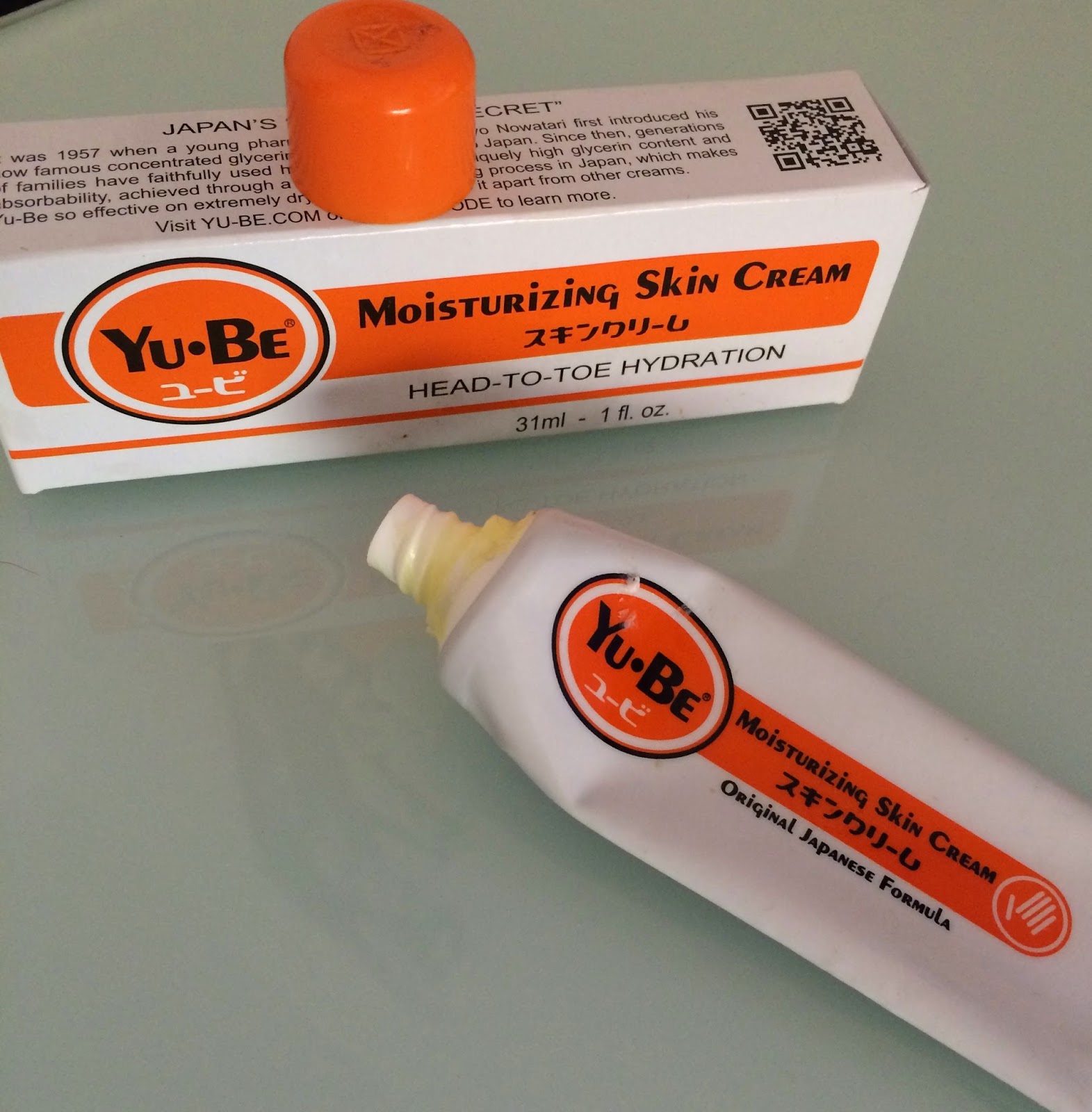
Walk into any high-end boutique in Tokyo, or even a local drugstore near the Shibuya crossing, and you’ll see walls of sleek, minimalist skincare. But tucked away—usually near the register or on the "tried and true" shelf—is a bright yellow tube with a medicinal look that hasn't changed much since 1957. That’s Yu-Be. It isn’t trying to be "clean beauty" or "clinical-grade" in the way we market things now. It just works. Honestly, it’s kinda refreshing to find a product that doesn’t rely on a twenty-step routine or a celebrity face to move units.
The story starts with a pharmacist named Yusaku Yoshikawa. Back in the late fifties, his customers kept complaining about the harsh Japanese winters. Their skin was cracking. It was bleeding. Standard lotions were too watery, and ointments were too greasy. Yoshikawa perfected a concentrated glycerin formula that was uniquely high in Vitamin E and Vitamin B2. That B2 is actually what gives the cream its distinct yellow color. No dyes. No fake tint. Just pure riboflavin.
What People Get Wrong About the Yu-Be Skin Cream Formula
Most people look at the ingredients and think, "Oh, it's just glycerin." That’s a mistake. While glycerin is the hero, the secret is the manufacturing process. It's a "vacuum extraction" method. This allows the cream to have an incredibly high glycerin content without feeling like you just smeared honey on your face. You've probably tried heavy balms before that sit on top of the skin like a plastic wrap. Yu-Be doesn't do that. It sinks in.
There is a distinct camphor smell. Let's be real: it's polarizing. It smells like a locker room or your grandmother's medicine cabinet for about thirty seconds. Some people hate it. Others, like me, find it weirdly comforting because it signals that the product is actually doing something. The camphor helps with circulation and provides a slight cooling sensation, but the best part? The scent disappears completely after a minute. You won't walk around smelling like a cough drop all day.
The Non-Greasy Myth vs. Reality
Marketing departments love to claim everything is "non-greasy." Usually, it's a lie. With Yu-Be skin cream, it’s more about the finish. When you first rub it in, it feels thick. Almost too thick. But as you massage it—and you really have to massage it—the cream transforms. It leaves a matte-ish protective barrier. It’s the only thing I’ve found that can heal a cracked knuckle overnight without ruining my keyboard or staining my bedsheets.
If you have oily skin, you probably shouldn't put this on your face. At least, not as a daily moisturizer. It’s a bit much. But for elbows, heels, and those weird dry patches that show up in January? It’s unbeatable.
The Science of the "Yellow Stuff"
Why Vitamin B2? Riboflavin is essential for skin repair. In the 1950s, this was cutting-edge pharmaceutical tech. Today, we have peptides and retinol, but for basic barrier repair, B2 is still a heavyweight. It helps the skin metabolize fats and proteins, which is basically the building blocks of your skin’s defense system.
Then there’s the sodium hyaluronate. We see "hyaluronic acid" on every label now, but Yu-Be was using these humectants long before they were trendy. It pulls moisture from the air and locks it into the dermis. Because it’s so concentrated, a pea-sized amount covers both hands. Most people use too much. Stop doing that. You’re wasting money.
Real World Use Cases
- The "Nurses' Secret": Healthcare workers who wash their hands fifty times a day swear by this. The glycerin creates a barrier that survives a couple of light rinses.
- Mountain Climbers: It’s a staple for high-altitude expeditions because it prevents windburn better than petrolatum-based jellies.
- Tattoo Aftercare: Some artists recommend it for the peeling stage because it hydrates without suffocating the new ink.
- The "Slug" Alternative: If you’re into the "slugging" trend but hate the mess of Vaseline, this is your middle ground.
Comparing Yu-Be to the Big Competitors
I get asked a lot how this compares to something like Aquaphor or CeraVe. It’s a different beast entirely. Aquaphor is petroleum-based. It’s an occlusive. It sits on top. Yu-Be is a humectant-heavy cream. It actually adds moisture rather than just trapping what’s already there.
CeraVe is great for daily maintenance, but it’s often too thin for severe damage. If your skin is already broken or "elephant-skin" rough, CeraVe is like bringing a squirt gun to a house fire. Yu-Be is the fire hose. It’s medicinal. It’s a treatment, not just a lotion.
Why It Stays Relevant in 2026
We are currently seeing a massive shift back to "heritage brands." People are tired of the 12-step Korean skincare routines that take forty minutes every night. We want stuff that works. We want transparency. Yu-Be has used basically the same formula for decades. There’s no "new and improved" version because they got it right the first time.
In a world of microplastics and complex chemical fragrances, the simplicity of a glycerin-based medicated cream is actually quite sophisticated. It’s vegan. It’s soy-free. It’s paraben-free. It was "clean" before that was a marketing buzzword.
The Hand-Cream-as-Face-Cream Debate
Can you use it on your face? Yes, but be smart. If you have "winter face"—that red, flaky, stinging sensation from the wind—a thin layer of Yu-Be before bed will fix it by morning. But if you're prone to cystic acne, keep it away from your jawline. The high glycerin content is generally non-comedogenic, but the sheer thickness can trap sebum in people who are already oily.
Actionable Steps for Using Yu-Be Effectively
Stop using it like a regular lotion. You’ll just get frustrated and feel sticky. To get the most out of it, follow these specific steps based on how the Japanese have used it for generations.
1. The Damp Skin Rule Always apply it right after the shower or after washing your hands. Glycerin is a water-magnet. If there’s no moisture on your skin for it to grab, it can actually pull moisture out of your deeper skin layers. Apply it to damp skin to "trap" that hydration.
2. The 30-Second Massage Don’t just slap it on. Rub it in circular motions. The heat from your hands helps the camphor penetrate and the glycerin settle. You’ll notice the texture change from a "paste" to a "silk." That’s when you know you’re done.
3. Overnight "Sock" Treatment For cracked heels, slather a thick layer on at night and put on cotton socks. It sounds like a cliché, but because of the B2 and Vitamin E, the skin regeneration happens much faster than with standard foot creams. Do this for three nights straight. Your feet will look brand new.
4. Lip Care in a Pinch It’s actually safe for lips. If you have those painful cracks at the corners of your mouth (angular cheilitis), a tiny dab of Yu-Be is more effective than any flavored lip balm. The camphor might tingle, but the healing is rapid.
5. Check the Label Make sure you’re getting the original formula. There are newer "body lotions" by the same brand that are thinner and come in pump bottles. They’re fine, but they aren't the "miracle" product. Look for the tube or the jar that says "Moisturizing Skin Cream."
This stuff isn't flashy. It won't look "aesthetic" on your vanity compared to a $200 glass jar of French cream. But when your skin actually hurts—when it’s dry, itchy, or cracked—Yu-Be is the only thing you’ll reach for. It’s a tool. Use it like one.