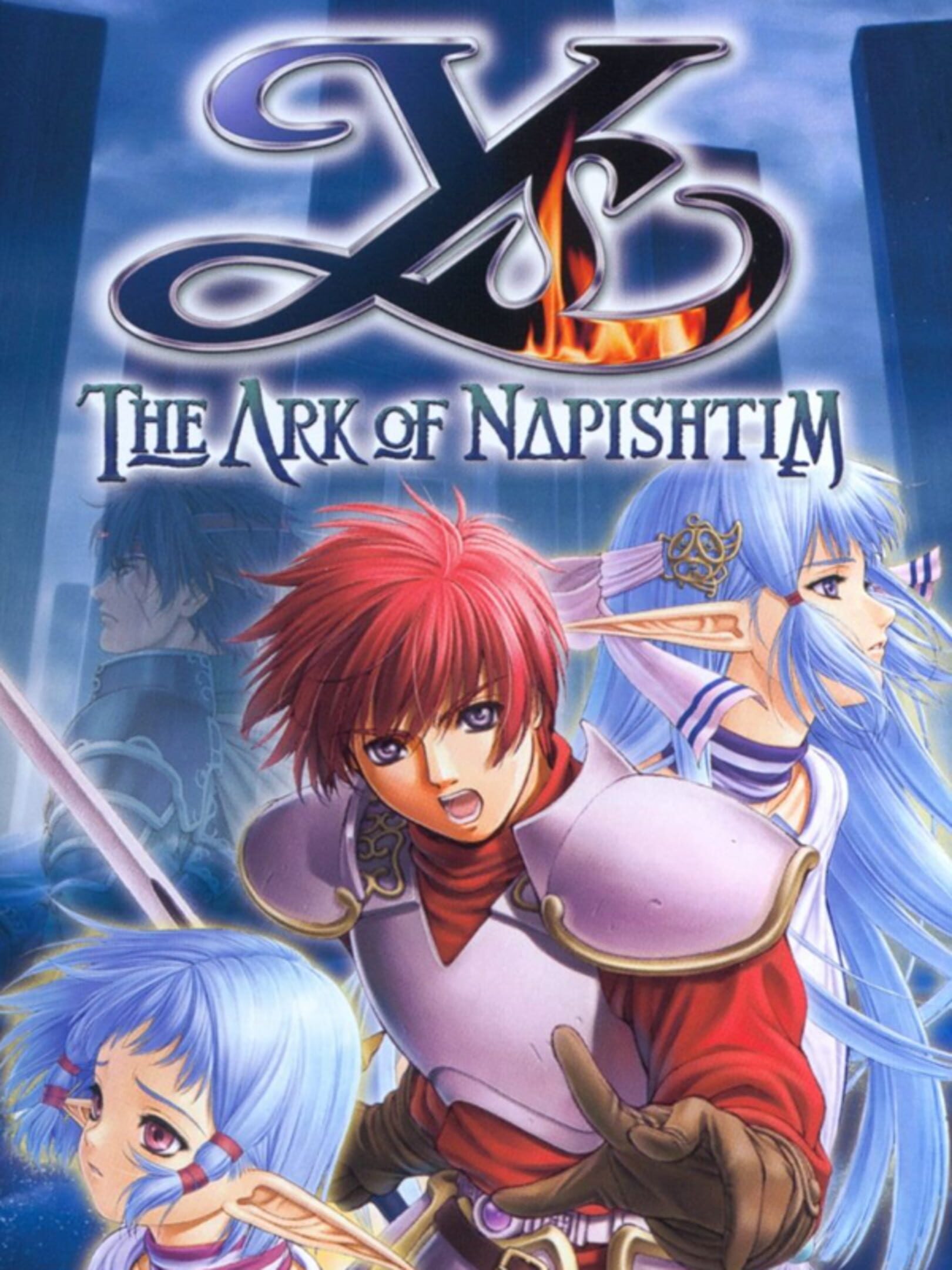
Adol Christin has a bit of a problem with shipwrecks. It’s a running gag in the Ys community, but in Ys VI: The Ark of Napishtim, it’s the catalyst for one of the most important pivots in action RPG history. When this game first landed in 2003, the landscape of Japanese RPGs was shifting. Final Fantasy was going cinematic, and Western RPGs were getting gritty. Meanwhile, Nihon Falcom was busy rebuilding their entire engine from scratch to bring Adol into a 3D world.
It worked. Mostly.
If you talk to any long-time fan of the series, they’ll tell you that Ys VI is the middle child. It’s the bridge between the old-school "bump combat" of the 80s and the high-octane "party system" of the modern era. Honestly, it’s a miracle the game is as cohesive as it is. It introduced the "Napishtim Engine," which eventually gave us masterpieces like The Oath in Felghana and Origin. But before those games perfected the formula, Adol was washing up on the shores of the Canaan Islands, and players were learning how to jump for the first time in a decade.
Why Ys VI: The Ark of Napishtim Changed Everything
Before we get into the weeds of the plot or the mechanics, we have to talk about the tech. For years, Ys was a 2D franchise. Transitioning to 3D is a death sentence for many retro series. Falcom decided on a hybrid approach: 3D environments with 2D sprites (and eventually 3D models in the later ports).
The result was a sense of scale that earlier games just couldn’t touch. The Great Vortex of Canaan wasn't just a line of dialogue anymore; it was a looming, terrifying presence on the map. You felt isolated. The Canaan Islands are populated by the Rehda, a demi-human race with long ears and tails who—shocker—don't particularly like humans. This cultural tension gives the game a weight that Ys I & II lacked. It wasn't just about killing a dark god; it was about navigating a delicate political situation while trying to figure out why the ocean is literally trying to swallow the world.
The gameplay introduced the three-sword system. This is where the depth kicks in. You have the Livart (wind), the Brillante (fire), and the Ericcil (lightning). You aren't just mashing one button. You’re cycling through blades because specific enemies are immune to certain elements, and each sword has a unique magic meter. The wind sword lets you pull off a whirlwind attack that’s great for crowd control, while the lightning sword is a rapier-style weapon built for precision. It forced players to actually think about their loadout, a precursor to the weapon-swapping we see in Ys VIII and Ys IX.
The Technical Mess of the Ports
If you’re going to play Ys VI: The Ark of Napishtim today, you have to be careful which version you pick. Seriously.
The original PC release in Japan was the purest vision, but most Westerners first encountered the Konami-published versions on the PlayStation 2 or the PSP. The PS2 version added voice acting and some questionable 3D models for Adol instead of the charming sprites. It also added pre-rendered FMV cutscenes that, frankly, haven't aged well.
Then there’s the PSP port. Just don't.
The load times on the PSP version are legendary for all the wrong reasons. Entering a new screen could take upwards of ten seconds. In a fast-paced action game, that’s a flow-killer. Thankfully, XSEED Games eventually brought the original PC version to Steam with some much-needed quality-of-life updates, including a "Catastrophe Mode" where healing items are used instantly instead of being hoarded in an inventory. This makes the boss fights—which are the meat of the game—feel much more like a modern "souls-like" encounter where your reflexes actually matter.
The Lore Most People Miss
The "Ark" isn't just a cool-sounding name. The lore of Ys VI: The Ark of Napishtim connects the dots for the entire series. It explains the origins of the Winged Ones, the Eldeen civilization, and the nature of the Emelas material.
Emelas is basically the "uranium" of the Ys world. It comes in different colors, and it’s what Adol’s swords are made of. But the Ark itself is a weather-control device created by the ancient Eldeen. It went haywire, because of course it did. The story explores the hubris of a civilization trying to control nature, a theme that resonates way more now than it did twenty years ago. When you finally reach the Ark at the end of the game, the shift from a tropical island aesthetic to a cold, sterile, technological nightmare is jarring in the best way possible.
The villain, Ernst, is also a standout. He isn't some faceless demon. He’s a human with three artificial fairies (Yue, Sera, and Kisala) who thinks he’s doing the right thing for his people. He represents the dark mirror of Adol—an adventurer who became cynical and power-hungry.
Why the Soundtrack Still Slaps
We can't talk about a Falcom game without the music. Falcom Sound Team jdk went incredibly hard on this one. The track "Release of the Far West Ocean" is an all-timer. It captures that feeling of high-seas adventure perfectly. Then you have "The Depth Napishtim," which is heavy on the synth and techno-beats, signaling that you’ve moved from a fantasy setting into a sci-fi one.
The music isn't just background noise. It’s the heartbeat of the game. It dictates the pace of the combat. If the BPM is high, you should be dodging. If the strings are swelling, you’re about to see something tragic. It’s emotive in a way that many modern, orchestral soundtracks aren't because it isn't afraid to be "gamey" and loud.
Navigating the Difficulty Spikes
Let’s be real: Ys VI is hard. It’s "grind for two hours because the boss just one-shot me" hard.
There is a specific mechanic called the "Dash Jump" that the game never really explains well, but it’s required for some of the best loot. You have to press jump and attack almost simultaneously while moving. It’s finicky. It’s frustrating. But mastering it is the difference between having the best armor in the game and struggling with the mid-tier gear.
The boss fights are massive. Galba-Roa, the giant fire-breathing dragon-thing, takes up half the screen. You spend most of the fight just trying to find a pixel of safety. This is where the "Napishtim Engine" shines—the hitboxes are generally very fair. If you died, it’s usually because you got greedy with a combo, not because the game cheated you.
Actionable Steps for New and Returning Players
If you're looking to dive into this classic, don't just jump in blindly. The game is a product of its time, and a little preparation goes a long way.
- Pick the Steam/PC Version: This is the definitive way to play. It supports widescreen, has the best framerate, and includes the "Catastrophe Mode" for a tighter experience.
- Focus on the Brillante (Fire Sword) Early: While the wind sword is your starter, the fire sword’s projectile magic is a lifesaver against the early bosses that have high contact damage.
- Learn the Dash Jump: Look up a video tutorial on the timing. It’s a frame-perfect input that allows you to reach hidden platforms in the Limewater Cave.
- Don't Skip the Grind: Unlike Ys VIII or IX, levels matter immensely here. A single level can be the difference between doing 10 damage per hit and 50 damage. If a boss feels impossible, go kill some bees for 15 minutes.
- Talk to Everyone: The Rehda village changes its dialogue frequently. If you want the full story of why the Ark was built and what happened to Adol's predecessors, you need to talk to the NPCs after every major event.
The legacy of Ys VI: The Ark of Napishtim is one of transition. It isn't as polished as Origin, and it isn't as massive as Monstrum Nox. But it has a soul. It’s the game that saved the franchise and proved that Adol Christin could survive in a 3D world. It’s a tight, 10-to-15-hour experience that reminds us why we play action RPGs in the first place: fast combat, incredible music, and the mystery of an ancient world waiting to be uncovered.
To get the most out of your run, pay close attention to the Emelas upgrades. You can't max out every sword easily on a first playthrough, so decide early on if you prefer the speed of the Ericcil or the raw power of the Brillante. Balancing your resources between sword levels and armor purchases is the hidden "strategy" layer that keeps the game engaging right up until the final climb to the top of the Ark. Get your gear in order, prepare for some of the best boss themes in the genre, and don't let the Great Vortex intimidate you.