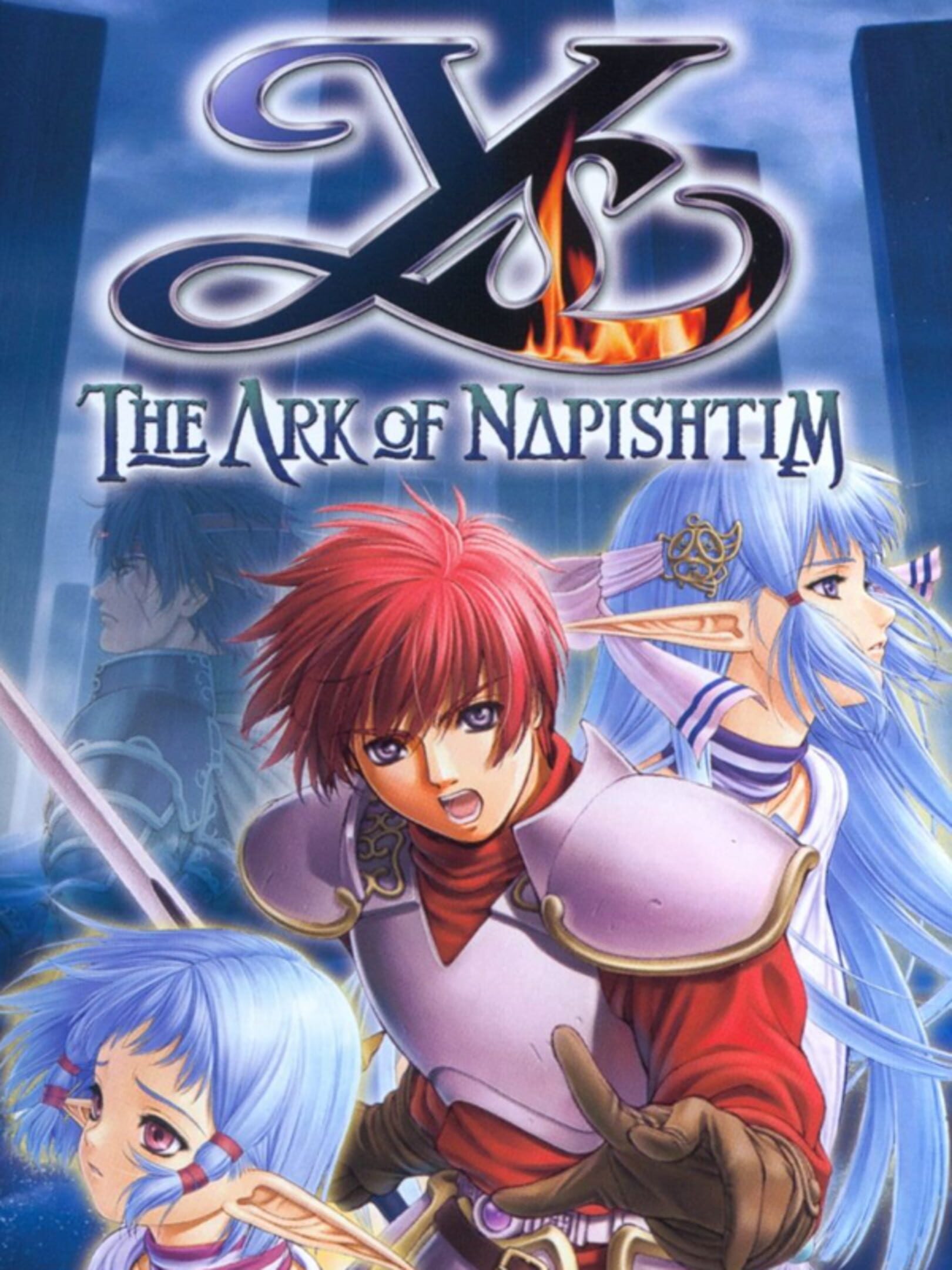
Adol Christin has a bit of a problem with shipwrecks. It’s basically his brand at this point. But back in 2003, when Ys VI: The Ark of Napishtim first landed on Windows PCs in Japan, the stakes were way higher than just a red-haired adventurer getting soggy. Nihon Falcom, the legendary developer behind the series, was actually in a pretty rough spot financially. They needed a hit. They needed something to bridge the gap between their 2D pixel-art legacy and the shiny new world of 3D graphics.
They got it.
Honestly, if you look at the modern Ys titles like Lacrimosa of Dana or Monstrum Nox, you can see the DNA of the Napishtim engine everywhere. It was the "Big Bang" for the franchise's middle era. It introduced a sense of verticality and speed that the older, top-down "bump system" games just couldn't touch. You’ve got jumping. You’ve got dash-jumps. You’ve got magical swords that behave like elemental keys. It’s a lot, but it works because it’s simple.
Why the Canaan Islands Still Matter
The story kicks off with Adol being swept overboard (shocker) near the Great Vortex of Canaan. He's rescued by two sisters, Olha and Isha, who belong to the Reeda tribe. They have long ears and tails, and they aren't exactly thrilled with "Erethians"—that's us humans—showing up on their shores.
The world-building here is subtle. It’s not a 40-hour cutscene slog. Instead, Falcom weaves the lore of the Winged Ones and the ancient Galbalan technology into the environment itself. You feel the age of the ruins. The Ark of Napishtim isn't just a cool name for a video game; it's a terrifying piece of weather-control technology that explains why the ocean has been trying to kill Adol for the last five games.
The Elemental Sword System
One of the best things about Ys VI: The Ark of Napishtim is how it handles progression. You don't just find a "Longsword +1" in a chest. You get three specific Emelas swords:
- Brillante: This one is heavy, fire-based, and hits like a truck.
- Livart: Your reliable wind sword that excels at rapid, swirling combos.
- Ericcil: A lightning rapier built for piercing thrusts and speed.
You aren't just mashing buttons. Well, you kind of are, but you're mashing them with intent. Each sword has a magic meter that charges up, allowing for devastating screen-clearing attacks. Switching between them on the fly becomes a necessity, especially when you realize some enemies take zero damage from anything but the right element. It’s a rhythm. It’s a dance. It’s Falcom at its peak.
The Technical Leap and the Port Chaos
When this game first came out, the pre-rendered 3D backgrounds mixed with 2D-ish character sprites felt like the future. It was vibrant. It was fast. But then the ports happened.
Konami handled the PlayStation 2 and PSP versions, and boy, did they take some liberties. They added 3D models for the characters which, frankly, looked a bit like clay dolls compared to the crisp original art. They also added voice acting—which was a mixed bag—and some extra "Trial of Alma" dungeons. If you talk to a purist today, they’ll tell you the PC version (specifically the one currently on Steam by XSEED Games) is the only way to play. Why? Because the PSP version had load times that would make you want to go outside and touch grass.
The Steam version fixed the major issues. It added "Catastrophe Mode," where you can't buy or carry healing items. You have to pick them up and use them instantly. It turns the game into a high-stakes arcade experience that rewards players who actually bother to learn boss patterns instead of just chugging potions.
The Soundtrack is a Certified Banger
We cannot talk about an Ys game without talking about the Falcom Sound Team jdk. The music in Ys VI: The Ark of Napishtim is aggressive. It’s melodic. It uses these soaring violins and shredding electric guitars that make walking through a rainy forest feel like a heavy metal concert.
The track "Release of the Far West Ocean" is iconic. It sets the tone immediately. It tells you that while you might be stranded on a beach, you are about to dismantle a god-tier machine with a piece of enchanted metal. Most modern RPGs go for orchestral swells that blend into the background. Ys music refuses to be ignored. It’s front and center, pushing you to run faster and hit harder.
What Most People Get Wrong About Adol
There’s this misconception that Adol is a "blank slate" protagonist. Sure, he doesn't talk much (aside from the occasional "Adol explained the situation" text box), but his actions define him. In The Ark of Napishtim, he isn't a chosen one by birth. He's just a guy who is incredibly good at surviving things he shouldn't.
The game challenges the idea of human greed. The villains aren't just "evil because they're evil." They are obsessed with reclaiming the power of a lost civilization, believing they can control the Ark. Adol serves as the counter-point: someone who appreciates the world as it is, rather than trying to own it.
Navigating the Difficulty Spikes
Let’s be real for a second. This game can be brutal. If you wander into the Quatara Strand or the ruins without grinding a couple of levels, the local wildlife will end you in two hits.
- Leveling is exponential. Being just two levels higher can make a boss go from "impossible" to "manageable."
- The Dash-Jump. To get the best items, you have to master this weird glitch-turned-feature. You jump and attack almost simultaneously. It’s finicky. It’s annoying. You’ll love it once it clicks.
- Upgrade your swords first. Don't hoard your Emelas. Dumping your crystals into Brillante or Livart is always a better investment than trying to save up for armor that you’ll replace in the next town anyway.
The Legacy of Napishtim
Without the success of this game, we probably wouldn't have Ys Origin or Ys: The Oath in Felghana. It proved that Falcom could modernize without losing their soul. They took the "Napishtim Engine" and refined it to perfection over the next five years.
It’s a shorter game by modern standards—maybe 12 to 15 hours if you aren't a completionist—but it’s all killer, no filler. No radiant quests. No map markers telling you to go collect 10 herbs. Just pure exploration and boss fights that fill the entire screen.
How to Get Started with Ys VI Today
If you're looking to jump in, avoid the old console versions if you can help it. Grab the version on Steam or GOG. It supports high resolutions, widescreen, and runs at a buttery smooth 60 frames per second (or higher), which is crucial for a game this fast.
Next Steps for Players:
- Check the Settings: Ensure "Widescreen" is enabled and adjust the controller mapping. The default Japanese layout (Circle/B to confirm) can be swapped if it feels weird.
- Don't Skip the Bestiary: Reading the descriptions of the monsters gives you a much better handle on the lore than just rushing the main quest.
- Master the Wind sword: While the fire sword looks cool, the wind sword’s magic is often the best for clearing out the annoying flies and smaller mobs that swarm you in the early game.
- Look for the Capla Water: These are rare items that fully restore your HP and MP. Save them for the final gauntlet in the Ark itself. You’ll know when the time comes.
The game doesn't hold your hand. It expects you to be an adventurer. It expects you to get lost. But that’s the point. Adol Christin didn't become a legend by following a GPS; he became a legend by washing up on a shore and deciding to see what was over the next hill.