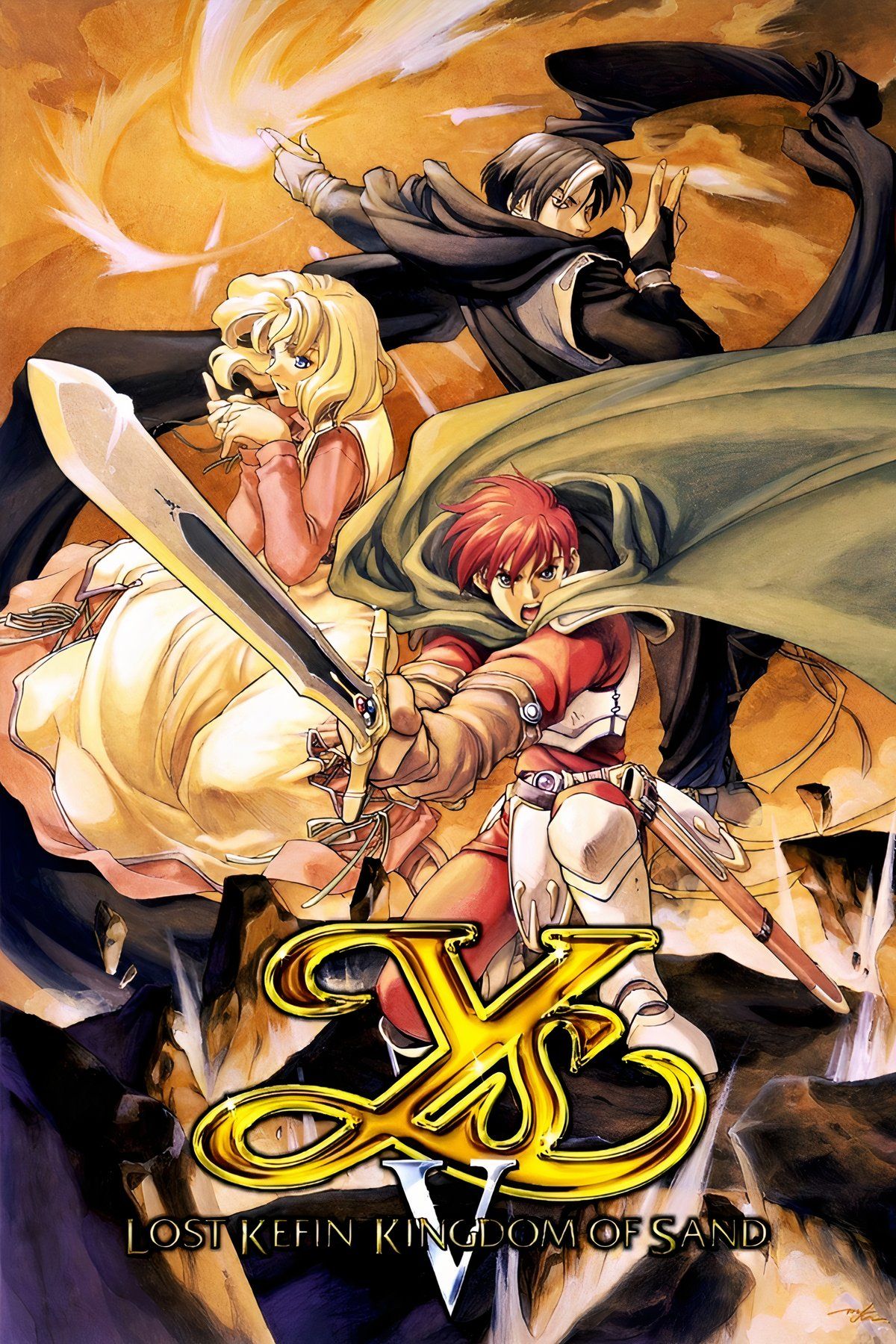
If you ask a hardcore Ys fan about the black sheep of the family, they won’t point to the early experiments or the modern shift into party-based combat. They'll talk about Ys V: Lost Kefin, Kingdom of Sand. It is a bizarre artifact. Released in 1995 for the Super Famicom, it sits awkwardly between the legendary bump-combat era and the high-speed 3D action that defined the series later on. It’s the game that almost killed the momentum of Adol Christin’s adventures, yet it’s also a fascinating look at a developer trying to find its soul during a massive industry transition.
Honestly, playing it today feels like stepping into an alternate dimension. You have Adol, the iconic red-haired adventurer, but the game plays more like a standard Legend of Zelda clone than the frantic, adrenaline-pumping RPGs Falcom is famous for. It’s slow. It’s deliberate. And for a long time, it was the only mainline entry that never saw an official Western release.
Why Ys V: Lost Kefin, Kingdom of Sand Feels So Different
Most Ys games are about speed. You run into enemies, you shred them, you move on. But in Ys V: Lost Kefin, Kingdom of Sand, Falcom decided to introduce a dedicated attack button and a manual guard mechanic. On paper, that sounds like a natural evolution. In practice, it turned the game into a bit of a slog.
The pacing is just... off. You spend a lot of time wandering through the desert of Xandria, and while the atmosphere is top-notch for the 16-bit era, the friction of the combat makes every encounter feel heavier than it should. It’s a huge departure from the "Bump System" of Ys I and II. It lacks the verticality of Ys III: Wanderers from Ys. It’s stuck in this middle ground where it wants to be a "serious" Action-RPG but forgets to keep the "Action" part exciting.
Then there’s the alchemy. This is the game’s big gimmick. Instead of just buying spells or finding them in chests, Adol collects elemental flux and creates "Alchemy Magic." You have to charge your sword to use it. It’s clunky. Most players find themselves just ignoring the magic entirely because it’s faster to just whack things with a piece of sharpened steel.
The Story That Actually Matters
Despite the gameplay stumbles, the narrative is surprisingly meaty. Adol arrives in the city of Xandria, hearing rumors of a "Phantom Kingdom" that vanished five hundred years ago. This is Kefin. The lore ties back into the broader Ys mythos—specifically the Eldeen—but it focuses more on the human cost of power and the hubris of an empire that thought it could master alchemy to solve all its problems.
You meet characters like Terra, a spunky thief who actually becomes a recurring character in later games like Ys VI: The Ark of Napishtim. Seeing her origins here is one of the few reasons modern fans go back to this specific title. The chemistry between Adol and the local cast feels more developed than in the previous entries, which often felt like boss-rush simulators with a bit of flavor text sprinkled on top.
The "Expert" Version vs. The Original
If you're looking to play this today, you’ll encounter two versions: the original Super Famicom release and Ys V Expert. Falcom released the "Expert" version just a few months later because fans complained the original was way too easy.
It didn't really fix the core issues.
The Expert version adds a few more enemies, tweaks some damage numbers, and includes a hidden dungeon, but the fundamental slowness remains. It’s a "fixed" version of a game that needed a complete top-to-bottom redesign. Later, Taito tried to remake it for the PlayStation 2, but that version is widely considered even worse—changing the art style and stripping away the 16-bit charm without fixing the mechanics.
Where Ys V Fits in the Timeline
Chronologically, this adventure happens right after Ys IV and before Ys VI. Adol is roughly 20 years old here. It’s a pivotal moment for him because it’s one of the few times he deals with a threat that isn't purely "ancient gods" or "demonic entities." Kefin is a man-made disaster. It’s an alchemical nightmare brought about by the greed of those who wanted to live forever in a paradise built on sand.
The music, composed by the Falcom Sound Team jdk, is legitimately incredible. Even if the gameplay doesn't grab you, tracks like "Field of Gale" capture that sense of vast, lonely desert exploration perfectly. It sounds "fuller" than many other SNES RPGs, pushing the console's sound chip to its limits.
The Rarity and the Fan Translation
For decades, English-speaking fans were left in the dark. Because Ys V: Lost Kefin, Kingdom of Sand sold poorly in Japan (relatively speaking), Falcom didn't see the point in bringing it West. We got Ys III on the SNES and Genesis, and then the series basically vanished from North America until the early 2000s.
It wasn't until the fan translation group Aeon Genesis released a patch in 2013 that most Westerners could finally see what the fuss—or lack thereof—was about. It remains the only way to play the game in English. It’s a testament to the dedication of the Ys community that they spent years translating a game that even the developers seem a little embarrassed by.
Is It Worth Playing in 2026?
You have to be a specific kind of gamer to enjoy this one. If you want the fast-paced thrills of Ys VIII: Lacrimosa of Dana or the tight, punishing combat of Ys Origin, you're going to be bored out of your mind. But if you’re a historian? If you love seeing how a franchise stumbles before it finds its footing? Then it’s essential.
The game is short. You can breeze through it in about 8 to 10 hours. It’s a cozy, somewhat clunky RPG that serves as a bridge between the 8-bit past and the 3D future. It’s the "missing link" that explains why Ys VI changed everything.
Actionable Steps for Exploring Ys V
If you want to experience the Kingdom of Sand without pulling your hair out, follow this path:
- Skip the PS2 Remake: Seriously. The Taito remakes are notorious for being low-budget and losing the Falcom "feel." Stick to the 16-bit original.
- Play the "Expert" Version with the Aeon Genesis Patch: Since the base game is notoriously easy, the Expert version provides at least a modicum of challenge for veteran RPG players.
- Don't Grind for Alchemy: The magic system is the weakest part of the game. Focus on upgrading your physical gear and learning enemy patterns; you'll have a much better time.
- Listen to the OST Separately: If you find the gameplay too slow, at least check out the "Ys V Orchard" arranged album. It’s some of the best music Falcom has ever produced.
- Watch for a Modern Remake: Rumors have swirled for years that Falcom president Toshihiro Kondo wants to remake Ys V using the modern Ys X engine. It is currently the only mainline game that hasn't received a modern update. Waiting for a "Reimagined" version might be the smartest move if you aren't a retro purist.
Ultimately, this game is a reminder that even the best developers have an "off" day. It’s a beautiful, flawed, and incredibly atmospheric experiment that proved Falcom needed to innovate—which they eventually did, leading to the massive success of the series today.