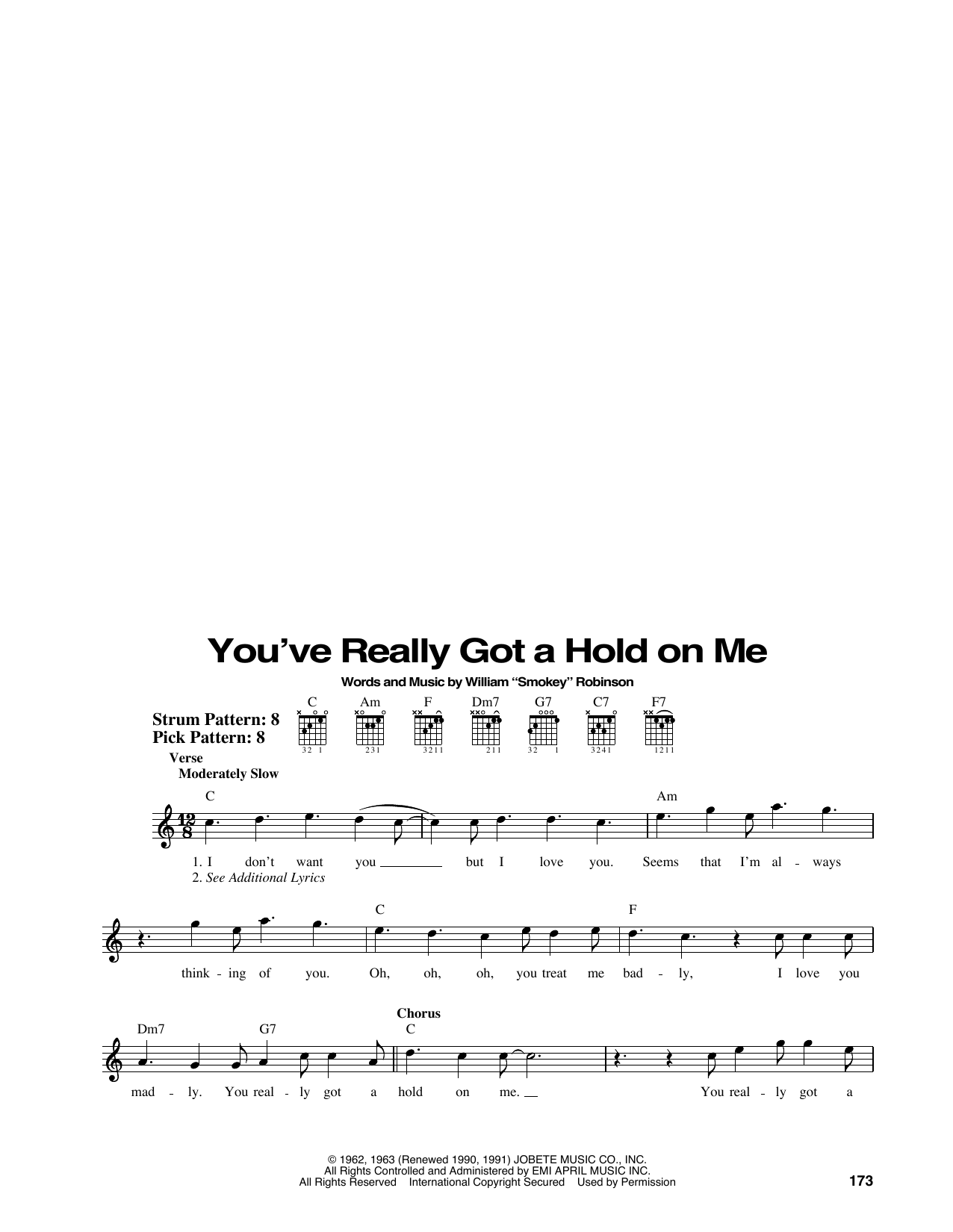
Smokey Robinson didn't just write a song when he penned You've Really Got a Hold on Me. He basically mapped out the blueprint for every toxic relationship ever captured on vinyl. It’s a weirdly upbeat track for something so emotionally desperate. You hear that opening piano riff—that iconic, tumbling soul line—and you know exactly what’s coming. It’s that feeling of being stuck. Loving someone you actually, physically, kind of hate.
The Miracles released this thing in late 1962, and honestly, the music world hasn't been the same since. It wasn't even supposed to be the "A-side." It was the B-side to a track called "Happy Landing." Imagine that. One of the most influential soul records in history was almost an afterthought.
The Messy Brilliance of Smokey Robinson’s Pen
Smokey was inspired by Sam Cooke’s "Bring It On Home to Me." He’s admitted that. You can hear the DNA of Cooke’s call-and-response style all over the track, but Smokey added this specific Detroit grit. It’s a song about a man who is being treated like absolute garbage. "I don't like you, but I love you." That’s a brutal opening line. It’s honest. It’s the kind of thing you only say when you're three drinks deep and staring at a rotary phone at 2:00 AM.
Berry Gordy’s Motown machine was just starting to hum at this point. The Miracles were the flagship. But while other Motown hits were polished to a mirror shine, You've Really Got a Hold on Me feels raw. It’s got that shouter-style delivery. Smokey isn't just singing; he's pleading. Bobby Rogers provides the harmony that makes the whole thing feel like a shared confession. It’s not just one guy suffering; it’s a universal condition.
The song hit number one on the R&B charts and cracked the Top 10 on the Billboard Hot 100. It proved that Motown could do more than just catchy pop; they could do deep, gut-wrenching soul that crossed over to white audiences without losing its soul. It’s a masterclass in tension. The rhythm section keeps things moving, but the lyrics are trying to anchor you in a place of total paralysis.
When the Beatles Met The Miracles
If you want to talk about the cultural impact of You've Really Got a Hold on Me, you have to talk about the Fab Four. In 1963, The Beatles were the biggest things on the planet, and what did they do? They covered Smokey. John Lennon took the lead vocal on their version for the With The Beatles album.
Lennon’s delivery was different. Where Smokey was smooth but pained, Lennon was raspy and aggressive. It sounded like he was actually angry at the person he was singing to. This cover changed everything. It was a bridge. It connected the burgeoning British Invasion with the roots of American R&B. Without that connection, the 60s rock scene would have looked a lot different.
Most people don't realize how much the Beatles idolized Smokey Robinson. Bob Dylan famously called Smokey "America's greatest living poet," and when you look at the construction of You've Really Got a Hold on Me, you see why. The economy of language is incredible. "You treat me badly, I love you madly." It’s simple. It’s direct. It’s devastating.
The Technical "Magic" Behind the Track
Recorded at Hitsville U.S.A., the song features the Funk Brothers, though they weren't officially called that yet. Eddie Willis on guitar, James Jamerson on bass—these guys were the heartbeat of the Motown sound. The production is deceptively complex. If you listen closely to the original mono mix, there’s a certain "air" in the room. You can hear the physical space of the studio.
The song follows a standard 12-8 time signature, which gives it that swaying, "triplet" feel typical of early 60s soul ballads. But it’s the vocal arrangement that elevates it. The Miracles weren't just backup singers; they were an extension of Smokey’s internal monologue. When they chime in with "You really got a hold on me," it’s like the voices in his head confirming his worst fears.
- Smokey Robinson: Lead vocals, writer.
- Bobby Rogers: Co-lead/Harmony vocals.
- Claudette Rogers Robinson: Background vocals.
- Pete Moore: Background vocals.
- Ronnie White: Background vocals.
- Marv Tarplin: The man behind that legendary guitar intro.
Tarplin’s guitar work is the secret sauce here. He wasn't flashy. He played exactly what the song needed. That opening lick is one of the most recognizable in music history, and it sets the melancholic yet driving tone immediately.
Why It Still Works in 2026
We’re living in an era of hyper-produced pop. Everything is tuned. Everything is quantized. Yet, people still flock to You've Really Got a Hold on Me. Why? Because it’s relatable. Everyone has had that one person. That person you know is bad for your mental health, your bank account, and your sleep schedule, but you just can't walk away.
The song has been covered by everyone. The Zombies did a version. Cyndi Lauper did one. Even Phil Collins took a crack at it. But nobody touches the original. There’s a specific vulnerability in Smokey’s voice that can’t be replicated by a filtered vocal chain or a modern pop star trying to sound "vintage."
It’s also a lesson in songwriting. It doesn't rely on a massive chorus or a beat drop. It relies on a groove and a sentiment. If you’re an aspiring songwriter, this is the track you study. It shows how you can take a negative emotion—obsession—and turn it into something people want to dance to. That’s the Motown magic.
Addressing the Common Misconceptions
A lot of people think this was a solo Smokey Robinson track. It wasn't. The Miracles were a tight-knit group, and their vocal blend was essential. Another myth is that the song was written for a woman. While the lyrics suggest a romantic interest, Smokey has often talked about how his writing process was more about capturing a universal feeling than a specific diary entry. He was a professional songwriter; he was writing for the market, and the market wanted heartbreak.
Also, some people claim the song was an instant smash. While it did well, it actually took a few weeks to gain momentum. It had to fight its way up the charts against the "sweeter" pop of the era. It was "too R&B" for some stations and "too pop" for others. Eventually, the quality of the song just won out.
How to Truly Appreciate The Miracles Today
To get the full experience of You've Really Got a Hold on Me, you need to stop listening to it on tinny smartphone speakers. This is a song that needs a bit of low-end. You need to hear Jamerson's bass moving underneath the melody.
- Find a mono pressing if you can. The stereo mixes of that era often panned the vocals awkwardly to one side.
- Listen to the lyrics without the music. Read them like a poem.
- Compare the Miracles' version to the Beatles' version back-to-back. You’ll hear the difference between soulful desperation and rock-and-roll angst.
If you’re building a playlist of essential American music, this isn't just a "nice to have." It’s a pillar. It represents the moment when R&B stopped being a niche genre and became the heartbeat of global popular culture.
Practical Steps for Music Lovers
If you're looking to dive deeper into this sound, don't just stop at this one track. Follow the lineage. Listen to The Miracles - Going to a Go-Go. Look into the work of Marv Tarplin, who is arguably one of the most underrated guitarists in history. Most importantly, pay attention to the phrasing. Smokey doesn't always land on the beat. He slides. He lingers. He pulls back. That’s where the emotion lives.
Next time you find yourself stuck on someone you know is trouble, put this record on. It won't solve your problem, but at least you'll know you're in good company. The Miracles were there first, and they made the pain sound like a masterpiece.
Study the vocal dynamics of the call-and-response sections to understand how Motown built "bigness" without using a dozen instruments. Analyze the transition from the verse to the bridge—it's a masterclass in shifting emotional weight without changing the tempo. Finally, check out Smokey's live performances from the 1960s; the way he interacts with the audience during this song shows exactly why he was the king of the Motown stage.



