Music history is littered with songs that almost didn't happen. Most people think of "You've Made Me So Very Happy" as a Blood, Sweat & Tears staple, a horn-heavy anthem that soundtracked the late sixties. But that’s only half the story. Actually, it’s not even the beginning.
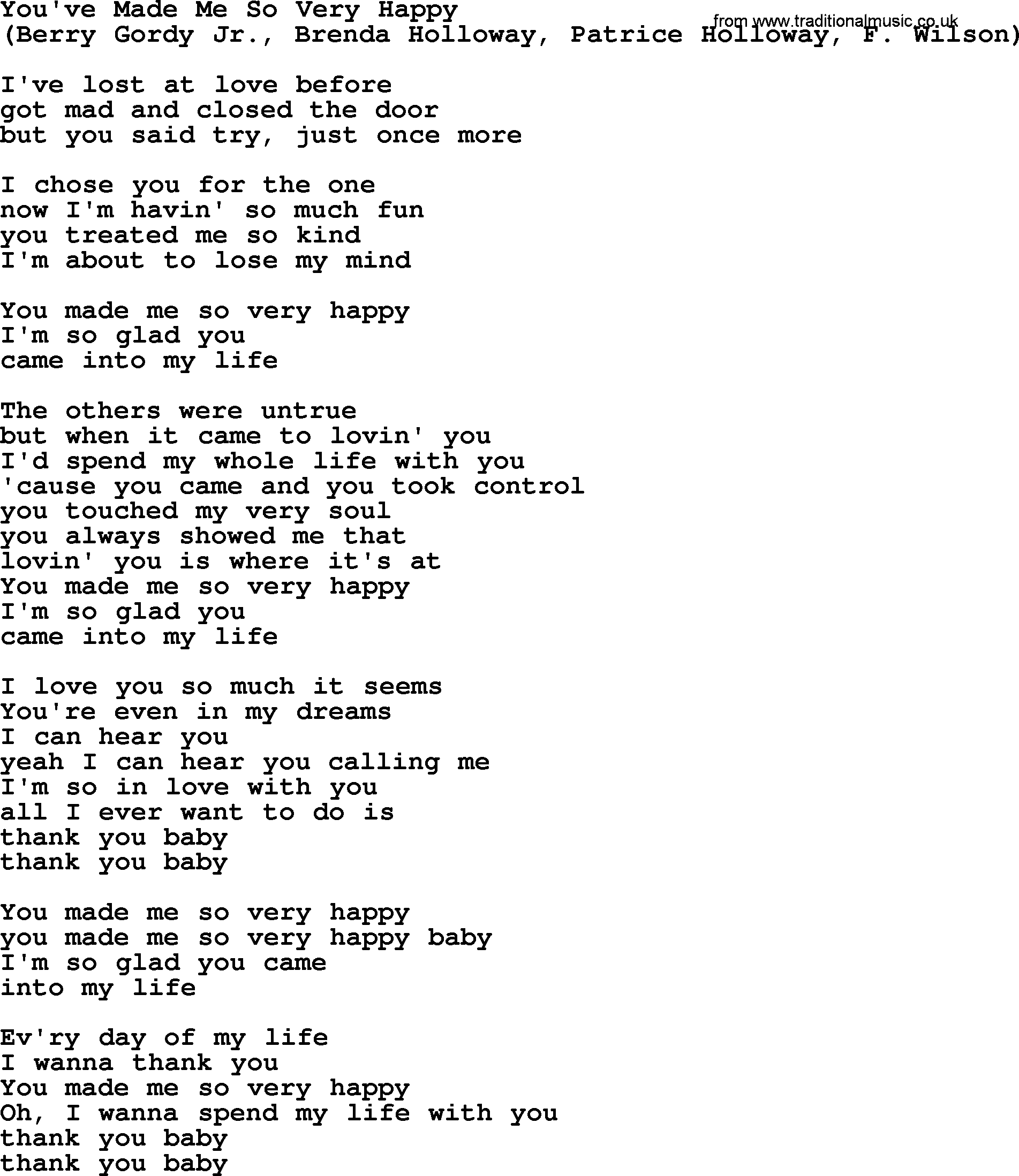
Before David Clayton-Thomas growled those famous opening lines, the song was a Motown deep cut. It was co-written by Berry Gordy himself, alongside Brenda Holloway, Patrice Holloway, and Frank Wilson. Brenda Holloway released it in 1967. It did okay. It hit number 39 on the Billboard Hot 100. But the version we all hum in the shower—the one with that explosive brass section—was a total reinvention.
Why the Brenda Holloway Original is Often Overlooked
It’s kinda tragic. Brenda Holloway was one of Motown’s most underrated talents, a woman with a cello-like voice who never quite got the push she deserved from the label. When she wrote You’ve Made Me So Very Happy, she was dealing with a breakup. She wanted to turn that pain into something grateful.
The original version is soulful, mid-tempo, and very much in that classic Detroit pocket. If you listen to it today, you can hear the skeleton of a masterpiece. But Motown was a machine. If a track didn't hit the Top 10, it was often pushed aside for the next Supremes or Four Tops record. Holloway eventually left Motown, feeling sidelined, and the song sat there like a hidden gem waiting for someone to polish it.
Enter Blood, Sweat & Tears
By 1968, Blood, Sweat & Tears was a band in crisis. Al Kooper, the founder, had left. The group was looking for a new identity. They found it in David Clayton-Thomas, a Canadian singer with a powerhouse baritone that could cut through a dozen horn players.
When they decided to cover You’ve Made Me So Very Happy for their self-titled second album, they didn't just play the notes. They ripped it apart. They added jazz progressions, a massive crescendo, and a sense of urgency that the original lacked. It was a gamble. Mixing rock, jazz, and R&B wasn't exactly a proven formula in 1969.
The Sound of 1969: Why This Version Stuck
It was huge.
The song peaked at number two on the Billboard Hot 100. It stayed there for weeks, kept out of the top spot by Aquarius/Let the Sunshine In. Honestly, 1969 was a wild year for music, and this track was the bridge between the psychedelic sixties and the more polished, produced sound of the seventies.
What makes the Blood, Sweat & Tears version work is the tension.
The song starts with that quiet, almost tentative piano. Then the horns kick in. It’s a wall of sound. You've got Lew Soloff on trumpet and Fred Lipsius arranging the brass. It’s sophisticated. It didn't sound like the "garage rock" of the time. It sounded expensive. It sounded like the future.
The Berry Gordy Connection
People forget that Berry Gordy, the titan of Motown, has his name on this. He didn't just run the company; he was a songwriter first. Having the CEO of Motown co-write a song that became a massive hit for a "white jazz-rock group" on Columbia Records was a weirdly full-circle moment for the industry. It proved the "Motown Sound" was universal. It could be stripped down, beefed up, and sold to an entirely different demographic without losing its soul.
Common Misconceptions About the Lyrics
A lot of people think this is a simple love song. "I'm so glad you came into my life."
Simple, right?
Not quite. If you look at Brenda Holloway's intent, it was a song of survival. It’s about coming out of a dark place. "I was a lonely girl / I had a lonely world." It’s about the relief of finding something stable after everything has fallen apart. When Clayton-Thomas sings it, it sounds like a celebration, but the roots are in deep, personal recovery.
- The song wasn't written for a group.
- It was originally a soul ballad, not a jazz-rock fusion piece.
- The "horns" were an afterthought in the original writing process.
The Technical Brilliance of the Arrangement
If you're a musician, you know the bridge is where the magic happens. The transition from the verse into that explosive "You've made me so very happy" chorus is a masterclass in dynamics.
The production on the 1969 album was handled by James William Guercio. This guy was a legend. He was the same producer who worked with Chicago. You can hear the similarities—the way the brass is tracked to sound punchy but never shrill. He used the studio as an instrument.
Why It Sounds Different on the Radio
If you listen to the radio edit, it’s about three and a half minutes. The album version is over four minutes. Most people prefer the radio edit because it hits the "hook" faster, but you miss out on the jazz-fusion instrumental breaks that made the band famous. These guys weren't just pop stars; they were world-class musicians playing complex charts.
Influence on Later Artists
You can't talk about You’ve Made Me So Very Happy without talking about the covers. Lou Rawls did a version. Gloria Estefan tackled it. Even Alton Ellis brought a rocksteady vibe to it in Jamaica.
It’s one of those rare "standard" songs. It’s flexible. You can play it with a solo acoustic guitar or a 20-piece orchestra, and the melody still holds up. That’s the hallmark of great songwriting. It isn't dependent on the production; the bones of the song are just that strong.
Critical Reception vs. Public Love
Critics at the time were sometimes snobby about Blood, Sweat & Tears. They called them "pretentious" for trying to mix jazz and rock. Rolling Stone wasn't always kind. But the public didn't care. The album won the Grammy for Album of the Year in 1970, beating out The Beatles' Abbey Road.
Let that sink in.
A jazz-rock album with a Motown cover beat Abbey Road. That’s the level of cultural impact we're talking about. The song was the engine that drove those sales. It was the "accessible" hit that allowed the band to experiment with longer, weirder tracks on the rest of the record.
How to Appreciate the Song Today
To really "get" the song, you have to listen to the versions back-to-back.
Start with Brenda Holloway’s 1967 version. Pay attention to the vocal phrasing. She’s vulnerable. Then, jump straight into the Blood, Sweat & Tears version. Feel the shift in energy. It’s like going from a candlelit room to a stadium with the lights full up.
Actionable Insights for Music Lovers
If you're looking to explore this era or this specific sound, here’s how to dive deeper:
- Check out the "Blood, Sweat & Tears" (1968) Album: Don't just stop at the hit. Listen to "Spinning Wheel" and "And When I Die." It's a trilogy of hits that defined the brass-rock sound.
- Explore Brenda Holloway’s Catalog: Look for "Every Little Bit Hurts." It’ll give you a better appreciation for the woman who gave life to the lyrics of You've Made Me So Very Happy.
- Listen for the "Guercio Sound": If you like the production, check out the early Chicago albums (Chicago Transit Authority). It’s the same DNA.
- Analyze the Lyrics: Next time you hear it, think about the transition from "lonely girl" to "so very happy." It’s a narrative arc, not just a repetitive chorus.
The song remains a staple of classic rock radio for a reason. It captures a specific moment in time where genres were melting together. It’s a testament to the fact that a great song can have multiple lives—first as a soul confession, then as a global pop-rock phenomenon. It’s about gratitude, pure and simple. And in a world that’s often cynical, that kind of blatant, brassy joy is still pretty refreshing.
Next Steps for Deep Listening: To understand the technical complexity mentioned, listen specifically to the 2:30 mark of the Blood, Sweat & Tears version. Notice how the drums and horns syncopate to build tension before the final chorus. Compare this to the steady 4/4 beat of the Motown original to see how rhythmic variation can change a song’s emotional impact entirely.



