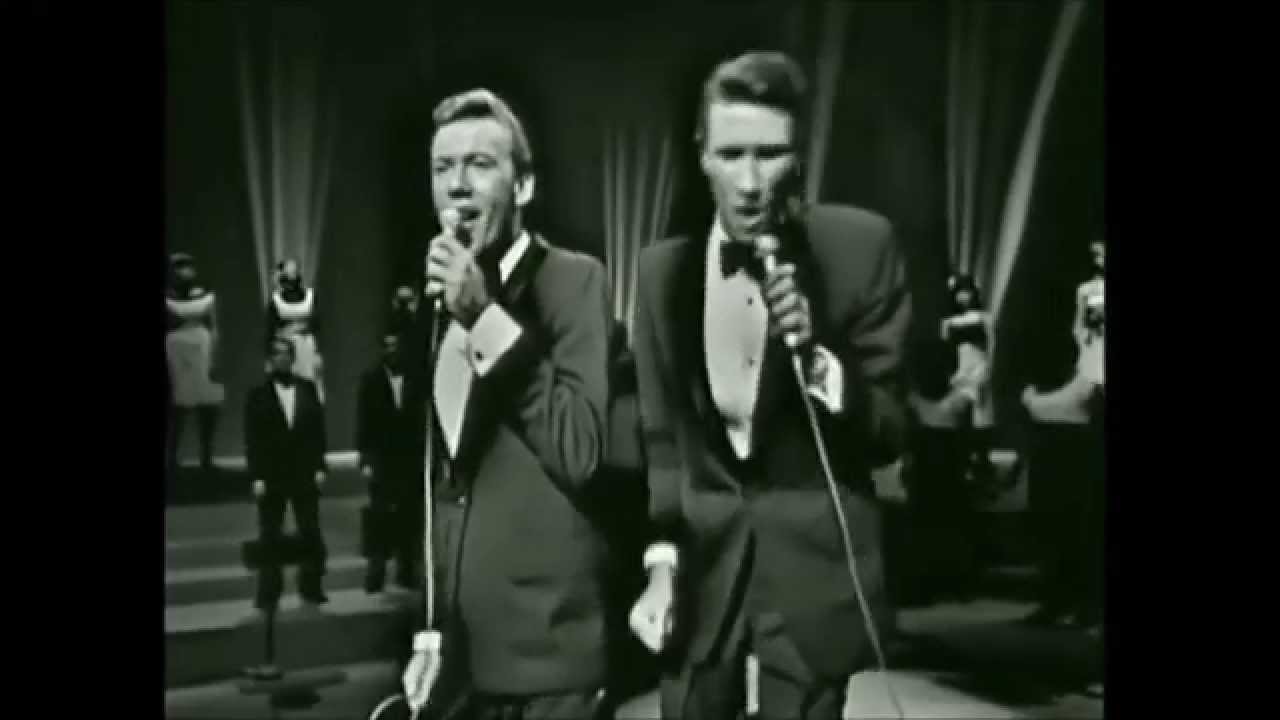
It starts with that low, almost mournful baritone. Bill Medley sounds like he’s singing from the bottom of a well, or maybe just the bottom of his soul. By the time Bobby Hatfield’s tenor soars in to meet him, you aren't just listening to a song. You’re hearing the literal blueprint for modern pop production.
You've Lost That Loving Feeling is, by most industry metrics, the most played song in radio history. BMI confirmed years ago that it surpassed eight million airplays, a number so massive it’s hard to wrap your head around. If you played the track on a loop, you’d be sitting there for about 45 years.
But here’s the thing: everyone involved thought it was going to be a disaster.
The Wall of Sound Meets The Righteous Brothers
In 1964, Phil Spector was already the "Tycoon of Teen." He had this vision of "Wagnerian" pop—huge, cavernous, and layered. He called it the Wall of Sound. When he signed The Righteous Brothers, they were basically a blue-eyed soul duo known for upbeat, stomping numbers. They weren't prepared for the grueling, claustrophobic sessions at Gold Star Studios in Los Angeles.
Spector brought in the heavy hitters. We’re talking about the Wrecking Crew—the legendary session musicians like bassist Carol Kaye and drummer Hal Blaine. To get that specific "thick" sound, Spector would have three pianos playing the same part. Five guitars. Three basses. It was sonic overkill.
The sessions for You've Lost That Loving Feeling were notoriously tense. Spector was a perfectionist bordering on the obsessive. He made the duo record the vocals dozens and dozens of times. Bill Medley famously asked Spector what he was supposed to do while Bobby Hatfield sang the high parts later in the song. Spector’s response? "You can go to the bank."
Why the Song Broke All the Rules
Back in the mid-sixties, radio programmers were extremely picky. They wanted songs under three minutes. Anything longer was considered "bathroom break" material or simply unplayable.
When the master tape was finished, the song clocked in at 3 minutes and 45 seconds. Spector knew this was a death sentence for a pop record. So, what did he do? He lied. He had the label print "3:05" on the vinyl. Disc jockeys across America played the record thinking it was a standard length, only to realize halfway through that the song was a slow-burn epic that refused to quit. By then, the listeners were hooked.
- The Tempo: It starts agonizingly slow. For 1964, this was a massive risk. Most hits were uptempo dance tracks.
- The Build: The bridge is one of the most famous "crescendos" in music history. It’s that "Baby, baby, I’d get down on my knees for you" section that feels like a physical weight lifting off the track.
- The Vocals: It was one of the first times white artists successfully mimicked the deep, resonant soul of Black gospel and R&B without it feeling like a cheap caricature.
Barry Mann and Cynthia Weil’s Masterpiece
We talk a lot about the singers and the producer, but we have to talk about the writers. Barry Mann and Cynthia Weil were the power couple of the Brill Building era. They wrote this at the Chateau Marmont, inspired by the Four Tops' "Baby I Need Your Loving."
Interestingly, the iconic line "You've lost that loving feeling" was originally just a placeholder. They figured they’d come up with something more "poetic" later. But the raw simplicity of that phrase—the idea that a feeling isn't just gone, but lost like a set of keys—stuck. It resonated.
There’s a common misconception that the song is purely about a breakup. It’s actually more desperate than that. It’s about the anticipation of a breakup. It’s that horrific "limbo" stage where you know the other person has checked out, but you’re still standing there, begging them to stay. That’s why it hits so hard. It taps into a universal anxiety.
The Cilla Black Rivalry
Over in the UK, the song faced an uphill battle. Andrew Loog Oldham, the Rolling Stones' manager, was a huge fan of Spector. He actually took out full-page ads in the British music press to champion the Righteous Brothers' version.
Why? Because Cilla Black had released a cover of it almost immediately. In the 60s, "cover battles" were common. Her version was actually higher on the British charts for a moment. But the sheer power of the Spector production eventually won out. You just couldn't replicate that Wall of Sound in a standard BBC-style studio. It was like trying to paint a mural with a toothpick.
Technical Nuance: The Mono Mix
If you listen to the song today on a high-end stereo system, you might notice something weird. Phil Spector hated stereo. He believed it took the power away from the music. He famously said, "Stereo is for people who want to hear the wood of the violins."
He mixed You've Lost That Loving Feeling specifically for AM radio. He wanted it to sound massive on a tiny, one-inch speaker in a transistor radio or a car dashboard. This is a big reason why the song has such "punch." Even today, the mono mix is considered the definitive way to experience the track. The layers of instruments bleed into each other, creating a single, roaring "instrument" rather than a clean separation of parts.
Cultural Impact and The "Top Gun" Factor
It’s impossible to discuss the legacy of the song without mentioning the 1986 film Top Gun. When Tom Cruise and Anthony Edwards serenaded Kelly McGillis in a crowded bar, they didn't just create a meme before memes existed; they revitalized the song for an entirely new generation.
Suddenly, a song from 1964 was back on the charts and back in the cultural zeitgeist. It proved that the emotion behind the lyrics was timeless. It didn't matter if you were a teenager in the sixties or a fighter pilot in the eighties; the dread of losing someone's affection remained the same.
However, the "Top Gun" version is stripped of the song's actual sadness. In the movie, it’s a pick-up line. In the original recording, it’s a funeral for a relationship. This contrast is actually pretty funny when you think about it. People now associate one of the most desperate songs ever written with a "bro-ey" bar scene.
Common Misunderstandings
People often think The Righteous Brothers were actually brothers. They weren't. Bill Medley and Bobby Hatfield were just two guys from Orange County, California. They got the name because Black audiences in Los Angeles would call them "righteous brothers" after hearing their soulful performances.
Another myth is that the song was an instant, effortless smash. In reality, Spector spent a fortune—around $35,000, which was an insane amount for a single in 1964—just to get it right. He was terrified it would flop and ruin his reputation.
Actionable Insights for the Modern Listener
If you want to truly appreciate the craftsmanship of this track, don't just stream the first version you see on a "60s Hits" playlist.
- Find the Mono Version: Seek out the original mono mix. The stereo versions often feel "hollow" because the song wasn't meant to be split between two speakers.
- Listen to the Bass: Pay attention to the way the bass guitars (multiple ones!) drive the bridge. It’s a masterclass in building tension without increasing the volume.
- Compare the Vocals: Listen to Bill Medley’s opening verse versus Bobby Hatfield’s climax. It’s a perfect example of how to structure a song to show off two completely different vocal ranges without one overshadowing the other.
- Read the Lyrics as Prose: Strip away the music. The lyrics are incredibly stark. "There's no welcome look in your eyes when I reach for you." It’s brutal.
The song remains a benchmark for what pop music can be when a producer is given total control and a massive budget. It’s the sound of obsession. It’s the sound of a "loving feeling" being captured in a bottle, just as it’s about to disappear forever.
Check out the 1965 live performance on Shindig! to see them perform it in their prime. It’s one of the few times you can see the sheer physical effort it took to hit those notes. You'll notice they don't look like they're having fun; they look like they're fighting for their lives. That’s the magic of the record.
Next Steps for Music Buffs
- Research the Wrecking Crew: To understand why the instruments sound so dense, look up the documentary The Wrecking Crew. It explains the specific session players who built the Wall of Sound.
- Explore the Brill Building: Look into other tracks by Mann and Weil to see how they shaped the "Blue-Eyed Soul" sound for other artists like The Animals and Dusty Springfield.
- Study the "Wall of Sound" Technique: If you're into music production, look into how Spector used echo chambers at Gold Star Studios to create that iconic reverb.



