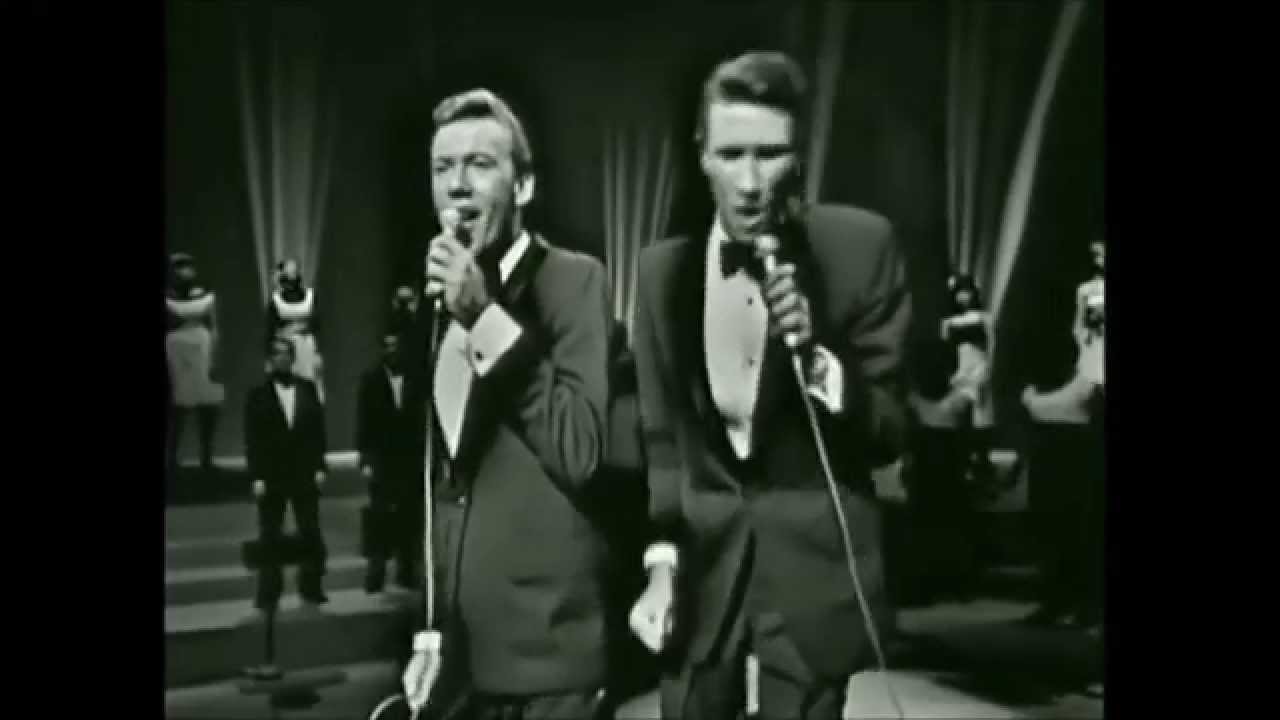
It’s the most played song of the 20th century. Honestly, think about that for a second. More than "Yesterday." More than "Stand By Me." When you look at the words to you’ve lost that loving feeling, you aren’t just looking at a pop lyric; you’re looking at a blueprint for the "Wall of Sound" and a cultural touchstone that nearly didn’t happen because the singer thought it was too low for his voice.
Bill Medley and Bobby Hatfield—The Righteous Brothers—didn’t actually write the song. That credit goes to the powerhouse trio of Phil Spector, Barry Mann, and Cynthia Weil. It was 1964. Spector wanted something "blue-eyed soul" but massive. He wanted a cathedral built out of sound.
The opening line is iconic. You never close your eyes anymore when I kiss your lips. It’s a devastating observation. It’s not a grand gesture of heartbreak; it’s the small, quiet death of intimacy that happens in the middle of a Tuesday afternoon. That’s why it resonates.
The Meaning Behind the Words to You’ve Lost That Loving Feeling
Barry Mann and Cynthia Weil were a married songwriting team, and they knew how to tap into domestic tension. The lyrics describe a relationship that hasn't officially ended yet, but the soul has left the building. You can feel the desperation in the bridge. That "baby, baby, I’d get down on my knees for you" part? It wasn't even in the original draft.
Spector and the writers spent weeks agonizing over the structure. They needed a build-up. The song starts in a low, almost subterranean baritone. Bill Medley was actually worried people would think the record was playing at the wrong speed. He told Spector, "Phil, I’m singing too low. Nobody’s gonna hear me." Spector just told him to shut up and keep singing.
The song works because it’s a plea. It’s a guy noticing the "lack of welcome" in a woman’s eyes.
And there's no tenderness like before in your fingertips.
That’s a heavy line. It’s tactile. Most pop songs of the era were about "I love you" or "You broke my heart," but this song was about the transition—the terrifying moment you realize the person sitting across from you is already gone in their head.
Why the Length Almost Killed the Hit
In 1964, radio stations didn't play songs longer than three minutes. Period. "You’ve Lost That Lovin’ Feelin’" clocked in at nearly four minutes. Spector knew the DJs would reject it.
So, he lied.
He had the labels printed with a fake runtime of 3:05. It was a classic industry hustle. By the time the program directors realized the song was a marathon, it was already the biggest hit in the country. People were hooked on the drama of it.
The middle section is where the magic happens. After the slow build, the "Woah-oh-oh" section kicks in. This was Spector’s Wall of Sound at its peak. He used the Wrecking Crew—a legendary group of session musicians—and had them play the same parts in unison to create a thick, blurred texture. It sounds like a thunderstorm in a recording studio.
Cher was actually one of the backup singers on the track. She was just a teenager then, hanging out in the studio because she was dating Sonny Bono, who was working for Spector. You can hear her in the mix if you listen closely to the soaring background vocals during the crescendo.
The Words to You've Lost That Loving Feeling: A Breakdown of the Verses
Let’s look at how the song progresses. It’s not a loop. It’s a ladder.
Verse One: The Realization The narrator notices the physical distance. The closed eyes, the lack of tenderness. It’s observational.
Verse Two: The Denial You’re trying hard not to show it, but baby, baby I know it. This is the "gaslighting" phase in reverse. He’s calling her out on her fading affection.
The Bridge: The Begging This is where Bobby Hatfield’s high tenor comes in to save the day. While Medley handles the "ground," Hatfield handles the "sky." When he screams "Need your love!" it feels like a man hanging off a cliff.
Interestingly, Hatfield was originally annoyed. He asked Spector, "What am I supposed to do while Bill is singing for the first two minutes?" Spector reportedly told him, "You can go to the bank and cash the checks."
The Top Gun Effect
You can’t talk about these lyrics without mentioning the 1986 film Top Gun. That scene in the bar where Maverick (Tom Cruise) and Goose (Anthony Edwards) serenade Kelly McGillis changed the song's legacy forever.
It turned a tragic heartbreak ballad into a "bro" anthem. Suddenly, every guy in a bar thought they could win a girl back by singing off-key. It’s funny how context changes everything. The original version is deeply sad, but the movie version is almost a comedy bit.
Actually, the Righteous Brothers saw a massive royalty spike after the movie came out. It introduced a 60s soul classic to a generation of kids wearing aviator sunglasses and flight suits.
Recording the Legend at Gold Star Studios
The atmosphere at Gold Star Studios in Hollywood was notoriously tense. Spector was a perfectionist—and that's putting it lightly. He would make the musicians play the same four bars for three hours straight until they were numb.
The bass line on this track is legendary. It’s played by Ray Pohlman and features a deep, thudding rhythm that acts as the heartbeat of the song. When you read the words to you’ve lost that loving feeling, you have to imagine them wrapped in that heavy, reverb-soaked production.
- Songwriters: Phil Spector, Barry Mann, Cynthia Weil
- Producer: Phil Spector
- Release Date: December 1964
- Chart Peak: #1 on Billboard Hot 100
- Total Radio Plays: Over 8 million (as of the early 2000s)
Wait, 8 million? Yeah. According to BMI, it’s the most-played song in American radio and television history. That means if you played the song back-to-back, it would run for over 45 years straight. That’s a lot of "woah-oh-ohs."
Misconceptions About the Lyrics
A lot of people think the song is called "You Lost That Loving Feeling." It’s not. It’s "You've" (You Have). It’s a present perfect tense because the loss is ongoing.
Another common mistake? People think it’s a breakup song. It’s actually a pre-breakup song. It’s a last-ditch effort to keep the fire from going out. The narrator is literally saying, "Bring back that lovin' feelin'." He hasn't given up yet.
There’s also the Hall & Oates cover from 1980. It’s good, sure. It hit #12 on the charts. But it lacks the raw, terrifying scale of the original. The Righteous Brothers sounded like they were singing in a cathedral during the apocalypse. Hall & Oates sounded like they were in a very nice, polished recording booth.
Actionable Takeaways for Music Lovers
If you want to truly appreciate the craftsmanship of this track, try these steps next time you listen:
- Listen for the "Vibe" Shift: Around the 2:15 mark, the song shifts from a low-key ballad to a frantic gospel-style plea. Notice how the drums become more aggressive.
- Isolate the Vocals: If you have high-quality headphones, focus on Bill Medley’s vibrato in the first verse. It’s incredibly controlled. He’s barely whispering, yet the power is evident.
- Compare the Mono vs. Stereo Mix: Spector hated stereo. He believed "Back to Mono" was the only way to hear his Wall of Sound. The mono mix is much punchier and feels like a single, solid wall of music hitting you.
- Watch the 1965 Shindig! Performance: You can find this on YouTube. Seeing the duo perform it live (even with a backing track) shows just how much physical effort went into those vocal takes.
The words to you’ve lost that loving feeling remain a masterclass in songwriting because they don't use metaphors. They use reality. They talk about eyes, fingertips, and the "something beautiful" that’s dying.
It’s a universal experience. Everyone has felt that shift in a room where the person you love suddenly feels like a stranger. Spector and the Righteous Brothers just happened to capture that chilling realization and turn it into the biggest song of all time.
To explore more about the history of 60s soul, you can look into the catalogs of the Wrecking Crew or the other hits written by the Mann/Weil team, like "We Gotta Get Out of This Place." Understanding the production techniques of the 1960s provides a much deeper context for why this specific song sounds so massive compared to its contemporaries.



