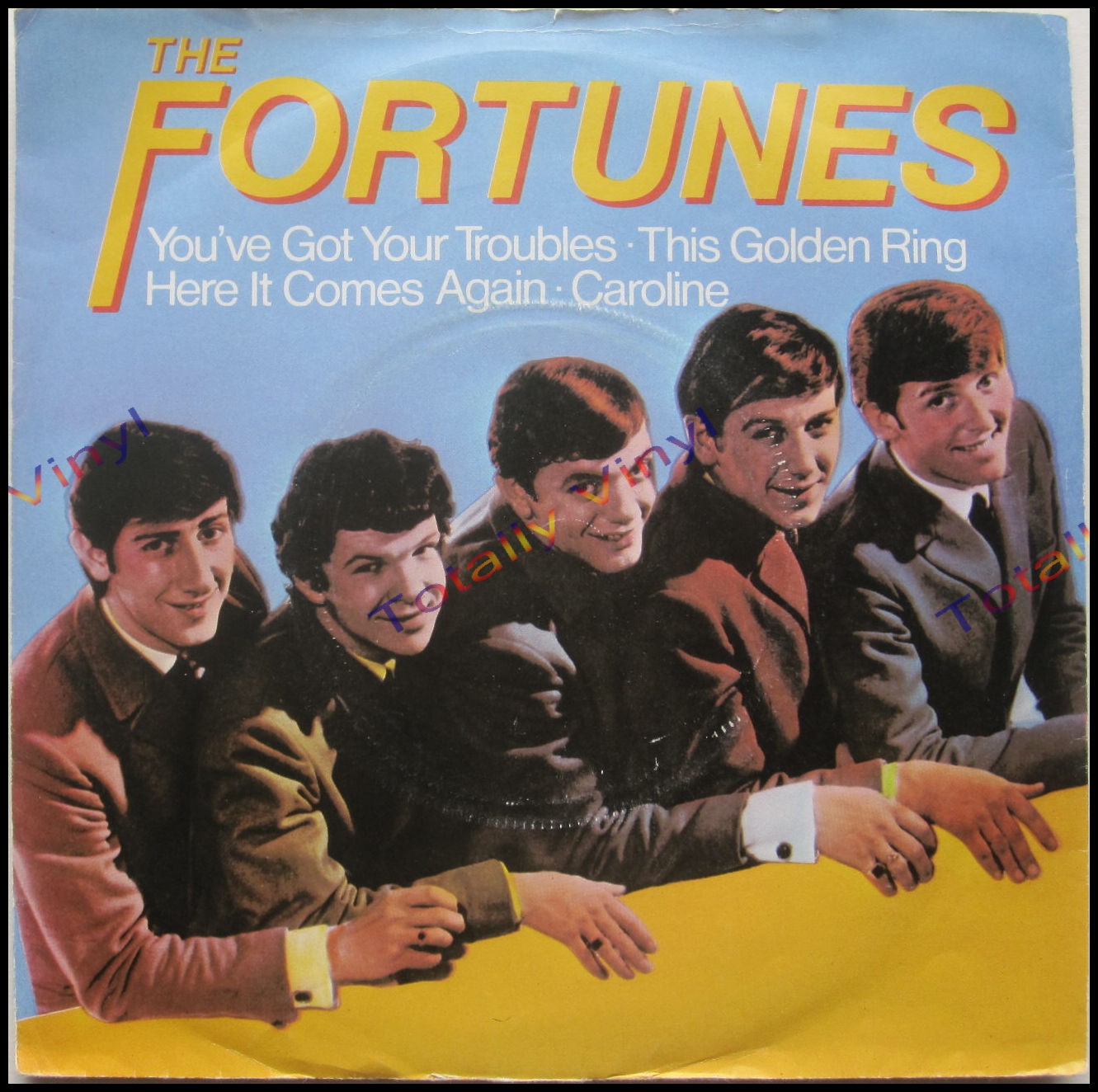
Pop music is usually obsessed with the high. The first kiss, the dance floor, the feeling of being untouchable. But in the summer of 1965, a group from Bristol called The Fortunes decided to take a different route with You've Got Your Troubles. They went straight for the gut. It wasn't just a hit; it was a blueprint for the "sophisti-pop" that would follow decades later.
Honestly, if you listen to it today, it doesn't sound like a relic. It sounds like a guy sitting at a bar trying to out-misery his friend. We've all been that guy. Or we’ve sat across from him.
The Secret Sauce of the Fortunes' Biggest Hit
Most people think of the mid-sixties as either the Beatles' mop-top era or the start of the heavy psychedelic stuff. The Fortunes occupied this weird, wonderful middle ground. You've Got Your Troubles was written by the songwriting powerhouse duo of Roger Cook and Roger Greenaway. These guys were basically the hit factory of the era. They knew exactly how to twist a melody to make it stick in your brain for forty years.
What makes the song work isn't just the lyrics. It’s the arrangement. It’s got these soaring, lush harmonies that sound almost cheerful until you actually listen to what lead singer Rod Allen is saying. He’s basically telling a friend, "Yeah, your breakup sucks, but I just lost the love of my life, so maybe sit down." It’s peak "one-upmanship" in the form of a ballad.
The production was handled by Noel Walker. He used these stabbing horn sections and a very specific, almost rhythmic acoustic guitar foundation. It’s a wall of sound, but it’s a polite wall. It doesn't scream at you. It seeps in.
Breaking Down the Chart Success
When the track dropped in May 1965, it didn't just crawl up the charts. It exploded. In the UK, it hit number two. It was blocked from the top spot by The Beatles' Help!, which, let’s be fair, is a tough fight for anyone to win.
Over in the States, it cracked the Billboard Hot 100 Top 10. That was a massive deal for a British band that wasn't part of the "mop-top" elite. It proved that the American audience was hungry for something a bit more melodic and orchestrated. People often forget that the "British Invasion" wasn't just about rock and roll rebellion; it was also about high-quality pop craftsmanship.
Why the Lyrics Resonated Then (and Now)
The opening lines are iconic. “I see that worried look upon your face / You've got your troubles, I've got mine.”
It’s an immediate equalizer.
There's something deeply human about the way the song acknowledges pain without trying to fix it. It’s not a "cheer up" song. It’s a "we’re both in the mud" song. In 1965, people were dealing with the draft, shifting social norms, and the pressure of a changing world. A song that said "everyone is struggling" felt honest.
Today? It’s the same vibe. You scroll through social media and see everyone's "perfect" life, and then this song comes on. It feels like a reality check. Rod Allen’s vocal delivery is key here. He’s got this smooth, almost effortless tone, but there’s a flicker of genuine hurt in the high notes.
The Sessions: What Really Happened Behind the Scenes
There's a bit of a myth that 60s bands just walked into a room and played. For The Fortunes, the reality was a bit more technical. They were incredible vocalists—arguably some of the best harmony singers in the business—but the studio sessions often involved the "big guns" of the London session scene.
Rumors have persisted for years about who played on the track. While the band were competent musicians, the use of session players was standard practice at Decca Records to ensure a "radio-ready" sheen. This doesn't take away from the band’s talent. Their voices are the record. You can't fake that three-part harmony blend. It’s organic. It’s tight. It’s what made them stand out from the dozens of other beat groups trying to make it in London at the time.
Interestingly, the song was almost passed over. Cook and Greenaway originally had a different vision for it. But when The Fortunes got hold of it, they slowed it down just enough to let the melancholy breathe. That was the game-changer.
The Long Tail of You’ve Got Your Troubles
A song isn't just a hit; it's a legacy. This track has been covered by everyone from Neil Diamond to Nancy Wilson. Each version brings something different, but none quite capture that specific blend of "I'm sad but I'm singing" that The Fortunes nailed.
Is it a "One-Hit Wonder" Situation?
Technically, no. The Fortunes had other hits. Here It Comes Again was another smash, and Freedom Come, Freedom Go did well in the early 70s. But You've Got Your Troubles is the one that defined them. It's the one that gets played on "Oldies" radio every single hour of every single day somewhere in the world.
Some critics argue the band got pigeonholed. They were so good at the "sad-lad" pop ballad that they struggled to pivot when the music scene turned toward harder rock and psychedelia in '67 and '68. They were too "clean" for the hippie movement but too sophisticated for the bubblegum pop scene. They occupied a narrow slice of the musical pie.
What Most People Get Wrong
People often misinterpret the song as being mean-spirited. Like the singer is mocking his friend.
That’s not it.
If you listen closely to the bridge, it’s about empathy through shared trauma. He’s saying, "I can't help you because I'm drowning too." It’s a very modern sentiment. It’s about the limits of emotional labor. You can't pour from an empty cup, as the modern saying goes. Rod Allen was singing about empty cups in 1965.
How to Appreciate the Song Today
If you want to actually "hear" this song for the first time again, stop listening to it on tinny phone speakers. You need to hear the mono mix if you can find it. The way the brass section sits right in the center of the mix, punching through the vocal harmonies, is a masterclass in 60s engineering.
The stereo mixes are fine, but they tend to separate the harmonies too much. The magic of The Fortunes was how their voices blended into a single, resonant instrument. In mono, that blend is undeniable. It’s a thick, rich sound that modern digital production often fails to replicate because it’s "too perfect."
Actionable Insights for Music Lovers and Collectors
To truly understand the impact of The Fortunes and this specific era of pop, there are a few things you should do:
- Listen to the "B-Side": Check out I've Gotta Go. It shows a slightly different side of the band’s energy and gives context to what they were trying to do beyond the big hits.
- Compare the Covers: Listen to the Neil Diamond version from his Classics: The Early Years album. It’s much more dramatic and "Vegas," which highlights how restrained and cool the original Fortunes version actually was.
- Research Roger Cook and Roger Greenaway: If you like this song, look up their discography. They wrote I'd Like to Teach the World to Sing (the Coke song) and Long Cool Woman in a Black Dress. Their range was insane.
- Track Down an Original 7-inch: For collectors, an original Decca press of You've Got Your Troubles is a staple. It’s not incredibly expensive because they sold millions, but owning the physical piece of history is worth the $10 or $20.
The Fortunes reminded us that it’s okay to be miserable, as long as you can harmonize through it. They took a simple "I’m sadder than you" premise and turned it into a piece of art that survived the British Invasion, the disco era, and the rise of the internet. That’s not just luck; that’s incredible songwriting meeting the perfect performers at the perfect time.
Next time you're having a rough day, put this on. It won't solve your problems, but it’ll definitely make you feel like you’ve got some pretty good company in the doldrums.
Key Takeaway: The enduring power of You've Got Your Troubles lies in its honest portrayal of mutual hardship, wrapped in world-class vocal harmonies and sophisticated 1960s production. It remains a foundational text for melodic pop.



