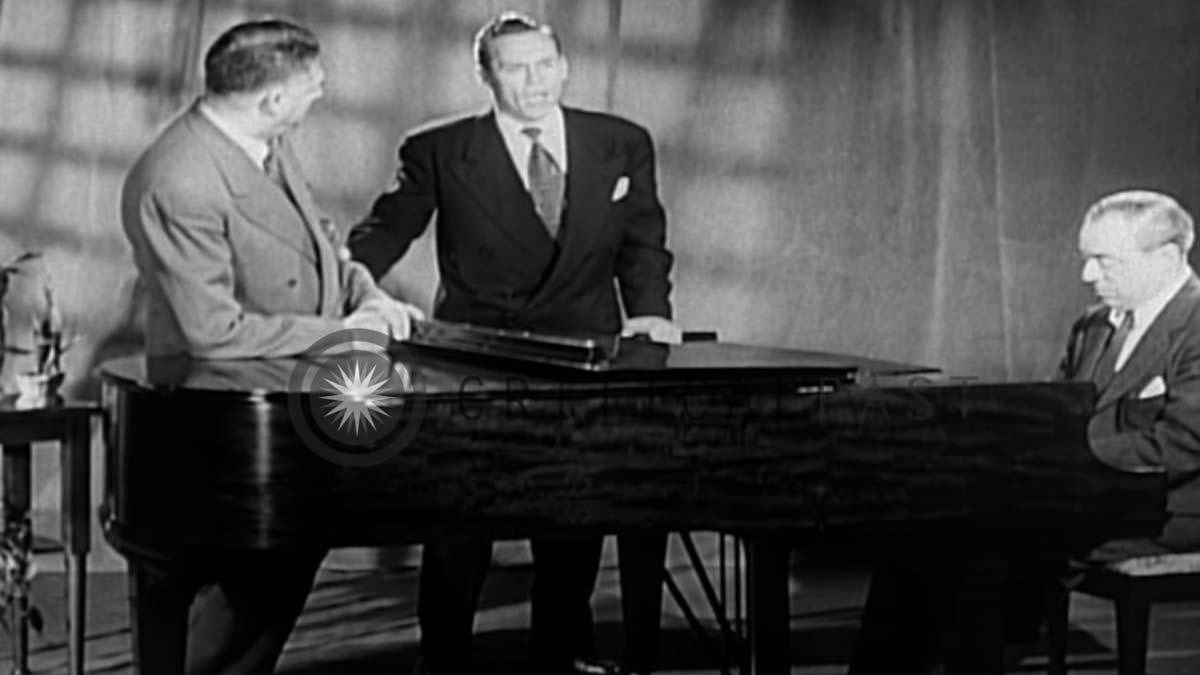
It is a short song. Barely a hundred seconds long. But "You've Got to Be Carefully Taught" from the 1949 musical South Pacific remains one of the most controversial pieces of music ever to hit a Broadway stage. Honestly, when Oscar Hammerstein II wrote those lyrics, he wasn’t just trying to move a plot along. He was picking a fight.
Most people think of Rodgers and Hammerstein as the kings of "safe" musical theater—big orchestras, sweeping dresses, and happy endings. But South Pacific was different. It was gritty. It was about the war, sure, but it was really about the rot of prejudice that soldiers carried in their duffel bags. The song "You've Got to Be Carefully Taught" basically argues that racism isn't something we’re born with. It’s a lesson. A curriculum passed down from parents to children like a family heirloom.
And man, did people hate it back then.
The Song That Almost Didn't Make the Cut
If you look at the history of the 1949 premiere, the pressure to cut the song was immense. It wasn't just some random critics complaining. High-level politicians and backers were terrified. During the show’s initial run and subsequent tour, especially in the South, there were literal legislative attempts to ban the performance.
In 1953, the Georgia State Legislature actually saw a bill introduced that aimed to prevent "movies, plays, or musicals" that had a "thinly veiled justification for intermarriage" or "pro-integration" sentiments. They specifically pointed at South Pacific. One legislator even claimed that a song like "You've Got to Be Carefully Taught" was inspired by Moscow. Seriously. They thought Rodgers and Hammerstein were secret communists because they dared to suggest that hating people of a different race was a learned behavior.
James Michener, who wrote the book Tales of the South Pacific that the musical is based on, famously recounted how the duo was told the show would be a huge hit if they just took out that one "unnecessary" song.
Hammerstein’s response? He said that song is what the show is about.
Without it, the story of Lieutenant Cable and Liat—the young American officer and the Tonkinese woman he loves but is too afraid to marry because of his upbringing—becomes just another tragic romance. With the song, it becomes a stinging indictment of American social structures.
Breaking Down the Lyrics: Why They Sting
The song is sung by Lieutenant Joe Cable. He’s a guy who has just realized that his own "proper" upbringing in Philadelphia is the only thing standing between him and his happiness. The lyrics are blunt.
"You've got to be taught to be afraid / Of people whose eyes are oddly made / And people whose skin is a diff'rent shade / You've got to be carefully taught."
He isn't using flowery metaphors. He’s calling out the specific, physical traits that people use to justify bigotry. The phrase "carefully taught" is repeated like a hammer. It suggests an effort. A labor. It implies that it actually takes work to make a child hate someone.
Think about the structure. The song is a patter song, sort of. It’s fast. It feels frantic. It sounds like a man having a nervous breakdown, which is exactly what Cable is experiencing. He realizes his parents, his teachers, and his neighbors essentially "poisoned the well" before he was old enough to know any better.
- It has to happen before you are six or seven or eight.
- It has to be "drummed in your dear little ear."
- It creates a cycle that is almost impossible to break once it starts.
What’s wild is that Rodgers wrote the music to be almost jaunty. It’s in a brisk 3/4 time, like a waltz. That juxtaposition makes the biting lyrics feel even more uncomfortable. It’s like a nursery rhyme about a genocide.
Real-World Impact and the 1958 Film
When the movie version came out in 1958, the song remained, but the context of 1950s America had shifted. The Civil Rights Movement was gaining serious steam. The song wasn't just a theatrical statement anymore; it was a political anthem.
However, some critics at the time—and even today—argue that the show doesn't go far enough. While Cable recognizes his prejudice, he doesn't exactly get a "redemption arc." He dies in battle. Some scholars, like those featured in the documentary Rodgers & Hammerstein's South Pacific: The Story of a Masterpiece, suggest that Cable’s death was the "easy way out" for the writers. By killing him off, they didn't have to show him actually bringing Liat home to Philadelphia and facing his "carefully taught" family.
That’s a fair critique. But you have to remember the era. In 1949, even mentioning miscegenation (interracial marriage) was enough to get you kicked out of most theaters in the American South.
Why We Are Still Talking About It in 2026
You might wonder why a song from the Truman era still gets shared on social media every time there’s a social justice protest. It’s because the psychology behind the lyrics has been backed up by decades of social science.
Researchers like Dr. Jennifer Eberhardt at Stanford have studied "implicit bias" for years. Her work basically proves what Hammerstein was saying: our brains are wired to categorize, but the values we attach to those categories are absorbed from our environment. Children as young as three start to pick up on the racial hierarchies of their parents.
It’s not just a "theater kid" song. It’s a sociological observation.
Common Misconceptions
Some people think the song is a "celebration" of teaching kids values. It’s the opposite. It’s sarcastic and bitter. If you hear someone singing it with a smile, they’ve completely missed the point of the character’s internal agony.
Another mistake is thinking the song is about Nellie Forbush. While Nellie (the lead) also struggles with her "carefully taught" prejudice against Emile’s children, Cable is the one who voices the realization. Nellie’s journey is about overcoming it; Cable’s journey is about the tragedy of being unable to escape it.
The Legacy of Oscar Hammerstein II
Hammerstein was a bit of a radical for his time. He was a member of the Hollywood Anti-Nazi League and was constantly pushing for racial equality in the arts. He knew that South Pacific could be a blockbuster, but he wasn't willing to trade its soul for a higher box office take.
The song set a precedent. Without "You've Got to Be Carefully Taught," you probably don't get the blunt social commentary of West Side Story or the political teeth of Hamilton. It proved that the American Musical could be more than just "escapism." It could be a mirror.
How to Engage With the Work Today
If you’re looking to really understand the weight of this piece, don't just listen to the soundtrack on Spotify. You need to see the context.
- Watch the 2008 Lincoln Center Revival: This version, starring Kelli O'Hara and Paulo Szot, is widely considered the "gold standard" for modern interpretations. It doesn't shy away from the darkness.
- Read the Original Source: James Michener's Tales of the South Pacific provides a much deeper look at the characters. The chapter "Fo' Dolla'" is where the story of Cable and Liat lives, and it’s much more devastating than the stage version.
- Listen to the Lyrics Closely: Pay attention to the "drummed in your dear little ear" line. It speaks to the repetitive, almost hypnotic nature of how bias is instilled.
The reality is that prejudice isn't a "glitch" in the human system; often, it's a feature that was installed on purpose. Recognizing that "installation" is the first step toward uninstalling it. That’s what Joe Cable was trying to say before the music cut out.
Next time you hear those opening chords, remember that you’re listening to a piece of music that once had the Georgia legislature calling for a ban. In the world of art, that’s usually a sign that the artist hit exactly where it hurts.
Actionable Insights for History and Theater Fans
- Audit Your Media: Look at older "classics" through the lens of when they were written. South Pacific was progressive in 1949, but parts of it (like the portrayal of Bloody Mary) feel dated today. Understanding that tension is part of being a critical consumer.
- Support Revivals That Take Risks: When local theaters put on South Pacific, see how they handle the racial themes. Do they lean into the discomfort, or do they try to make it "pretty"? The best productions are the ones that make the audience feel the sting.
- Discuss "Learned Behavior" With Your Kids: Use the core concept of the song to talk about how we form opinions of people we haven't met. It’s a great jumping-off point for teaching media literacy and empathy.



