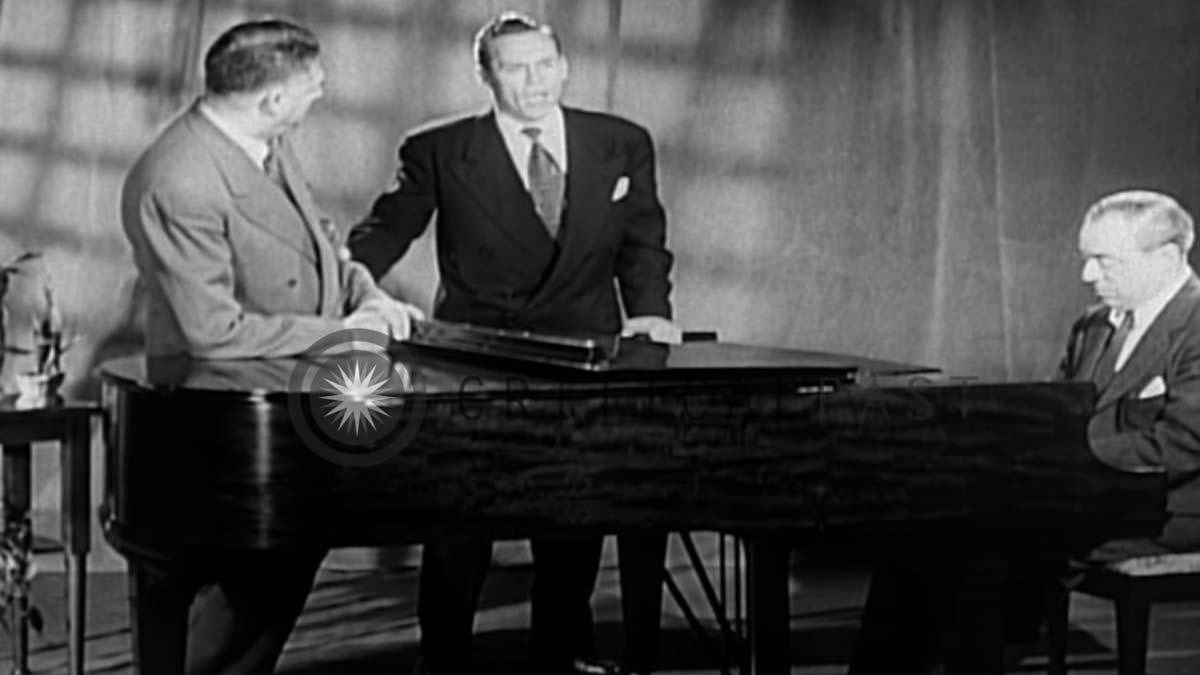
It was 1949. Rodgers and Hammerstein were essentially the kings of Broadway, coming off massive hits like Oklahoma! and Carousel. They had enough cultural capital to do whatever they wanted. So, what did they do? They wrote a musical about the Pacific theater of WWII that leaned heavily into interracial romance and the systemic roots of racism. Specifically, they wrote a song called You've Got to Be Carefully Taught for the character Lieutenant Cable.
It’s a short song. Only about 60 seconds long. But it nearly got the show banned in parts of the United States.
Honestly, the lyrics are blunt. There’s no poetic dancing around the subject. Cable sings about how hatred isn't something we are born with; it’s something passed down by parents and teachers, "before you are six or seven or eight." In the context of 1949, this wasn't just a "brave" artistic choice. It was a massive financial risk. Investors and politicians were terrified of it. They begged the duo to cut the song.
Oscar Hammerstein II basically told them to pound sand. He knew that without that specific song, South Pacific wasn't a story about the complexities of human nature—it was just another tropical romance.
The Fight to Keep it in the Script
When South Pacific went on tour in the early 1950s, the pushback got real. In Georgia, two state legislators actually introduced a bill to ban entertainment that had a "socialist" or "anti-American" bias. They specifically pointed to You've Got to Be Carefully Taught as a piece of "pro-communist" propaganda. It’s wild to look back on now, but suggesting that racial prejudice was a learned behavior was considered a radical, subversive act of aggression against the social order.
James Michener, who wrote the book Tales of the South Pacific that the musical is based on, recalled that people were constantly trying to "save" the show by removing the song. Rodgers and Hammerstein were told it would ruin their reputations.
They didn't budge.
The song serves a vital narrative purpose. Without it, the character of Nellie Forbush—a nurse from Little Rock, Arkansas—and her struggle with her lover’s biracial children doesn't have a mirror. Cable, who is struggling with his feelings for a Tonkinese woman named Liat, uses the song to realize his own hypocrisy. He sees that his refusal to marry her isn't a "natural" instinct. It’s a programmed one.
The Anatomy of the Lyrics
If you look at the structure of the song, it’s remarkably simple. The melody is jaunty, almost like a nursery rhyme. That’s intentional. It creates a sickening contrast. You’re hearing a catchy, upbeat tune while the lyrics describe the systematic poisoning of a child's mind.
"You've got to be taught to be afraid / Of people whose eyes are oddly made / And people whose skin is a different shade."
Hammerstein was a master of the "message song," but he usually hid it better. Here, he dropped the mask. He was responding to his own observations of American life. He saw the way the returning GIs were coming back to a country that was still segregated, even after they fought a war against a regime built on racial purity.
It’s worth noting that the phrase "oddly made" refers to the shape of eyes, a direct nod to the anti-Asian sentiment prevalent after the war with Japan. It was an uncomfortable mirror for a 1949 audience to look into, especially since many of them had just spent four years viewing anyone of Japanese descent as a sub-human enemy.
Why It Still Hits Differently Today
You might think that after 75 years, the song would feel like a period piece. It doesn't.
When the Lincoln Center Theater revived South Pacific in 2008, people were still crying in the aisles during that number. Why? Because the psychology behind it hasn't changed. We still see the "us vs. them" mentality being handed down like a family heirloom.
Modern critics sometimes argue that the song is "on the nose" or "preachy." Maybe it is. But in the late 40s, being "on the nose" was a requirement because nobody was talking about these things in popular media. You couldn't afford to be subtle. If you were subtle, the audience would just ignore the subtext and focus on the pretty palm trees.
Real-World Impact and Legacy
The song has been covered by everyone from Nina Simone to Mandy Patinkin. Simone’s version is particularly haunting. She strips away the Broadway polish and turns it into a slow, simmering indictment. When she sings it, you don't think about a musical; you think about the Civil Rights Movement.
- The Billy Taylor Version: A jazz interpretation that highlights the melody's tension.
- The 2008 Revival: Matthew Morrison's performance brought a youthful, frantic energy to the realization that his character was "broken" by his upbringing.
- The 1958 Film: While the film used color filters that many people hated, the song remained the emotional fulcrum of the plot.
The Problem with "Tolerable" Racism
One of the most nuanced things about the song—and the show in general—is that it doesn't just target "bad people." It targets "good people." Nellie Forbush is the hero. She’s charming, funny, and kind. But she is also a bigot.
She admits it.
She tells Emile de Becque that she can't help how she feels about his first wife being a woman of color. She says it's "born in her." This is where the song You've Got to Be Carefully Taught acts as the ultimate rebuttal. Cable is essentially telling Nellie (and the audience), "No, you weren't born with it. You were lied to."
This distinction is what made the song so dangerous to the status quo. If racism is an inherent trait, it’s an excuse. If it’s a learned behavior, it’s a choice. And if it’s a choice, you can be held responsible for it.
How to Approach the Song Now
If you are a performer or a director tackling this piece, the biggest mistake you can make is treating it like a museum object. It’s not a "classic" to be polished. It’s a confession.
Cable is dying inside when he sings this. He knows he is a coward. He loves Liat, but he knows he will never take her back to Philadelphia because he’s afraid of what his mother’s friends will say at the bridge club. He’s acknowledging that his education—his "elite" upbringing—actually made him a smaller, worse person.
Actionable Insights for Understanding the Work
To truly grasp the weight of this moment in musical theater history, you should look at the primary sources.
- Read Michener's original text: Compare the "Fo' Dolla" and "Our Heroine" chapters to see how the musical simplified yet sharpened the themes.
- Listen to the 1949 Original Cast Recording: Pay attention to William Tabbert’s phrasing. There is a frantic, almost breathless quality to it.
- Research the 1953 Georgia Legislation: Look up the "Literature Commission" of Georgia. It provides a terrifying context for what Rodgers and Hammerstein were up against.
- Watch the "South Pacific" segment in the "Broadway: The American Musical" documentary: It features interviews that explain why the song was the "conscience" of the show.
The song remains a staple of the American songbook because it refuses to let us off the hook. It’s a sixty-second lesson in sociology that says more than most three-hour lectures. It’s uncomfortable, it’s abrasive, and it’s arguably the most important thing Richard Rodgers and Oscar Hammerstein II ever wrote.
Next time you hear that "ding-ding-ding" intro, don't just hum along. Listen to the warning. It's a reminder that the things we teach our children today will define the wars they fight—or avoid—tomorrow.
Take the time to listen to three different versions of the song: the original 1949 Broadway cast, the 2008 Lincoln Center revival, and Nina Simone’s 1964 recording. You will hear how the same set of words can shift from a desperate realization to a militant demand for change. Understanding that evolution is the key to understanding why South Pacific hasn't faded into obscurity.



