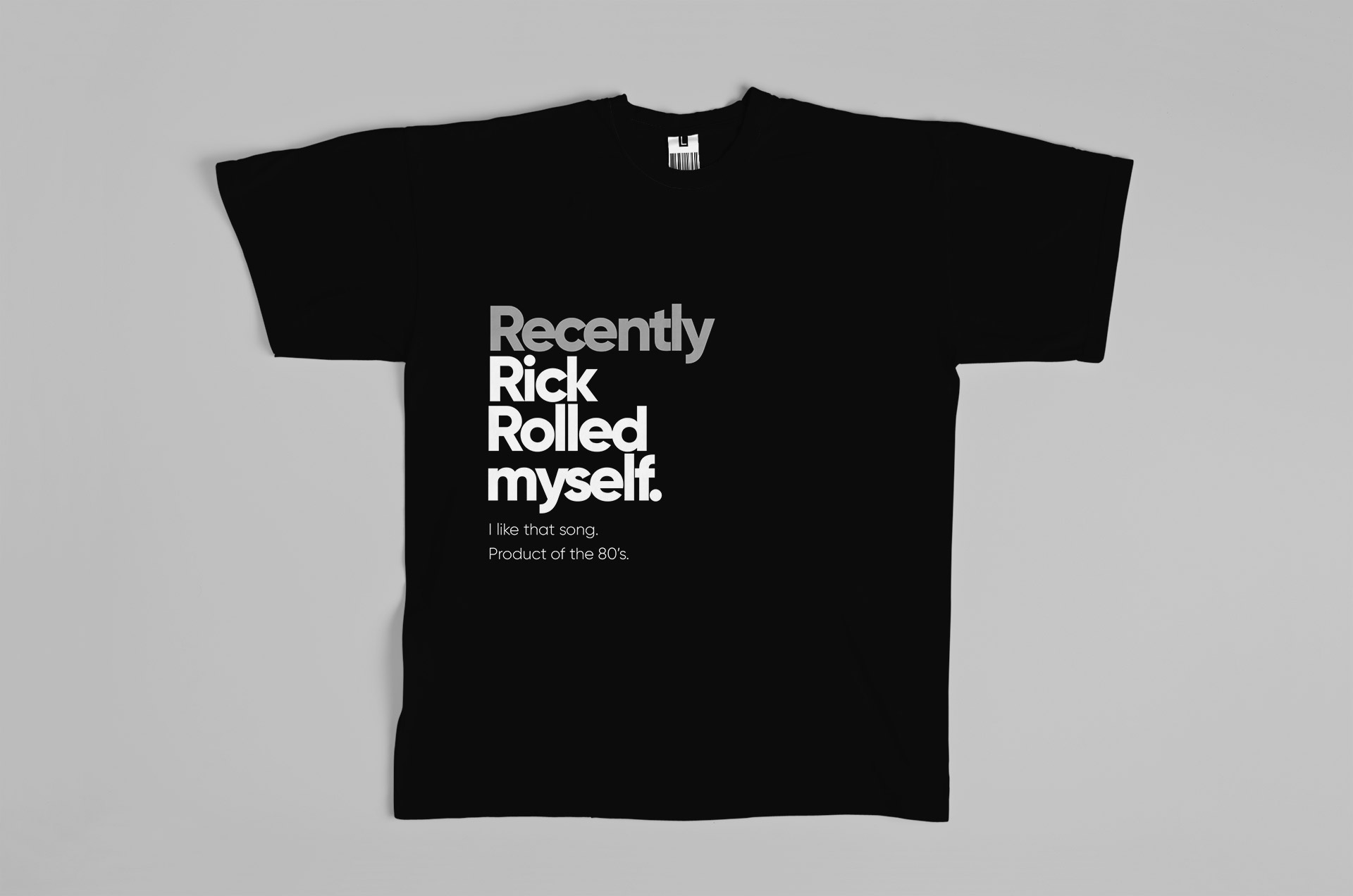
It happens in a flash. You’re clicking a link that promises a leaked movie trailer, a high-stakes political scandal, or maybe just a "hidden" cheat code for a game. The tab loads. Then, those iconic synthesized drums kick in. That 1980s bassline thumps. Before you can hit the back button, a young, trench-coat-wearing Rick Astley is shimmying across your screen. Honestly, it’s a specific kind of digital defeat. You've been rick rolled. It's been nearly two decades. Think about that. In internet years, 2007 is practically the Stone Age. Most memes from that era—think "Chocolate Rain" or "Advice Animals"—are buried in the digital archives of our collective memory, gathering dust. Yet, Rickrolling refuses to die. It’s the cockroach of the internet, but somehow more charming. It has evolved from a simple bait-and-switch prank into a cultural pillar that even Rick Astley himself eventually had to embrace, despite his initial confusion.
The Weird, Accidental Birth of a Legend
Most people think Rickrolling was some masterstroke of marketing. It wasn't. It was actually a descendant of another, weirder prank called "Duckrolling." Back on 4chan, a site known for its chaotic energy, a moderator set up a word filter that replaced the word "egg" with "duck." Eventually, people started posting links that promised one thing but led to an image of a duck on wheels. It was stupid. It was simple. And it worked.
Then came March 2007. The first trailer for Grand Theft Auto IV was about to drop. The hype was suffocating. Rockstar Games' servers actually crashed because so many people were trying to watch the video at once. Seizing the moment of pure desperation, a user on 4chan posted what they claimed was a mirror link to the trailer.
Instead of Niko Bellic in Liberty City, thousands of gamers were greeted by Rick Astley’s "Never Gonna Give You Up."
That was the "patient zero" moment. It wasn't just a prank anymore; it was a phenomenon. By April Fools' Day in 2008, YouTube itself got in on the joke, redirecting every single featured video on its homepage to the song. On that day alone, millions of people realized they’d been had. The song, which peaked at number one in 1987, was suddenly back on the charts of global relevance.
Why "Never Gonna Give You Up" Was the Perfect Weapon
Why this song? Why not Wham! or Duran Duran?
There’s something uniquely "rickrollable" about Rick Astley. For starters, his voice doesn’t match his 1987 appearance. He looks like a slender, boyish ginger, but he opens his mouth and this deep, soulful, baritone voice comes out. It’s jarring. Then there’s the dancing. It’s earnest. It’s incredibly sincere. In the cynical, snarky world of the mid-2000s internet, that sincerity was the perfect foil.
The song itself is also a masterpiece of pop construction. Written and produced by Stock Aitken Waterman, it’s an earworm. Even if you’re annoyed that you’ve been tricked, you’re probably going to hum that chorus for the next three hours. It’s a "non-punishing" prank. Unlike clicking on a link that gives your computer a virus or shows you something truly horrific, Rickrolling is ultimately harmless. It’s a "gotcha" that ends in a dance party.
The Anatomy of a Successful Roll
If you want to understand why you've been rick rolled so many times, look at the bait. The best Rickrolls rely on high-stakes curiosity.
- The "Leaked" Document: This works best in political circles or fandoms.
- The Solution to a Problem: "Hey, I found the fix for that Windows bug here!"
- The Emotional Hook: "You won't believe what this celebrity said about you."
Social media has only made it easier. Shortened URLs (like bit.ly or tinyurl) hide the destination. You can't see "youtube.com/watch?v=dQw4w9WgXcQ" anymore. You just see a button that says "Click for free pizza." You click. You lose.
The Man, The Myth, The Rick
For a long time, Rick Astley stayed quiet. Imagine being a retired pop star in the UK, living a quiet life, and suddenly you’re the most famous person on the internet for a song you released twenty years ago. He told the Los Angeles Times in 2008 that he found the whole thing "a bit spooky." He wasn't mad, just... confused.
But he played it perfectly. He didn't sue. He didn't try to shut it down. He waited.
In 2008, he made a surprise appearance at the Macy’s Thanksgiving Day Parade. During a performance by the cast of Foster’s Home for Imaginary Friends, Astley popped out of a float and lip-synced his hit. He Rickrolled the entire United States on national television. It was a legendary move that solidified his status as a "good sport."
Fast forward to 2020, and Rick Astley actually got Rickrolled himself on Reddit. A user named u/the_malcom posted a photo of meeting Astley backstage in the 80s. Astley commented on it. Then, the user replied with a link claiming to be a "backstage video" of that encounter. It was, of course, the music video. Astley’s response? A simple "upvote" and a "Well played."
The Science of Why We Keep Doing It
Psychologically, Rickrolling is a form of "in-group" social signaling. When you prank someone, you’re participating in a shared digital language. If you "get" the joke, you're part of the internet culture. If you don't, you're the "normie."
It also taps into something called "Incongruity Theory" in humor. We expect one thing (information) and get another (a soulful ginger dancing). The sudden shift in expectation creates a momentary tension that is released through laughter—or a frustrated sigh.
Even as technology changes, the "Rickroll" adapts. We’ve seen:
- QR Code Rolls: Placed on stickers in public bathrooms or on "missing pet" flyers.
- Discord Embeds: Where the preview image looks like a news clip but plays the song.
- 4K Remasters: High-definition versions of the video that make the prank look like a legitimate cinematic experience.
- The "Silent" Roll: Using the lyrics in a long, serious-looking Reddit comment where the first letter of every line spells out the chorus.
Impact on Music and Digital Rights
Interestingly, the Rickroll changed how the music industry looks at "meme" songs. Normally, labels are quick to take down copyrighted content. But RCA and Sony realized that the Rickroll was driving millions of views to Astley's catalog. It was free marketing.
As of 2024, the official "Never Gonna Give You Up" video has over 1.5 billion views on YouTube. That’s not just a prank; that’s a massive stream of ad revenue. It paved the way for other songs to find second lives through memes, like Fleetwood Mac’s "Dreams" or Kate Bush’s "Running Up That Hill" (though the latter had some help from Stranger Things).
What to Do Next Time You Get Hit
Getting Rickrolled is a rite of passage. If you find yourself staring at that trench coat, don't just close the tab. Check the comments. Usually, there's a community of people who all fell for the same bait, commiserating in their shared failure.
Actionable Insights for the Digital Citizen:
- Hover before you click: On a desktop, hovering over a link usually shows the URL in the bottom corner of your browser. If you see "dQw4w9WgXcQ," run. That is the alphanumeric DNA of the Rickroll.
- Check the URL length: Shortened links are almost always a trap unless you trust the source implicitly.
- Embrace the irony: If you’re a content creator, using a Rickroll (sparingly) can actually build rapport with your audience. It shows you don't take yourself too seriously.
- Verify "breaking" news: If a link claims a major celebrity has died or a war has ended, and it’s not from a verified news outlet, it’s probably Rick.
The reality is that you've been rick rolled because the internet thrives on curiosity. We want to know. We want the secret. We want the leak. As long as humans are curious and links are clickable, Rick Astley will be there, waiting to tell us that he’s never gonna give us up. He’s never gonna let us down. And honestly? There are worse fates on the internet than a catchy 80s pop song.
To stay safe, keep an eye on suspicious links in Reddit threads, especially those buried in "Edit" notes. Use a link expander tool if you're truly paranoid. But sometimes, just let the music play. It’s part of the history of the web.
Next Steps for Avoiding the Trap: Learn to recognize the "dQw" string in YouTube URLs, which is the most common signature of the original video. You can also install browser extensions specifically designed to "alert" you before a page containing the song loads, though many purists argue that this ruins the fun of the game. Always verify the source of "leaked" information by checking official social media channels before clicking "exclusive" third-party links.



